Guerilla? Or Just an Outlaw

Jesse James was one of the most famous or infamous outlaws of the American west – robbing stage coaches, banks, trains, and leader of the James-Younger gang.

Why am I talking about Jesse James you might ask? And where does the guerilla bit come into it?

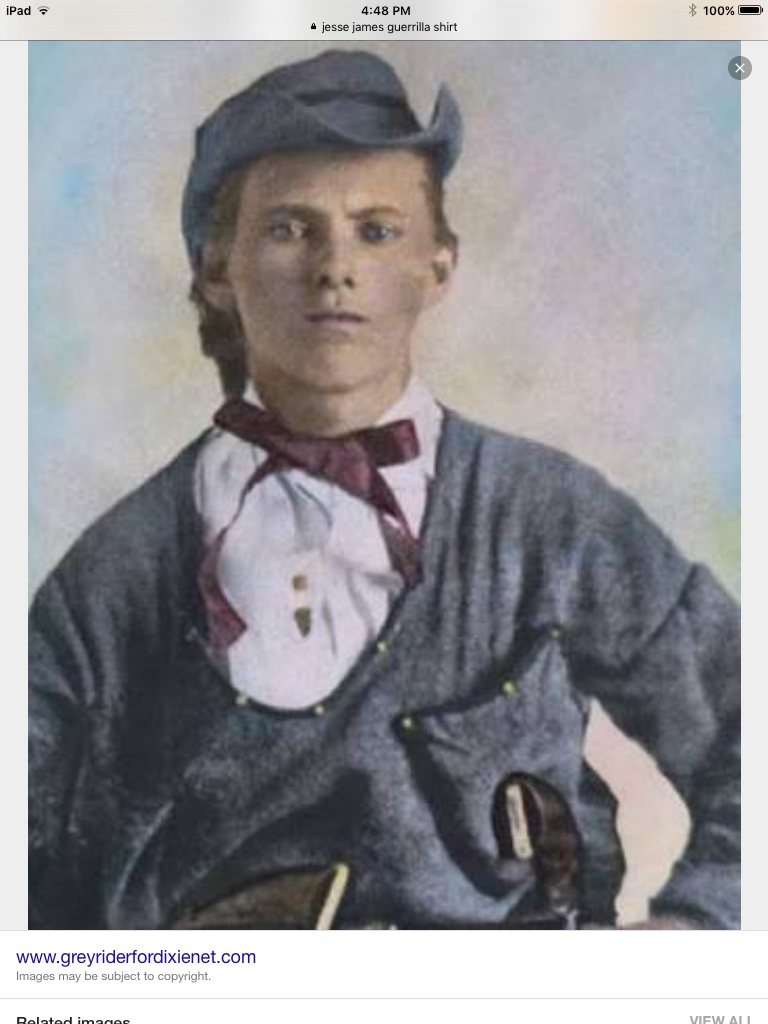
Well, once upon a time, in a land far far away….lol, no simple really. Jesse and his brother Frank James were confederate guerrilla's (also known as bushwackers). Road Runner, fellow Okie when we are there, requested a Jesse James guerrilla shirt.

With eyebrows slightly raised, of course I accepted the challenge and had him send me a picture. (As seen below)


Not hard really, finally found fabric that would drape nicely in the required grey, a simple black bias binding should work and found some studs that could replicate the trim.

It came time in the book to get onto this one and so I fiddled around with a pattern and created the very simple oversized guerilla shirt with slanted rounded pockets. Ta dah! Road Runner's guerilla shirt.

(Hmm they could actually have had more slant on the pockets now seeing it on the mannequin, noticeable when it's laying flat)

These shirts with their pockets shaped like that apparently made for ease of carrying extra ammo and accessibility to it. (so I've heard)

Personally I'm thinking that if you are galloping around on a horse at break neck speed you might lose it but then I thought about the drape of the fabric and figured it might well stay put due to the weight of the ammo.

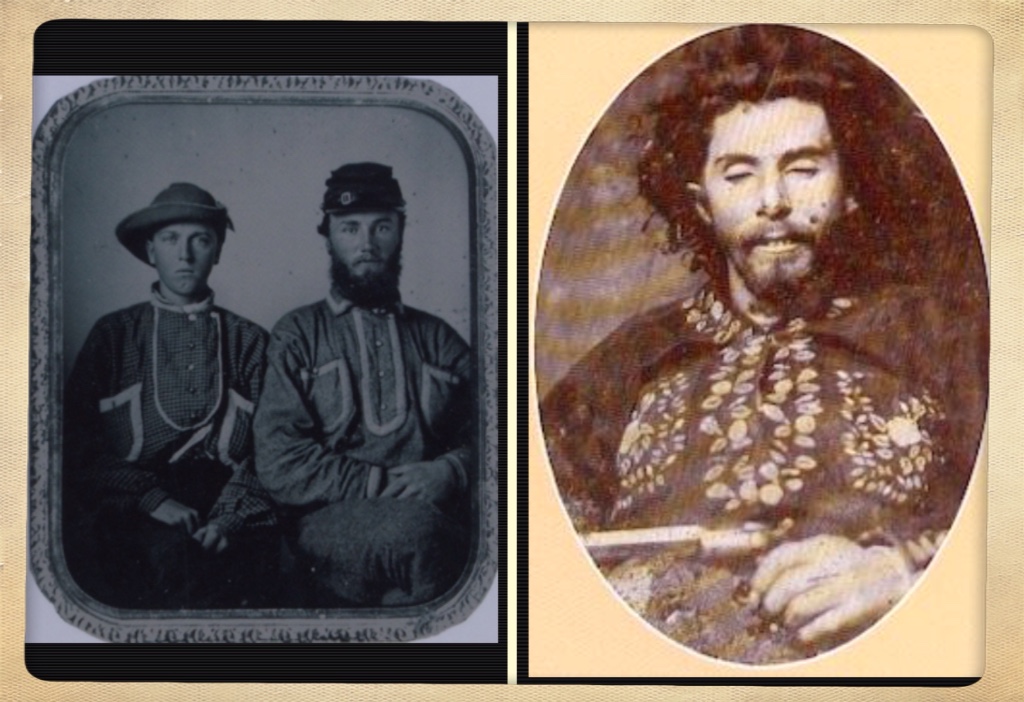
The guerrilla shirts were often made by wives or sweethearts, some were elaborately embroidered, some plain, some with a placket and collar, made from various fabrics and patterns. According to civil war websites the shirts originated in Missouri but were similarly worn down through Texas.

Here are some more examples worn by the Duvall brothers and Bloody Bill Anderson.


All very different indeed!

And the whole guerrilla story with William C Quantrill and Bloody Bill Anderson is a tale for another day.

Cheers

Kat xo


https://en.m.wikipedia.org/wiki/Jesse_James#Quantrill.27s_Raiders

http://muse.jhu.edu/login?auth=0&type=summary&url=/journals/civil_war_history/v058/58.2.beilein.pdf

http://civilwartalk.com/threads/the-guerrilla-shirt.26529/


Old Idaho Penitentiary, Boise

Leaving Twin Falls this morning we are headed up Hwy 84 towards Washington.

Boise, Idaho – land of the potato. We stopped here for lunch and a quick trip to the Old Idaho Penitentiary State Historic Site.

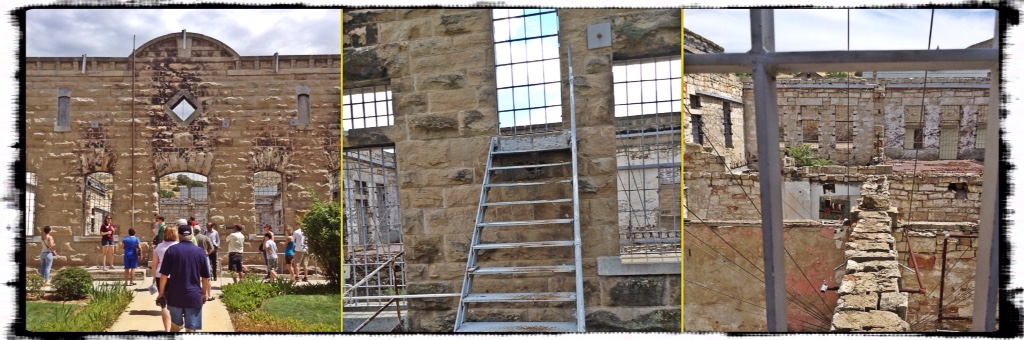
In the 1870's with the gold mine boom, crime began to be on the uprise and so with nowhere to house these criminals the Territorial Prison came into being.

The turnkey building or administration building (the entrance to the penitentiary museum) was built in 1893. He turnkey guard made sure other guards attending the yard and inmates could keep an eye on how long guards were out there and if they had been out there too long would go to find out where and if anything had happened to them.


He also controlled the wait/walk and gate entrance for prisoners who were seeking entry for visitation.

1870's with the mining also brought more crime, so the territorial building was built in 1870.

Over the 101 year history there were 500 hundred escape attempts but only 90 were successful. If they didn't get out of Idaho Territory as per Al Priest (?) then it wasn't considered successful, even though he was more than some 200miles west of the penitentiary.


The 2 House (North Wing) was built in 1899 but held no prisoners until 1911. If I have it right, the 3 House (South Wing) also built in 1899 only housed prisoners in the early 1920's.

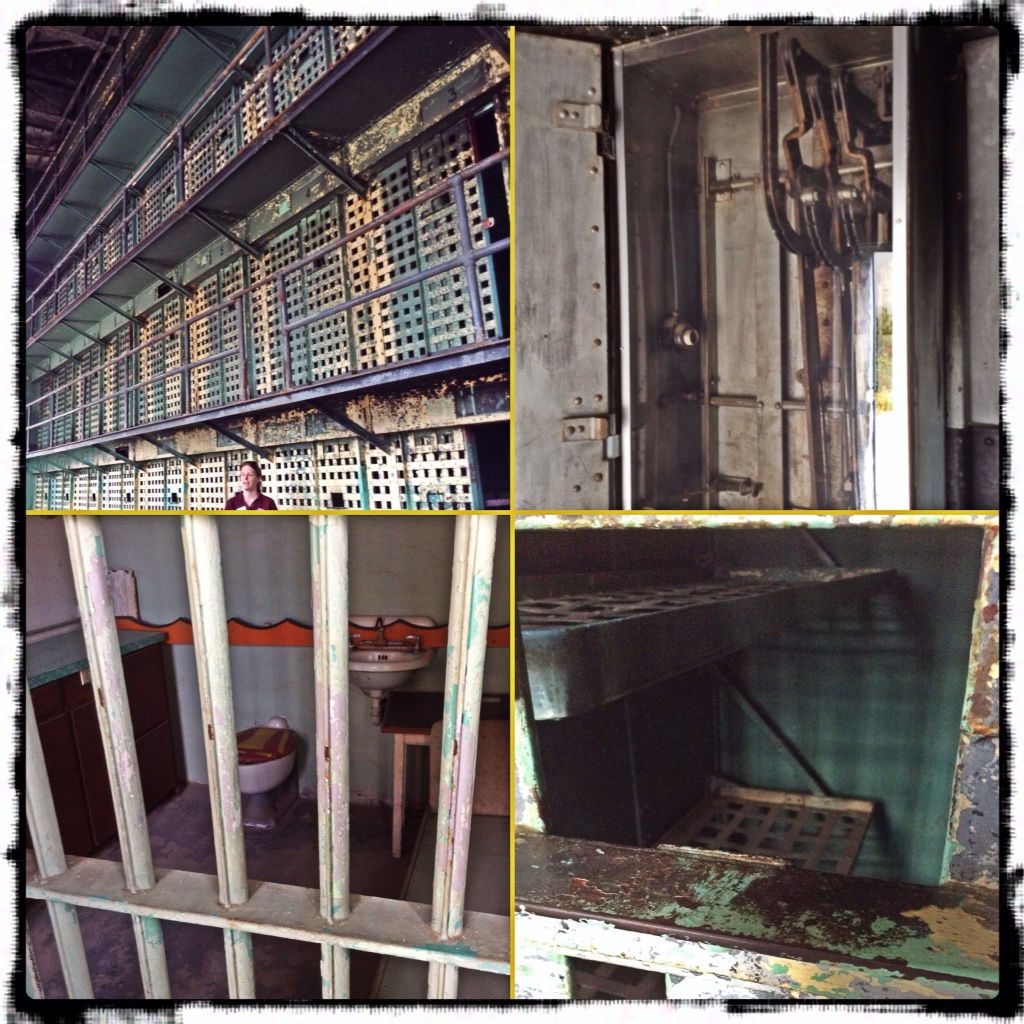
The first was your more 'rustic' prison experience. Two per cell, one chamber pot also known as a 'honey bucket' (eeeww!) in those days. No sanitation or plumbing it housed 160 inmates, so 80 honey buckets, that could be thrown at guards if they weren't careful and 4 floors, low railings, guards had to be on their guard of being pushed off the balcony also. Heating and cooling was next to non existent.

The second gave prisoners a more comfortable feel with amenities including plumbing and heating. Pastel colours to the cell walls were introduced in the hopes of having calming effects on prisoners.

It also included a private barber cell so inmates didn't have access to scissors and razors etc if out in the open. The guards would have to let each inmate in and out of the barber cell, pat them down before allowing to re enter the general cells.


The dining hall built in 1898 was designed by inmate George Hamilton. It was said that if he did a good job for the warden he would obtain an early release. Of course he did do a beautiful job. It contained a plunge bath for 6-8 men at a time, storerooms, a bakery and the main dining hall.

The dining hall in those days contained long dining tables. Prisoners were not allowed to speak to each other or even turn their heads and was the same into the early 1900's when they changed it to round tables and allowed conversation.

Hamilton got his release but was told he must leave Idaho and was never to return again. Now whether he got out and the. Realised he didn't know what to do outside of prison life, or the thought of not returning to Idaho it is said that the day before he was to catch a train after being released, he actually committed suicide.


Where the rose garden is now situated, used to be the gallows. Ten executions by hanging were carried out at the penitentiary and six were carried out in this garden.

The building known as Siberia was for prisoners put into solitary confinement. If you ended up there you were stripped of all clothing except for felt slippers. The hole in the floor was the toilet and the hole in the ceiling was your only air and light. It's narrow about twice my width and prob 6ft in length. The longest confinement was 7 months. An inmate was given his oatmeal one morning and when dishes were taken away he kept a his spoon and wouldn't give it back. So the guards said he would stay in until the spoon was returned. Seven months later he gave the spoon back and was allowed out.


The youngest inmates to serve here were 10 and 11. The 10yr olds father owned a bar and got into a fight with a patron. When his Dad asked for his gun the kid decided he could do one better, got the gun and actually shot the guy. The Warden took pity on him, so instead of being in with the general population he was allowed to live with the Warden's family on the prison grounds. He became a good baseball player on the grounds and I think the tour guide said that when the warden left the prison the young man was not re incarcerated. Missed the last bit of that part of the story.

In the 1950's cell block inmates were able to have a little more freedom, they were allowed their choice of colours (if all 4 inmates could agree) on their cell walls. They also had better access to leather crafting and woodworking tools, hence the padded headboards and toilet seats etc.

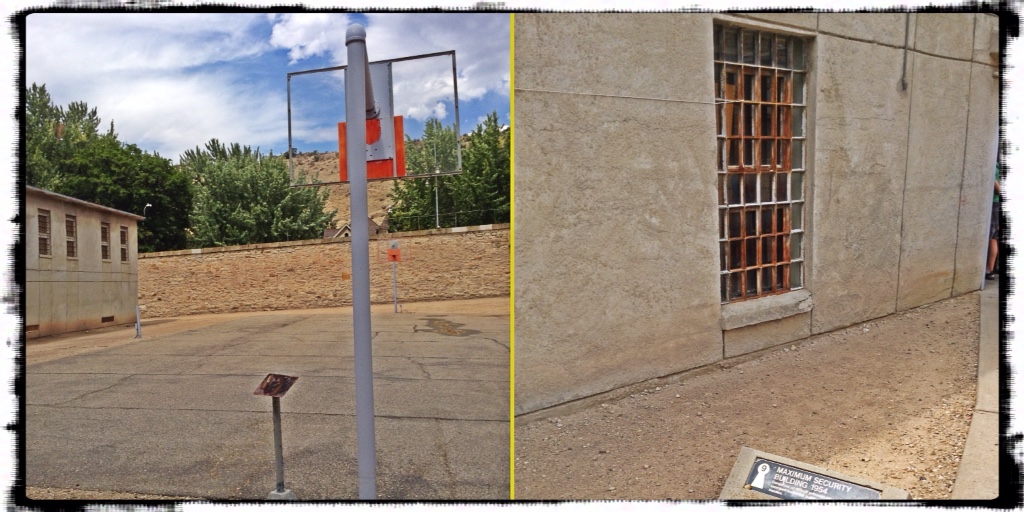
They had a basketball team and a baseball team. The 'away' games ceased after one inmate jumped from a train during an away game so after that their were only ever 'home' games. Both teams were the 'Outlaw's' and that name still stands with one of the parks or stadiums today.


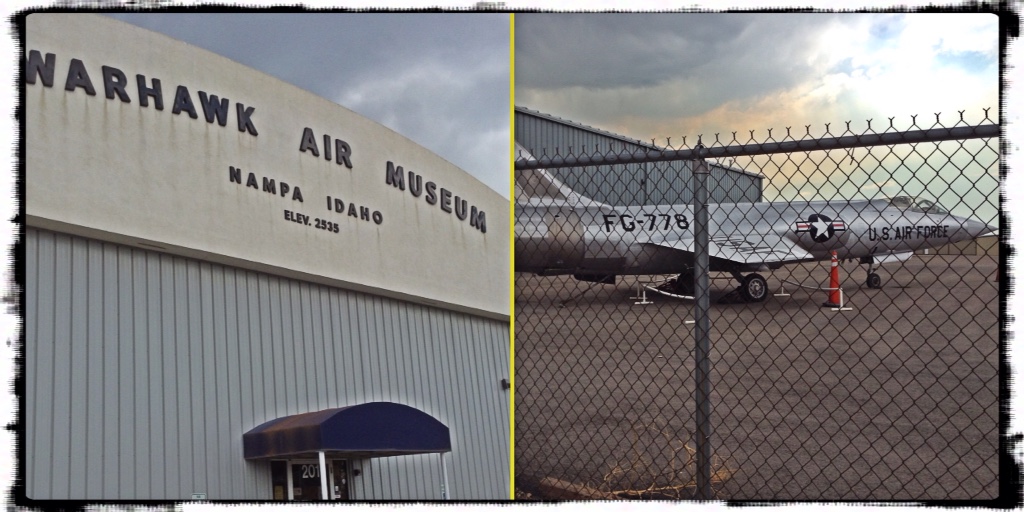
Anyway after the outlaw jaunt in Boise we made a pit stop in Nampa. We were going to go to the Warhawk Museum but of course it's Monday! Bloody well shut! Hopefully we will get back there to see it. So headed onwards to Baker City, Oregon. The home of the Oregon Trail and a hundred historic buildings.


This is where we will spend the night before heading up the road further and into Washington by tomorrow night.

See ya!

Kat xo

http://history.idaho.gov/old-idaho-penitentiary

https://en.m.wikipedia.org/wiki/Old_Idaho_State_Penitentiary

http://www.warhawkairmuseum.org


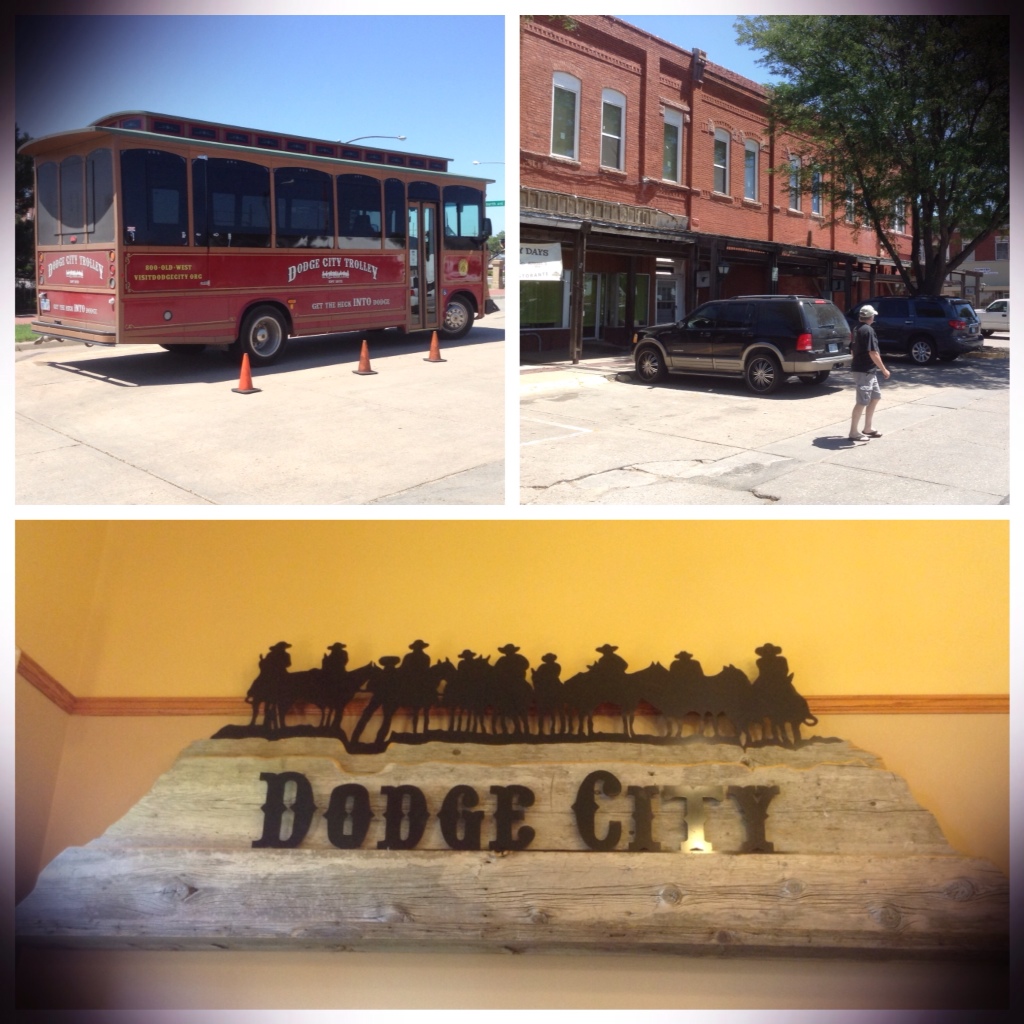
Get The Heck INTO Dodge

As the billboards display, it’s into Dodge, not outta Dodge.

After a good nights sleep in Colby we headed down the 83 to Garden City. Kansas has a lot of fertile farming land and it’s no wonder they call it Plainsmen country as it is just that – very very flat. Full of corn fields and feed lots, and then more corn fields and oil derricks.

On the outskirts of Garden City seems to be a large industrial hub and also a manufacturer for wind turbines. These things are huge when you see all the parts laying in a plant yard!

Onward we went heading east to Dodge City arriving around lunchtime.

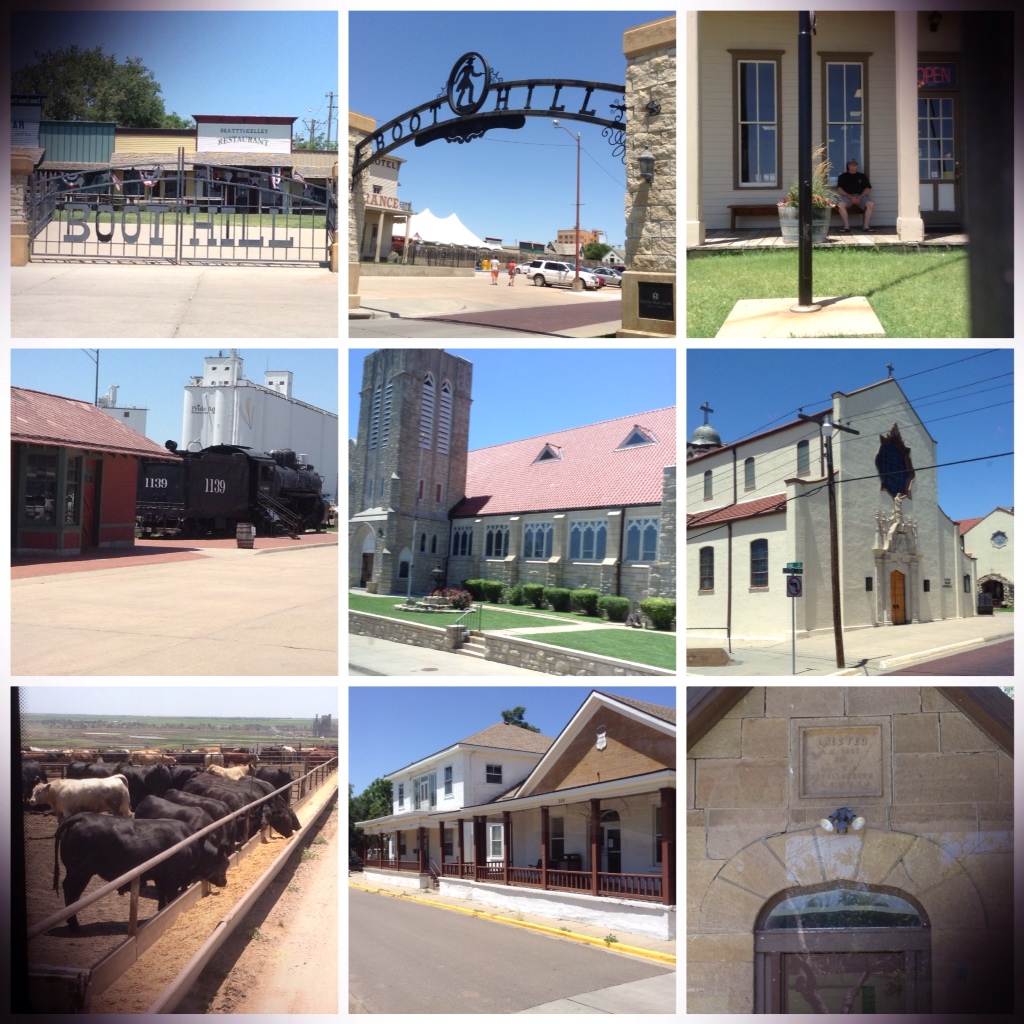
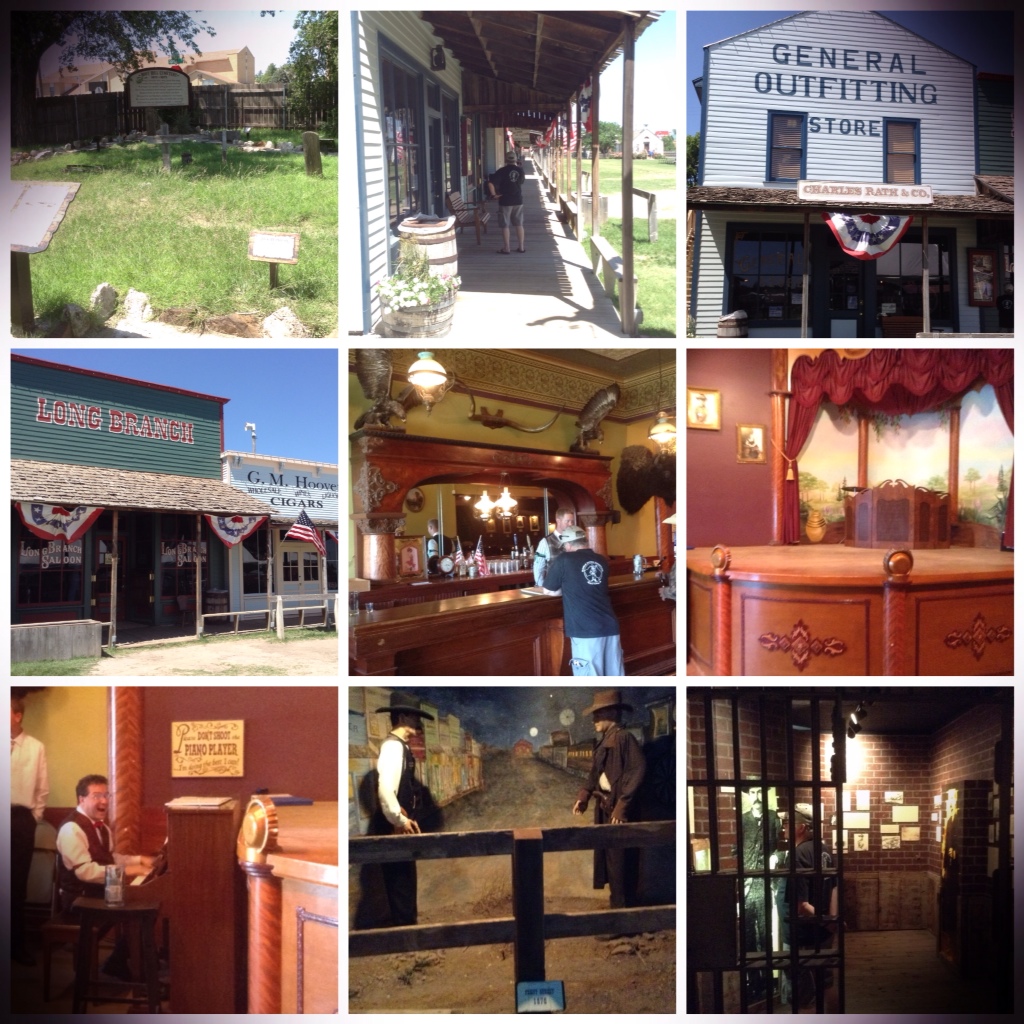
Dodge City town burnt down twice in the 1880’s, front street as depicted now at The Boot Hill Museum (some buildings or facades were moved to the site, the rest was replicated in 1958) is a replica of what it looked like back then, however was originally about 2 blocks away.

Dodge City was dubbed The Wickedest Little City in the west. Now it seems to hold the history and the spirit but is a booming cattle industry/meat producing town amongst corn, wheat and other crops.

Other interesting facts to note, (there was so much information to take in on the Trolley Tour I couldn’t keep up!). Other than the famous and infamous cowboys, lawmen etc that travelled through and worked in Dodge City.

– Fort Dodge was established in 1865, originally a campground of sorts for wagons travelling the Santa Fe Trail.

– George Hoover established the first saloon in Dodge. A sod hut erected in 1872, he later became Mayor.

– First burial on Boot Hill was in 1872 (named Boot Hill because people were usually buried with their boots on) and the Alice Chambers, a dance hall girl reportedly to be the only woman to have been ‘planted’ on Boot Hill, however supposedly by natural causes.

– Dodge City was known as queen of the cowtowns until the Kansas quarantine law came into effect in 1885 when the longhorns carried a tick disease that infected local cattle.

– there were 2 front streets, the more ‘decorum’ North side where no firearms or dance halls were allowed (north of the tracks and on the side where the reproduction street is), and the South side which was the main business block of the 1880’s popular with buffalo hunters and cowboys, saloons, gunfights and ruckus! Separated during the times of Wyatt Earp and Bat Masterson trying to bring order to the city.

– The Long Branch Saloon was the most popular. Owned and operated by Beeson and Harris, later made famous by the television series ‘Gunsmoke’. Regular entertainment was given by the Dodge City Cowboy Band and was known for gambling and fine whiskey.

– between 1866 and 1872 it is said the population was around 1000 citizens that reportedly consumed enough alcohol to the equivalent of 150 miles/ year!!!

– it was also known during that time that only 13 people were Christians. Gospel Hill becoming know for it’s churches, the St Cornelius Episcopal church still has the original building from 1891 the stained glass windows are still original. The Presbyterian church that is there now is built on the original site, the gable being where the first church was and the bell in the courtyard is from the original Presbyterian Church.

– The Mueller-Schmidt house is original and listed as a historic landmark today and you can take tours through it.

– The Santa Fe Depot once a famed Harvey Hotel was one of the finest depots. The building at the end of the depot is the original Harvey girls dormitory.

– The first Marshall for Dodge was in 1875. The famous Wyatt Earp was an assistant Marshall or Deputy in 1877 and had a quite way of enforcing law. Bat Masterson also embodied the colourful tales of the Wild West. He was one of the first citizens buffalo hunting with his brother and a friend. Bat’s brother Ed was a Marshall which was a short tenure when he was shot by a cowboy in a saloon as he attempted an arrest.

– Butter & Egg Rd was originally used as a street for farmers to bring butter and eggs into town to be sold. The county here wanted to change it for 911 upgrade purposes to Laryette but the community got together and protested keeping the name of the road as it’s original. It sits out in amongst the feedlot heartland.

– There are huge feedlots here with up to 1.3million cows capability. 85% cow hides are used for leather goods like shoes and car upholstery. Nothing is wasted, even the manure is used for fertiliser on other crops.

– Dodge City is one of the richest wheat and cattle industries in the world.

– When Francisco Vasquez de Coronado came through on his quest for gold in 1541 when he gave up looking for the City of Gold they left the horses here which in part is how the Indians became proficient horsemen and they became the ride for cowboys to navigate the plains.

– 3 years of intense buffalo hinting nearly eliminated the buffalo by the end of the late 1870’s. Prior to the hunting a buffalo herd could be a mile long and one and a half miles in width.

– at Fort Dodge, the Custom House original building was the original commanding officers quarters. The wooden building housed military men.

– The museum library is situated in the original store house.

– The quarters for the men, two stone barracks and one of Adobe. All now sits inside the Military Kansas Veterans and is a state soldiers home, like a retirement home.

– 1500 trucks a day service business in Dodge, for meat processing and other major manufacturers.

– There are two major meat processing plants in Dodge, employing around 2 thousand people each. The Winter Livestock lots is the biggest privately owned and runs auctions every Wednesday.

Phew! A history bombardment, fabulous! Hot day too, 106F/41C. Thoroughly enjoyed it.

We decided to move on at around 4.40pm and not do the wax museum. Tonight we spend in Pratt, KS, homeward bound to Edmond, OK tomorrow.

See you on the trail again next week as we head to Kentucky! Yee haa!

Kat xo

http://www.visitdodgecity.org/index.aspx?NID=157

http://www.boothill.org