What About Wednesday?

Yesterday started out with practice day, Wednesday 'work shirkers' found 13 Cowboys head out to the range to partake in 6 stages.

We did one of single target engagement, a Nevada sweep next and then a 5 round alternate with a 5 round dump. Repeat each stage twice, giving you a chance to perfect on the previous run or change things up. It's good for checking yourself, your equipment and well, really…..just an extra day to have fun shooting!

After burgers and beer, Jack and I headed for the National Cowboy & Western Heritage Museum, my all time favourite, to see the headdress exhibition before it finishes this next month.

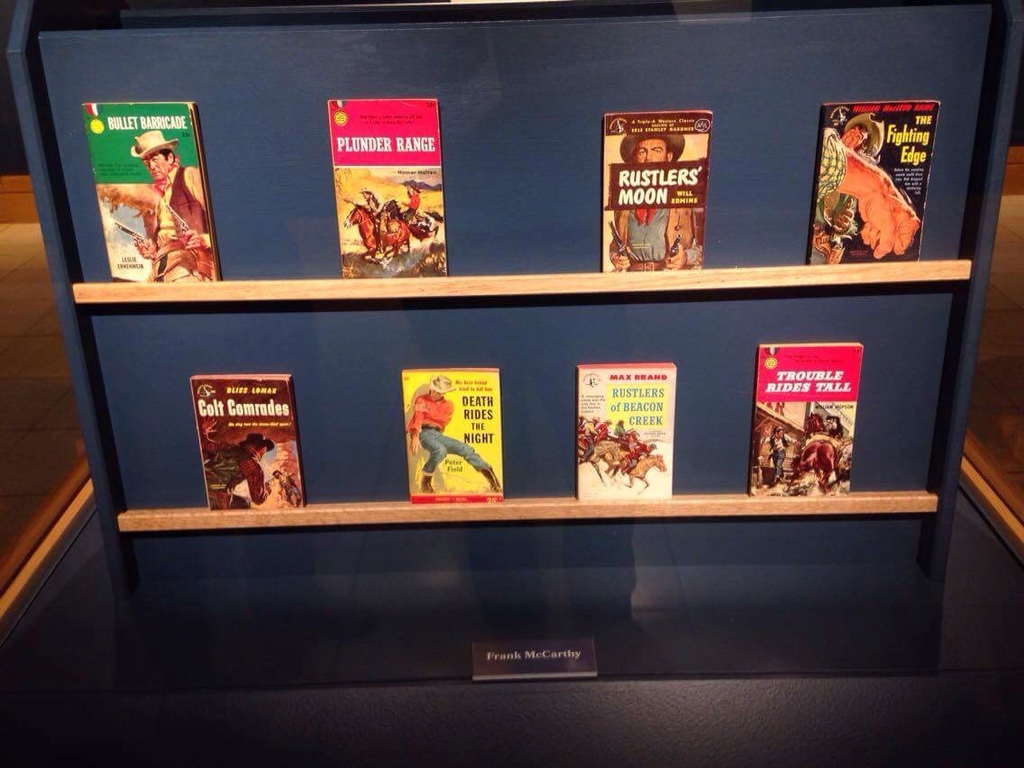
As we headed down the main passage way the current short exhibition is 'The Artistry of the Western Paperback'. Featuring artists who illustrated covers etc for dime novels and more. Of course we had to get pics of our heads in the photo opportunity novels!
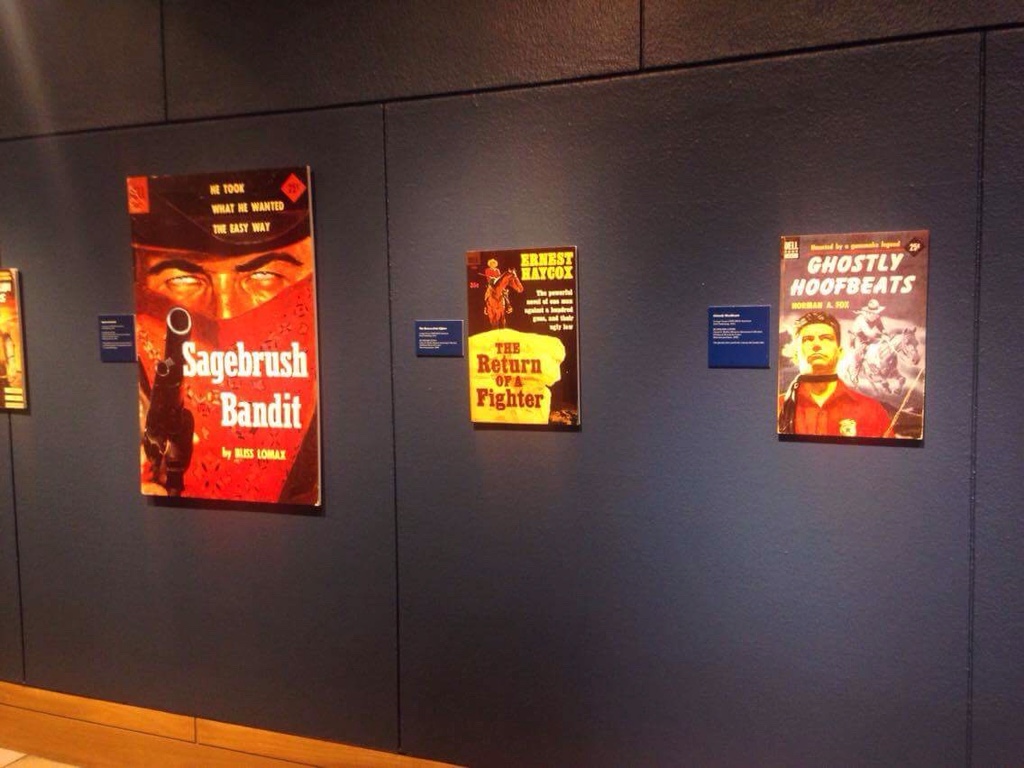
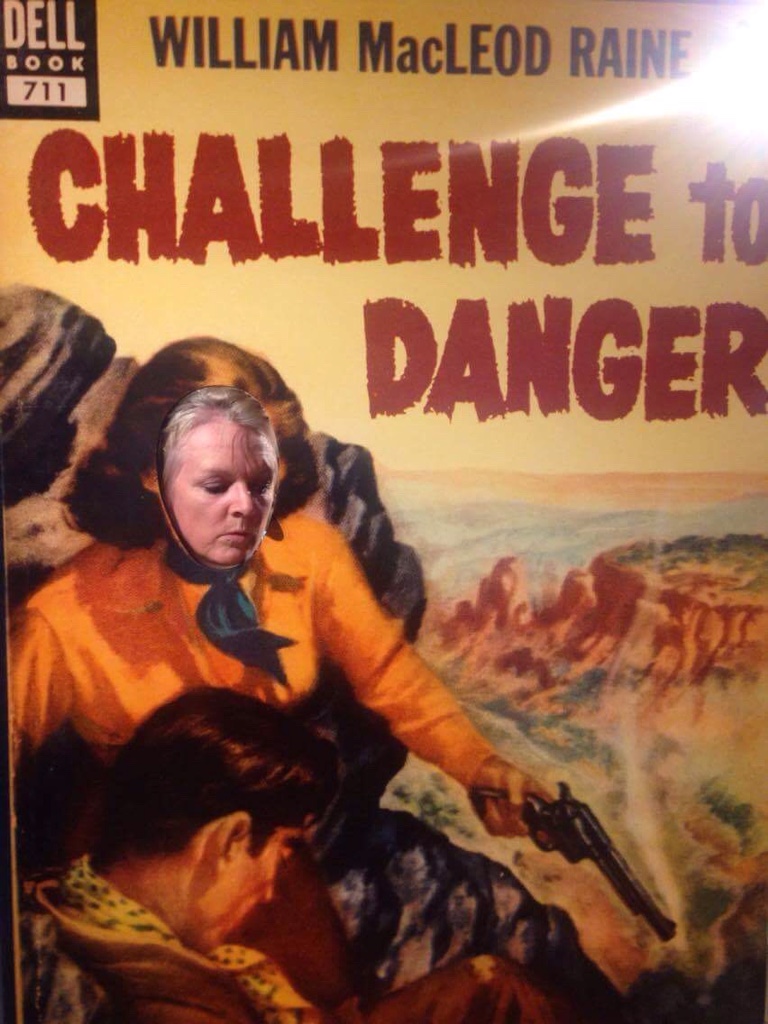
 

Then we made our way into the exhibition hall where the 'Power and Prestige: Headdresses of the American Plains' is housed. There is no photography in this exhibit but I did take notes!

Around the walls are some beautiful photos of tribal chiefs and warriors. There are also some drawings that were done by captured Indians being held in forts. Many depicted warriors and horses.

The headdress, like other forms of clothing or jewellery in other cultures, is a symbol of prestige, power, wealth and position in a tribe.

Some of the headdresses were made with the traditional eagle feathers with porcupine quills, horsehair, leather, silk and/or beads. There were smaller ones made with deer tail and one split horn piece covered in weasel fur. This one (photo courtesy of National Cowboy & Western Heritage Museum website) made using ring-neck pheasant feathers.
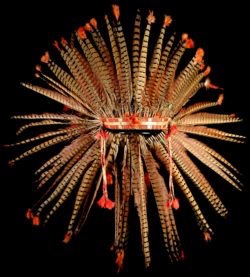
 

There are also 5 distinct styles of headdress; flared, swept back, stand out, straight up and trailer. The trailer headdress are exquisite but I would think there would be a fair bit of weight in these also as they are the ones that usually reach the ground. There is an exceptional exhibit of one in another section of the museum that we have seen before.

As we made our way to the next exhibition I spied a familiar bronze statue. It was indeed a Frederic Remington! (Remember the Winter Range trophies from previous blog?!!) here is a collection of Frederic Remington works including, bronze, drawings, art and facts and tales of the artist himself. A chance meeting I do declare! 🙂


On into the 'Hollywood and The West' exhibit. What a stunning collection of photography by John R Hamilton. (Also no photography in the exhibit.)

His many views through the lens of some very scenic sunsets, snow, monument valley backdrops, are beautiful but it is his candid shots of the many western actors that he captured both during filming and off set that makes for an excellent (photo courtesy of National Cowboy & Western Heritage Museum website)


For movies from the silver screen era such as Hombré, Silverado, El Dorado, Stagecoach, The Searchers, Sergeants 3, Revenge and more. Featuring none other than John Wayne, Paul Newman, Kevin Costner, Henry Fonda, Kirk Douglas, the 'rat pack', and of course the lovely ladies Shelley Winters, Anne Margaret, Bridget Bardot and a very young Natalie Wood.


From here we could see another interesting exhibit with that all familiar cowboy accoutrement – the bandanna. Aptly named 'A Yard of Turkey Red: The Western Bandanna' just had to be viewed while we were here. (Photo courtesy of National Cowboy & Western Heritage Museum website)


The neckwear that became the most recognised cowboy attire, was usually used to keep dust and dirt out of the cowboys face whilst herding cattle. They kept their best bandannas for outings and like other species, some were more colourful in hopes of attracting the ladies.

Turkey red was a colour produced for dyeing cotton with the root of the rubia plant. An arduous process apparently in the 18th and 19th century, it was imported to England from the Middle East in the 1700's. Later even cochineal was used to dye and produce magnificent reds also. Indigo also featured in later years.

Around the walls the photos and cabinet cards feature Cowboys sporting their bandannas and although black and white you can clearly see the distinctive patterns on them.

The display cases house a number of different bandannas, some dating back to pre civil war (paisley pattern)1865. The thing that caught my eye however was a bolt of fabric still with its stickers on it. A gorgeous red with cream and what appeared to be navy, continuous floral design motif. Made by SH Greene Warwick of Rhode Island, it was gorgeous and I found myself looki at the end of the bolt to see if I could work out how many yards were left on it!

It was interesting to note that many of the later bandannas had dot or geometric designs on them. The paisley design came in around 1808, so named after the town it was produced in – Paisley, Scotland. However paisley is an English word for buta or boteh, the teardrop shaped design is actually of Persian origins. As we know it is probably the most significant or recognisable detail on the bandanna.

Later productions of bandannas had pictures and were often used for souvenirs or advertising. There was a bandanna with a castle featured but I didn't get the details of this one. I did however find on the Internet that a bandanna with Washingtons picture on it was produced in 1776.

All in all a great way to round out the day!

Kat xo


Zion National Park

Thursday and it's time to head out again! Yes, we are cramming in as much as possible in the few days we have here.

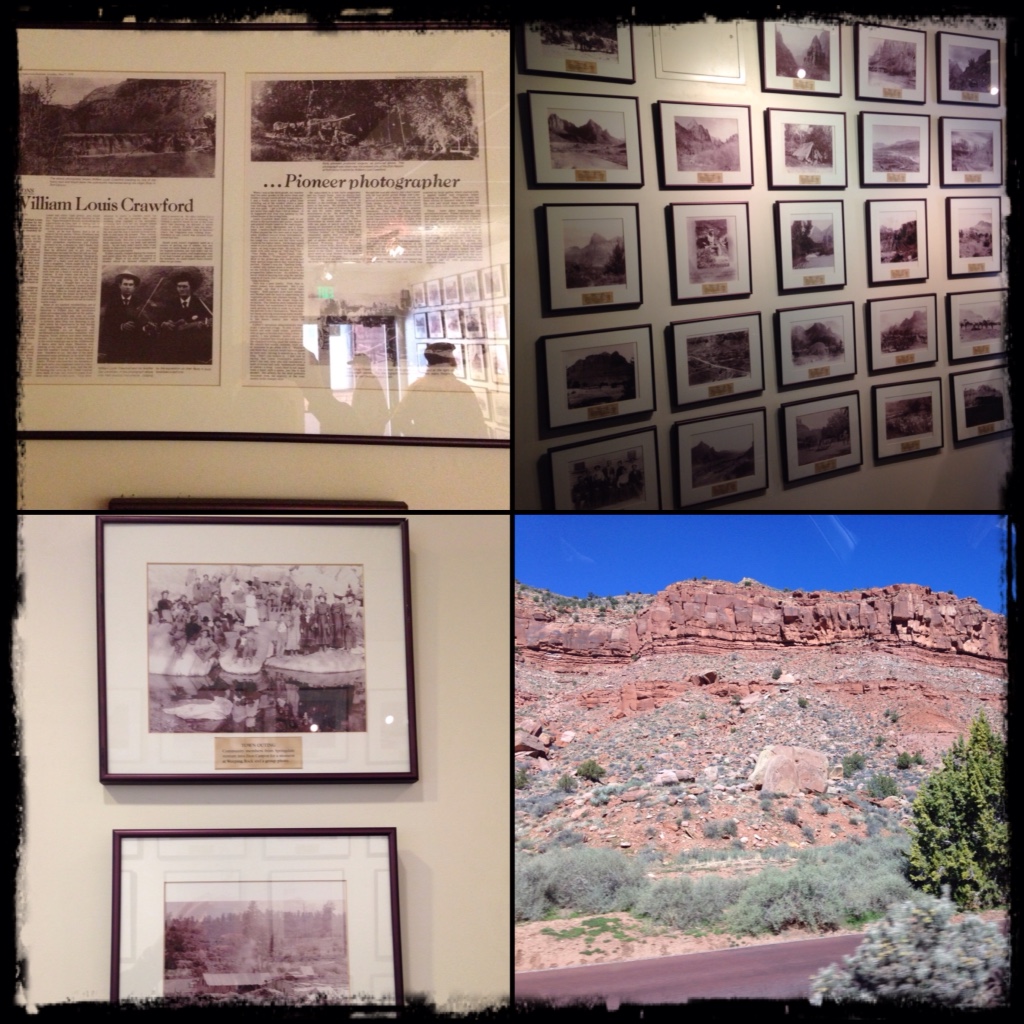
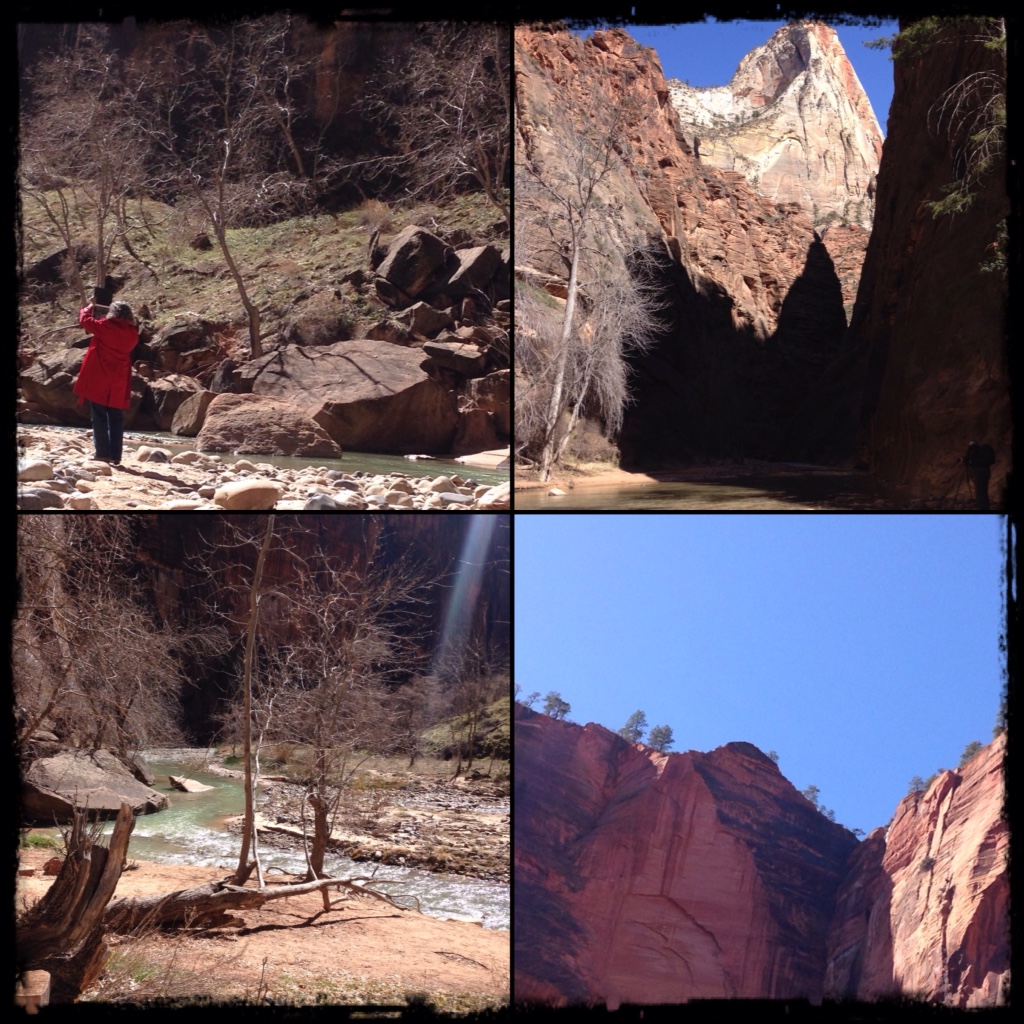
Zion National Park, a must see, when visiting the St. George, Utah area. A wonder of beauty, red sandstone and rugged terrain.

Winding roads lead to nine various points of interest, walking trails and many many photo opportunities. We went up through the 1 mile tunnel capturing some stunning scenery along the way including deer to the side of the road, a missed photo opportunity for those.


Returning through the tunnel we made our way along from the Zion Lodge and through to The Grotto Trailhead. The walking trail here would lead you on and up the path to Angel's Landing. A trail that reaches the summit with the final path being a mere 2foot wide and a chain fence (sorry I mean a chain between two posts and so on!) to hang on. With correct footwear, bit more fitness and during summertime I would think about attempting that one!


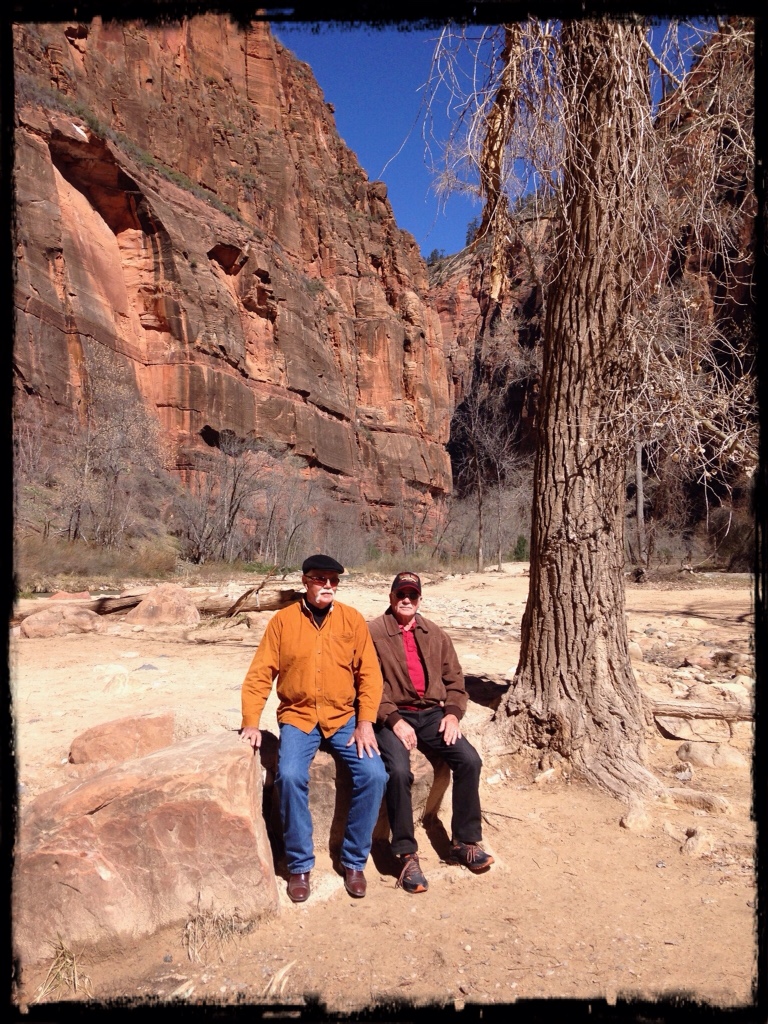
Onward to the Temple of Sinawava. We did the 2 mile Riverwalk trail. Ambling along the canyon alongside the river, the water and it's pale emerald colour which is in fact perfectly crystal clear and exceptionally cool. Yes of course I put my hand in! 🙂


After we got done there we headed back into Springdale to Wildcat Willie's for a great lunch, a beer and well, ended up buying some of the beer glasses!


Next it was get back into town and onto Dixie and TL's for dinner. What a fabulous evening, not only for drooling over every corner of their fabulous home, but for the exceptional company and guests – Dixie, TL, Virgil, Allie, Pat, Twelve Mile Reb, Dusty Garnet and Juan Bad Hombre.

Oh and thanks for the use of your sewing machine Dixie! Love your sewing room 😉

Kat xo

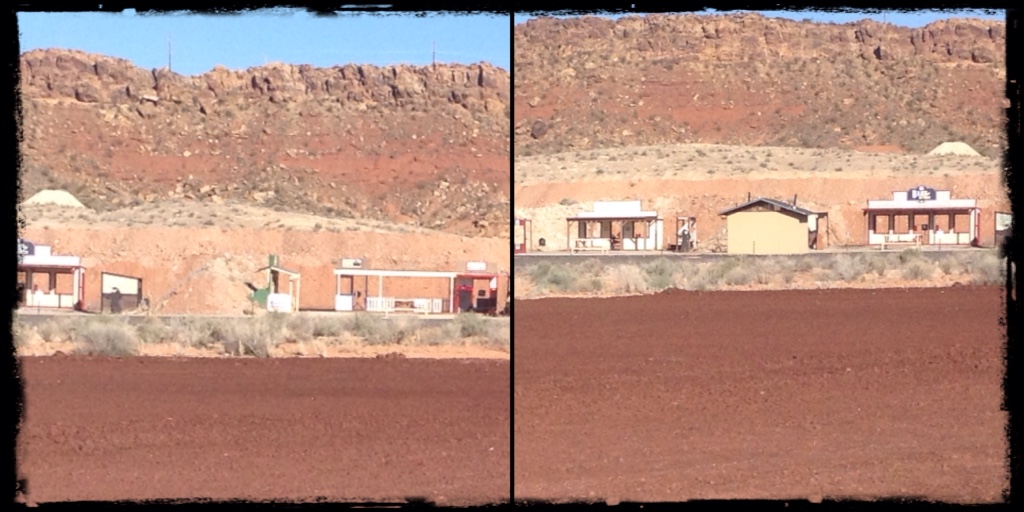
P.S. We did go past the cowboy range where Dixie Desperado's shoot at the Southern Utah Shooting Sports Park! We will come back to shoot one day, enjoy your Wild Bunch club match tomorrow.


Pine Valley and Tuacahn Ampitheatre

Still on Wednesday! After the house, the temple, lunch and a quick trip into Joann's (fabric sourcing) we took a scenic drive out to Pine Valley. On Anne's wall is a painting of a small church which still exists in this quaint little community.

From one side of the red rock cliffs to snow dusted mountains, the scenery certainly is a treat. As we came into Pine Valley, having climbed in altitude, the hills are covered with more snow and there is still plenty of the white sparkly stuff on houses and shaded yards.


Now before I go on, I must share the painting as painted by Roland Lee in 1987.


Here, today hidden amongst the now grown pine trees is this little hidden gem built in 1868. According to the National Register of Historic Places, it was designed after the New England chapel pattern by Ebenezer Bryce, a ship builder who said he was building it like a ship.


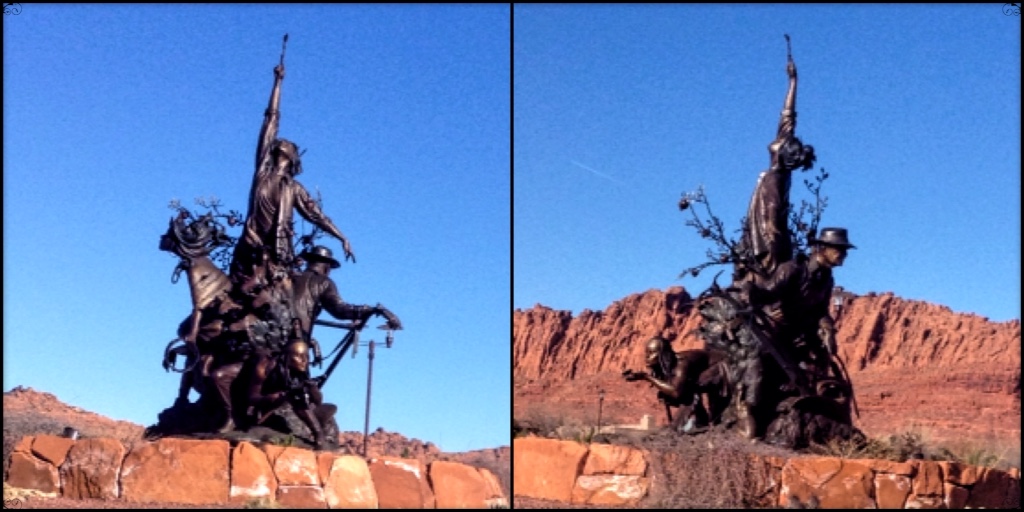
Back in the car when clear across the other side of town through Snow Canyon up through some beautiful estates and can I just say, some very spectacular bronze art on the roundabouts!


Here we ended up at the Tuacahn Ampitheatre, all natural, red rock backdrop. Tiered seating and stage, home to the Performing Arts College, this place would be an awesome acoustic experience for concerts, plays and more.


Another great day!

Kat xo


Brigham Young House and Temple

We headed out to further the Mormon experience of St. George and took a tour of Brigham Young's winter home.

He would come here from Salt Lake City to avoid the cooler climate and get a little relief from his rheumatoid arthritis.

Into the little white side building we commenced the tour with Elder Johnsen.


In the beginning Joseph Smith, having written the Book of Morman, was the first prophet of the church. He had been driven out of New York into settlements in Missouri and on from there.

Haun's Mill Massacre, 2,500 men rode in and killed many Mormans, tar and feathering Smith and driving many others out of Missouri.

Whilst Smith was undergoing all this, Brigham Young was taking care of business. He sent many families north and south to settle and create missions at both ends of the spectrum. People with different skills were sent to create functional settlements.

By 1861, 79 families were established here in St George and a further 360 families were later sent down to the cotton mission. A lot of the families were from the south, and having experimented with cotton in previous years, assisted the mission in cotton production, hence where the name Dixie came from.

Cotton provided for their needs during the Civil War. Later it was more viable for them to buy rather than produce it themselves and so the cotton industry faded out. The cotton mill still exists today but has been restored and used for other purposes.


They also established a silk industry here and the tree in the back yard is one of the original mulberry trees. Young taught the people to be resourceful and to try different things, it also allowed them to decorate with the silk.


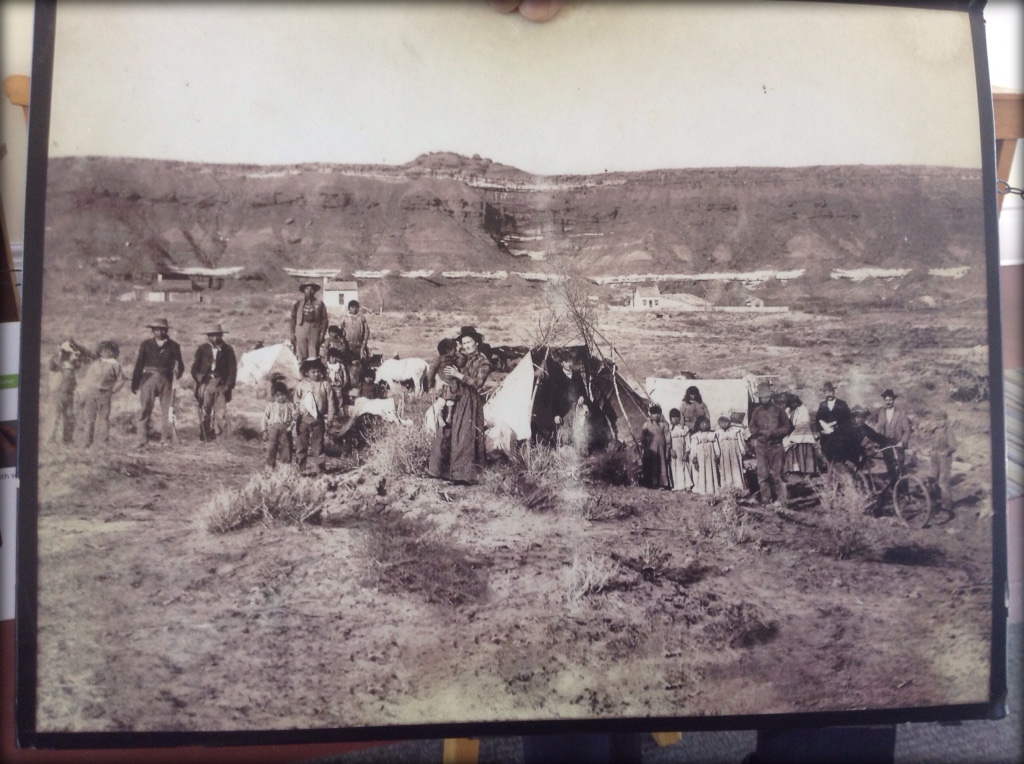
This is what St George used to look like when they first came to settle – looking towards the red cliffs. I'm sure they wondered why they had been sent here to such an unforgiving looking place at the time.


Zion, as it was called at that time, was why they came because a prophet had made the calling.

Erastus Snow was the guy who looked after everyone when Young was not here, only coming down in later years for winters.

The back section of the home is original of 1871 and in 1873 the front two stories were added. The small white office we had the initial part of the tour in was added in 1876. The office was used for selected brethren meetings. They would work up ordinances for the temple, marriages, baptisms etc.

Young named St. George after George A. Smith. When the communities were getting scurvy he taught the people to grow potatoes and to eat the skins, so they did and avoided getting sick – that's how they came to call him Saint George. When it came time to name the town they went to Young and asked it to be named St. George.

George A. Smith's rocking chair gives an idea of his stature. The Indians called him man who can be taken apart. He had a toupee, glass eye and wooden leg.


Soap, candles, cheese etc were made in the outdoor pantry off the verandah. They often lowered stores down wells to keep them cool – no refrigerators in those days!

Thomas Cottam furniture builder and master woodworker created a lot of the pieces in the house. The timber work is just outstanding and even wih limited resources they have produced beautiful work. The craftsman, used to seeing the beautiful variations of European timbers and hardwoods, only had the softer, plain pine timber from Pine Valley. So the various timber 'look' is actually grain painted and stained to create the oak and cherry.

Interesting fact: The bee hive significance means worker, industrious. And indeed everyone worked hard and they have created many industries.

Like most houses the parlour was where entertaining was done. The table in the centre – pine – was his original table but looks like cherry. The 'marble' fireplace original is also timber and painted using a feather. See! techniques we use today to create faux techniques were being used in the 1800's!!


Brigham Young passed away when he was 75 years old. A very learned man despite only 11 days of formal schooling. He is known as one of the greatest colonisers having settled 400 areas between Alberta, Canada, South California, parts of Mexico, and Polynesian islands.

He had plural wives but his wife Amelia, unable to have children, helped with various affairs, and looked after him with his rheumatism and had a wonderful singing voice. The box piano although not hers is similar to what she would have used. The box piano so named for the legs and pedal sections being removed to transport in an open wagon.


Again the fireplace in the dining room, although looking like marble, was indeed painted pine. The temple sketch on the wall was drawn from a dream Young had about what the temple should look like.


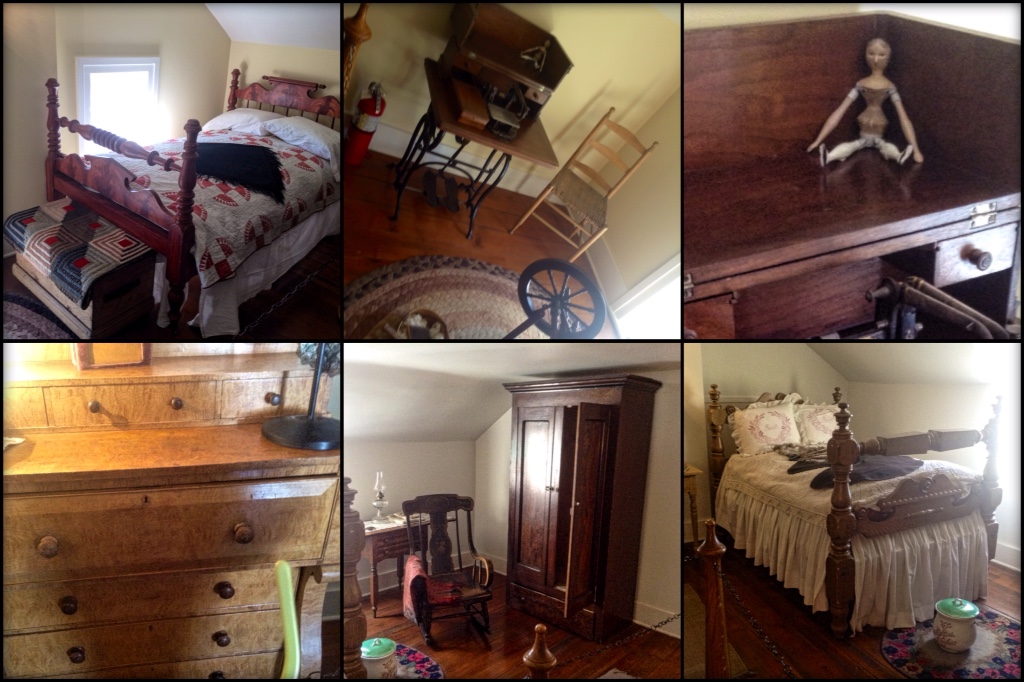
The hired help stayed in the upstairs room and were not to be called servants. They were all gods children and deserved to be treated equally.

The doll on the pedal sewing machine was one of 13 Cottam had made for the girls (he probably made tops for the boys).

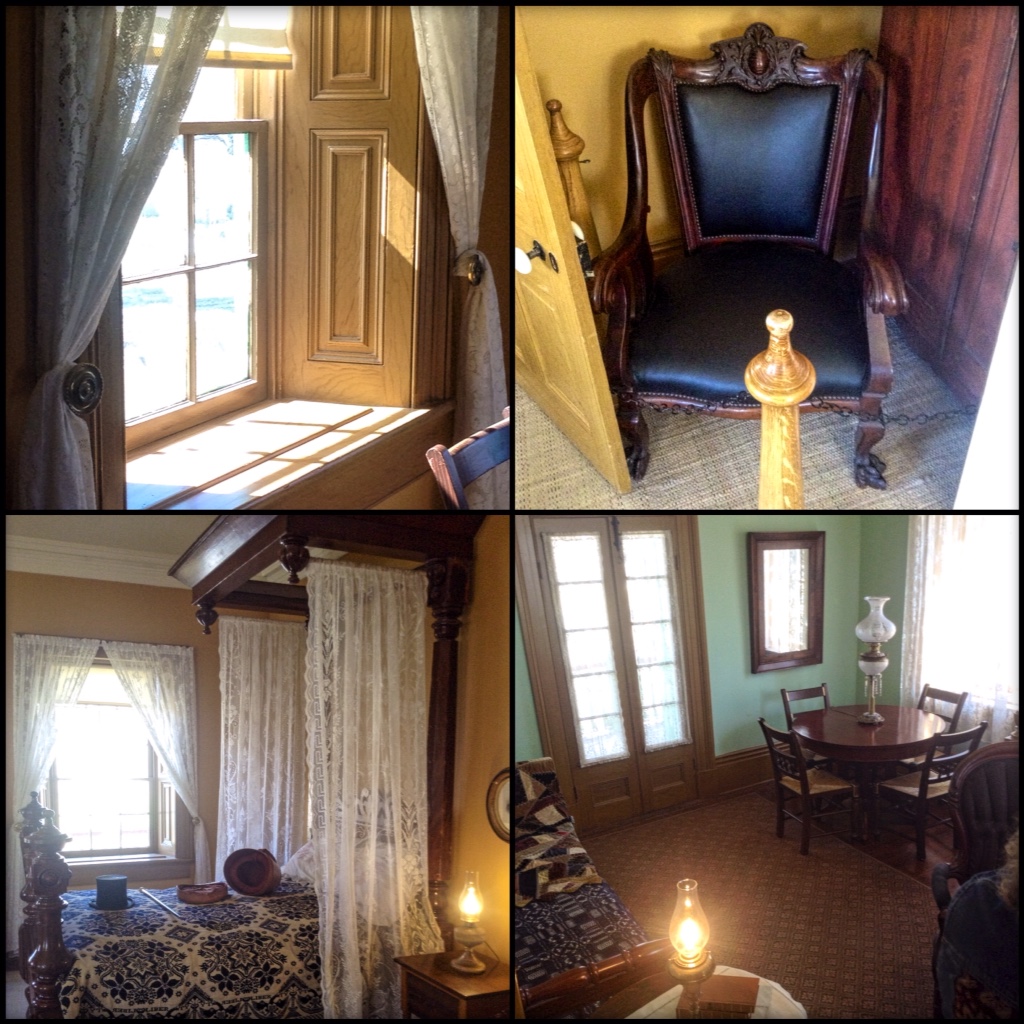
The bed, armoire and chair are all original. No 'built in' wardrobes in those days as it was treated as a separate room which meant the house could be taxed more, hence armoire's were used.


The windows are beautifully detailed, Young said that the sunshine flooding the room also reminded him of the lords word flooding his life.


In his room is the chair that his portrait was taken in. The feet of the chair were lions feet – he was known as the lion of the lord. The pineapple on the back of the chair signifies hospitality. Check out this chair! Pine of course but upholstered in horse hair! Extreme resourcefulness.


All the Mormon people we came across are very quitely spoken, although passionate people. Not a lot are from the direct region as we found out when we visited the St. George, Utah Temple.

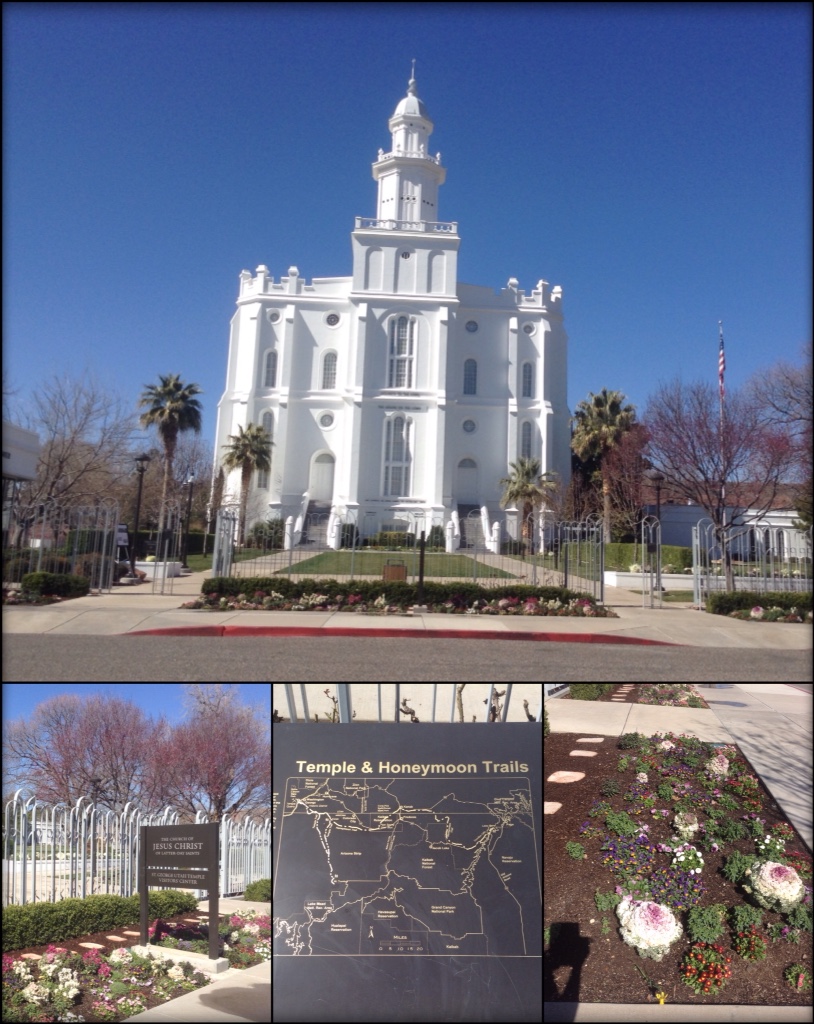
The Utah Temple was the first to be dedicated in the West. The people were given the task of building the temple and did so before ever building their own homes. It took them an amazingly short 18 months to build. It was built with red sandstone from the red cliffs and was coated with gypsum to seal it. Hence the gorgeous white we see today and it's illumination of a nighttime is a spectacle on its own! It has recently had its clean and repair so we are lucky to be seeing it in its pristine glory.


The smaller tabernacle further in town is currently being refurbished for seismic protection. None of the tabernacles, churches or temples for the Latter Day Saints have a cross on them as they believe Christ still lives among them. Some may appear to have a cross but they are in fact weather vanes.

In the visitor centre we saw how the lead filled canon was used to pound rocks and earth for the foundations of the temple – perhaps a better use for a canon. The centre also shows a timeline from 1871-1877 of the colonisation and subsequent building of the temple, all the while with full glass windows and the temple as a backdrop – today against perfect, cloudless blue skies and manicured lawns.


Into the explanation room and their are pictures of some of the rooms within the temple. You aren't allowed in the temple (as an everyday person) once it has been dedicated, unless you are a member of the Church.

The baptismal room with its full plunge pool features cows around the base symbolising the twelve tribes of Israel and are facing outward to signify the word reaching all wherever you may be.

The celestial room is a place for reflection, no phones, no clocks, no technology, and you would sit in silence or speak in humbled tones and quite voices.


All the Sisters and Elders are from all across the globe. The girls are sent on mission for 18mths and the boys 2years. We spoke with one from France, Chile, Texas, Washington, Brazil.


St. George, Utah is indeed a city steeped in religious history. Whether you are religious or not, this history formed what is today. The trials, tribulations and monumental tasks settlers undertook, makes for a very interesting and insightful visit.

Kat xo

Wednesday, 2nd March


Jacob Hamblin House

Santa Clara, part of Washington County, Utah, is the original settlement of 1854 in the St George area.

We visited the home of Morman missionary, Jacob Hamblin and had a short tour talk by Sister Bunnting.

Along with 6 other families, he was sent to the Santa Clara area by Mormon prophet Brigham Young (for those of the modern day world, you should remember that name from the Hell On Wheels series) into the Cotton Mission known as 'Dixie'.

Jacob Hamblin was a missionary and conduit to the Indians for many years, living with them and assisting in the movement of Indian trains to California. He wore a red bandana which symbolised he was a friend to the Indians.


He was trusted by the Indians and often stood up for them in dealings with the Government and other people. He was a quite shy man who never showed anger or fear as that was known as a sign of weakness to the Indians.

The fort the Mormons came to in Santa Clara was situated close to the Santa Clara River. When the great flood of the Santa Clara and Virgin Rivers occurred in the 1800's it took out 3 sides of the fort. Hamblin then built this house high up on the hillside where he hoped another flood would not reach them.


At the time he had 2 wives, one in each of the front side rooms and of the 24 children they raised (some were adopted) 10 lived in this home. Jacob would have slept in the central room.


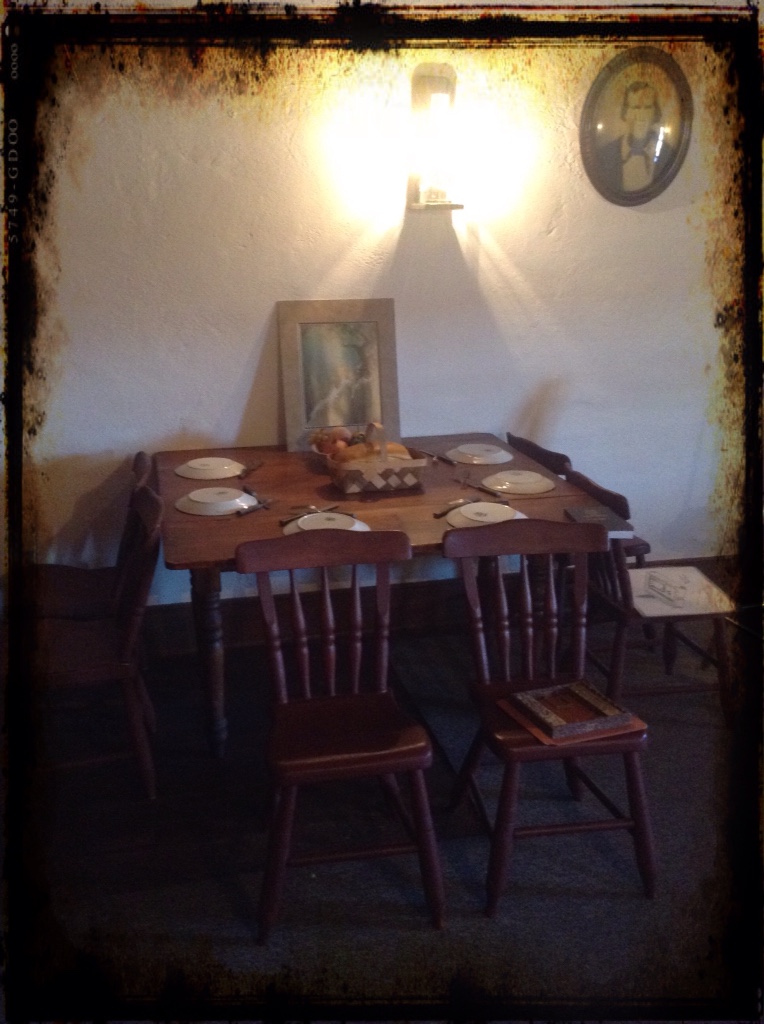
The table setting interestingly enough is set as they used it then. Chairs were turned facing out so you would kneel to pray before eating. Once prayers were said you would turn your seat around to eat. The plates were set face down literally to avoid dust and dirt on your plate but no explanation as to why the silverware (cutlery) was placed as is.


Later a room was dug out at the back of the central room and used as their root vegetable cellar. The saddle displayed in this room was Jacob's. The pouch on the side of the saddle was for his scriptures and although he carried a gun he believed the word was mightier. The hobbles hanging on the wall were used so the horses could graze without wandering off when he was out on missions.


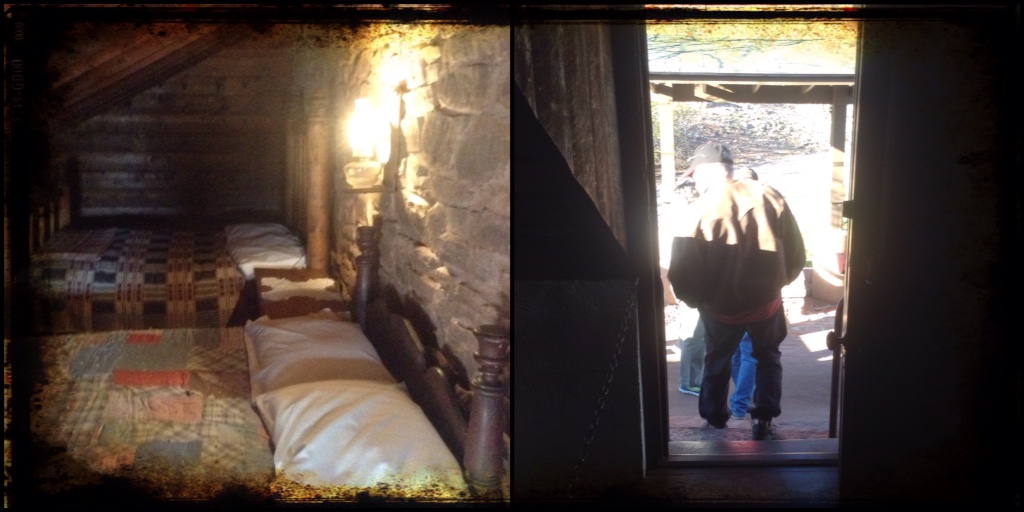
Into the left front room and on the mantle is pictures of two of his wives. There has been no picture of Rachel found but these are of Priscilla on the right and Louisa on the left. The furniture, quilt, rope beds and straw mattresses are all original.


Ascending a very narrow staircase into the upstairs room which was for the children for sleeping, church, schooling, teaching carding of cotton ready for spinning etc.

The central door on the front wall leads out to the slanted verandah roof where they used to lay food out for drying.


When they extended and dug out the hillside for the root cellar an additional upstairs back bedroom was added for the girls to have privacy.


Going outside the door to ground level the final piece of the tour was the rock piece displayed. When his wife Rachel died in 1865 he was away and he was so distraught that he couldn't be there to grieve with his children that he carved his name into a rock and the date she passed away. The petroglyphs on the rock are reportedly to have been there at the time of the inscription.


Anyway for a really brief bit of insight into Mormon roots and the cultural history of southern Utah this was a great little tidbit to start with.

Kat xo

For more info go to https://en.m.wikipedia.org/wiki/Jacob_Hamblin

https://en.m.wikipedia.org/wiki/Santa_Clara,_Utah


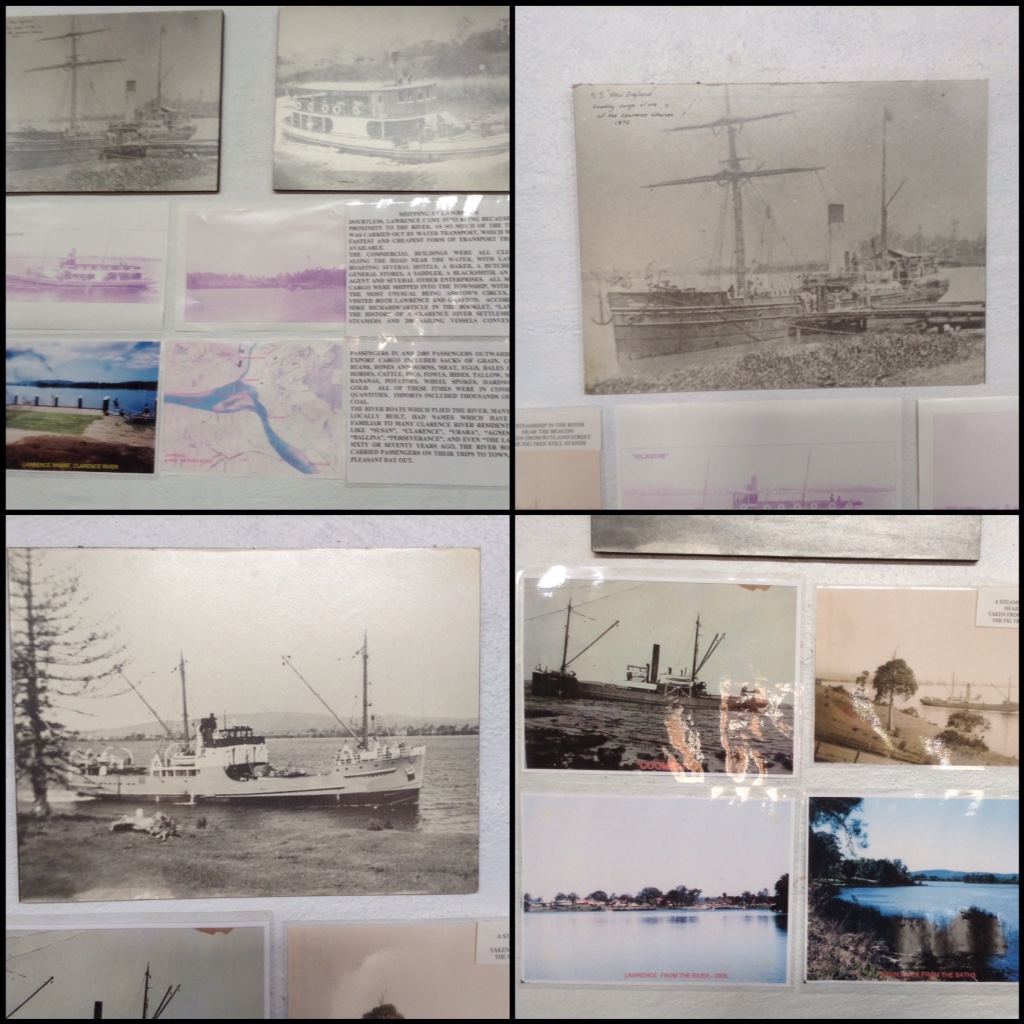
Lawrence of Clarence River

I amuse myself, Lawrence of Clarence River, thoughts in my mind was Lawrence of Arabia, I know, it's different. Just my twisted mind.

The little town of Lawrence, established 18 something, sits on the banks of the mighty Clarence River on the north coast of New South Wales. 18something!? You say. Well yes, 18 something, I can not find a specific 'established' date for this tiny little town steeped in history.

Photos within the museum tell me that it was a town more than likely around the 1860's. Public education certainly existed during 1864 however the school buildings foundation was not laid until 1880. Many other major buildings were not erected it seems until around the 1880's either.


Past recollections of previous generations, tell stories of Lawrence being a busy little port with many wharves, a great number of boats hauling up and down the river, 3 hotels, 2 large sawmills, 2 general stores, a bank, and a butter factory!


Loads of potato's were shipped, timber, duck hunting seasons existed back then in Australia, the timber industry in the area was booming and for a price illicit rum could be procured from the surrounding bush areas. Bit like being able to procure white lightning from the hills of Kentucky I imagine.


Of course these days Lawrence is very much a sugar cane growing area and from Paddlewheel and Emeralds place it is not uncommon to see the occasional cane fire burn off.

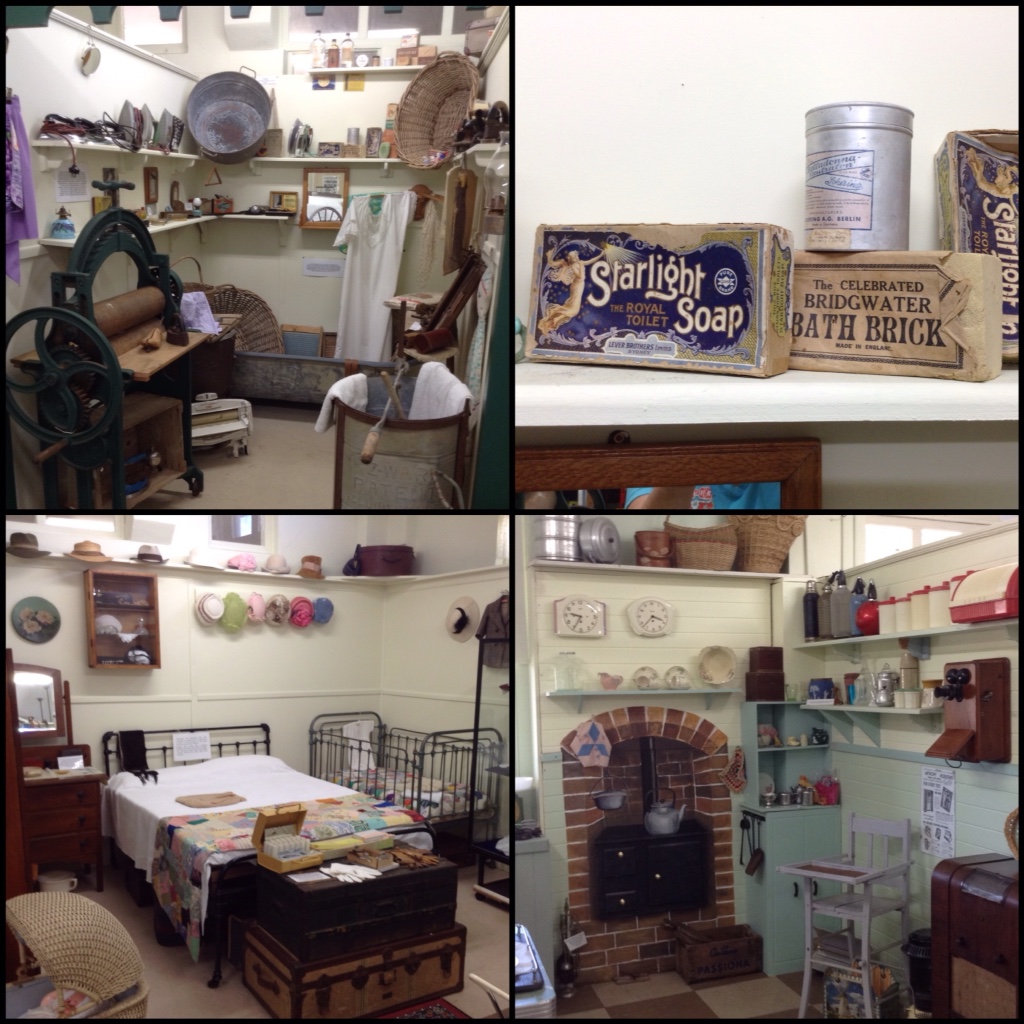
I mentioned the Museum. The Lawrence Museum is housed in an old radio station building. 2NR was the station. It has been stripped out – some radio gear preserved for history – and now has been set up as different rooms.

There is the kitchen area items, the sewing room with a beautiful display of sewing machines, merchandisers cards of needles, buttons, patterns etc.


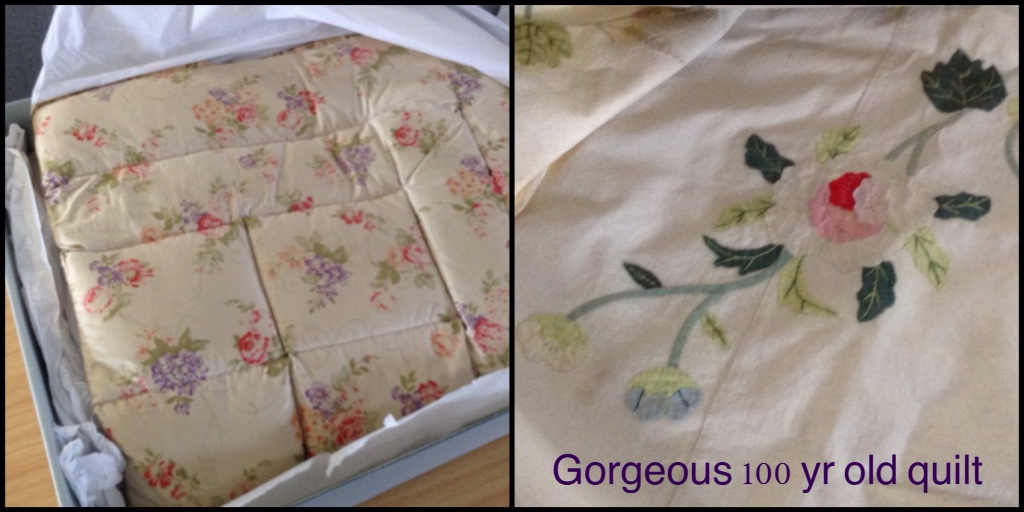
The bedroom is kitted out with baby linen, old quilts, beds, etc. The parlour with musical instruments, tea sets, and a gorgeous old wedding dress.


There are War related displays which are yet to be revamped as there are many more pieces to be included.


I was genuinely impressed by the hard work and efforts that the volunteers carry out here. They are to be commended.


To finish this quick afternoon tour, we stepped outside to leave. There are some out buildings filled with farm implements that I didn't go take a look at as it was near closing time.

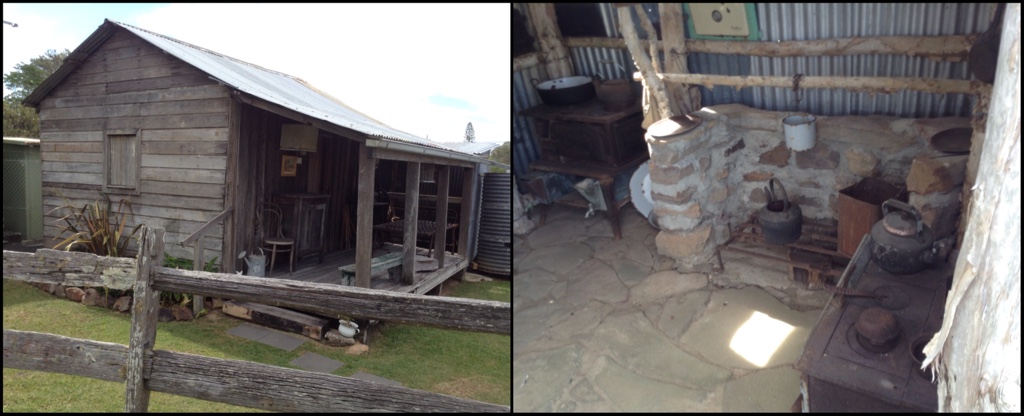
I did take a quick look at the very small cottage that housed a family with 8 children at one point! An interesting story in itself, the tiny cottage was home to a gentleman named Edward Ramsamy. Known as Ram Chandra he was, in later life, instrumental in assisting the Commonwealth Serum Laboratory with an antivenene for the deadly Taipan snakes.


So there you go! A little bit, about a small town alongside a big river. Thanks Emerald for taking me to see it!

Kat xo

20th November 2016


Remembrance Day

We held our minute silence on Friday 11th at the 11th hour in memory of all veterans both past, present and across continents.

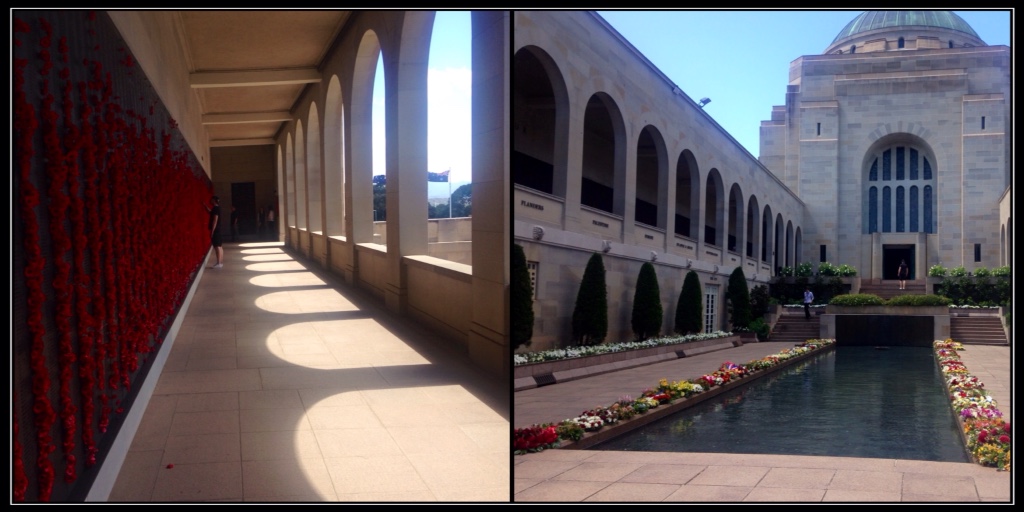
Saturday afternoon however, we took a quick trip to the Australian War Memorial in our nation's capital. This trip all I wanted to do was to at least see the Hall of Honour, the reflection pool and the tomb of the Unknown Soldier.


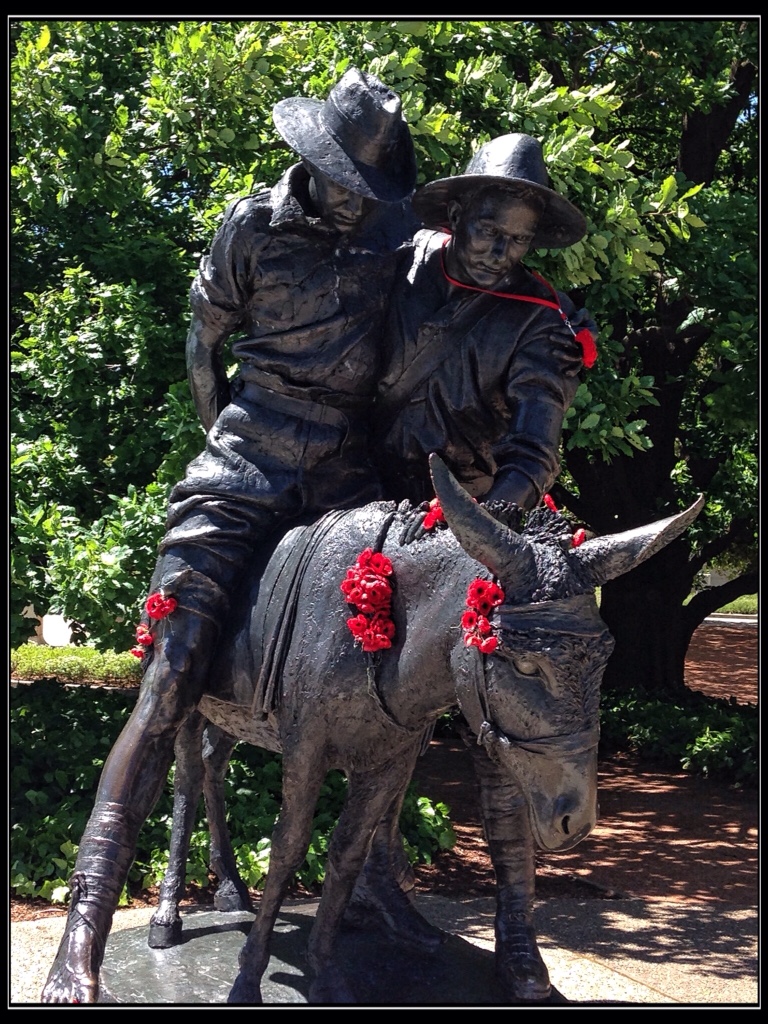
Simpson's donkey is covered in red poppies from the previous day's memorial service. A bronze tribute to John Simpson Kirkpatrick. Recognised for his bravery and compassion, he and his donkey carried water up to troops through Shrapnel Gully and many wounded soldiers back down to Anzac Cove.


The flags even seemed to fly with pride in the clear blue skies and moderate winds, against a backdrop of Anzac Parade, through to both the old and new Parliament house's.


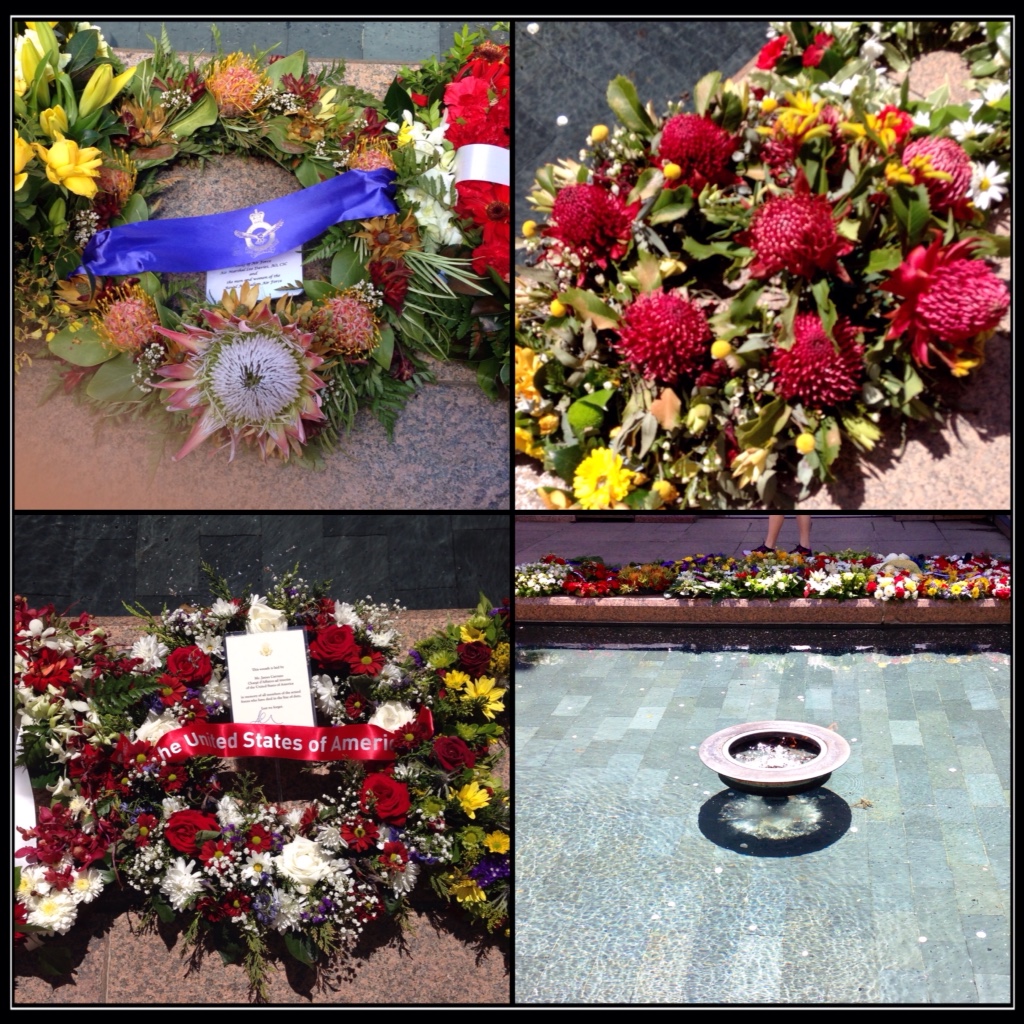
There are many visitors coming and going as we make our way up the stairs and into the Reflection Pool area. The wreath's still lay around the pools edge, and it's really nice to see all the Australian native flowers used in many of the display's.


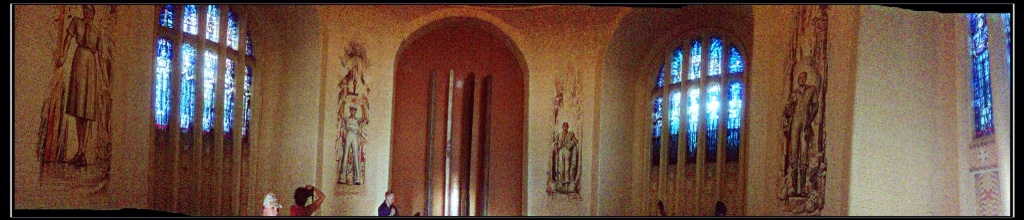
There is much chatter outside by some but I was glad that upon entering the tomb of the Unknown Soldier everyone was respectfully silent. This hall has always been my favourite with its beautiful stained glass windows, ornate ceiling, tiled pictures and reverent setting.


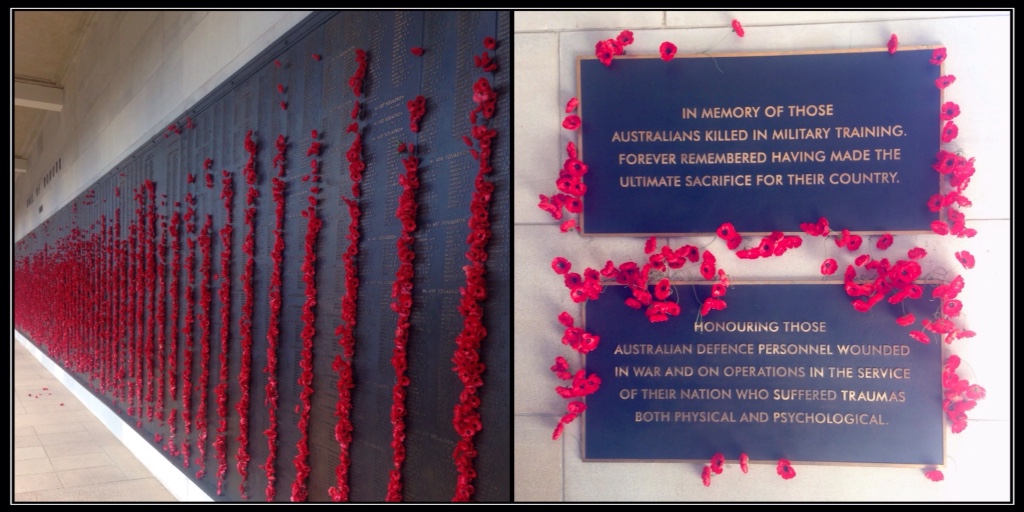
Out into the Hall of Honour the bronze name plaques are filled with poppies and soon I managed a moment of next to no one in these areas for a better photo.


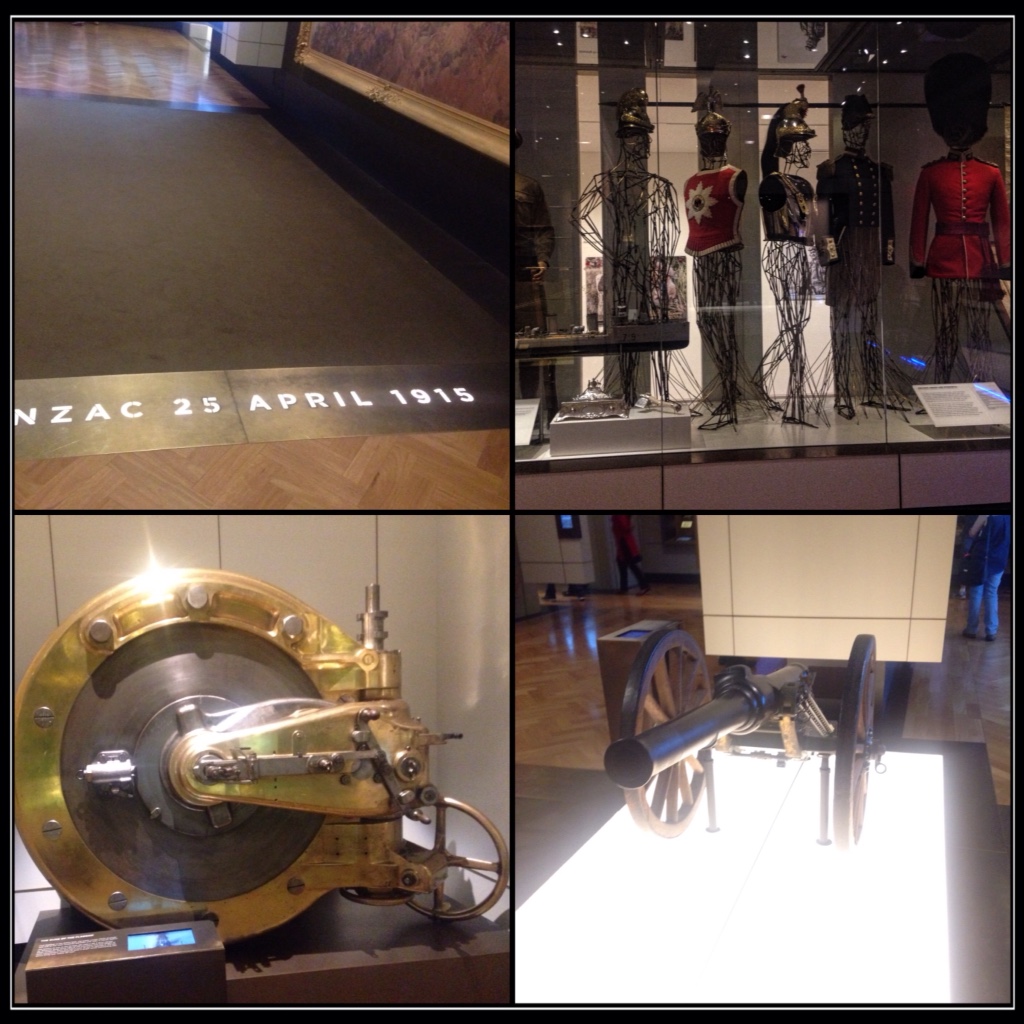
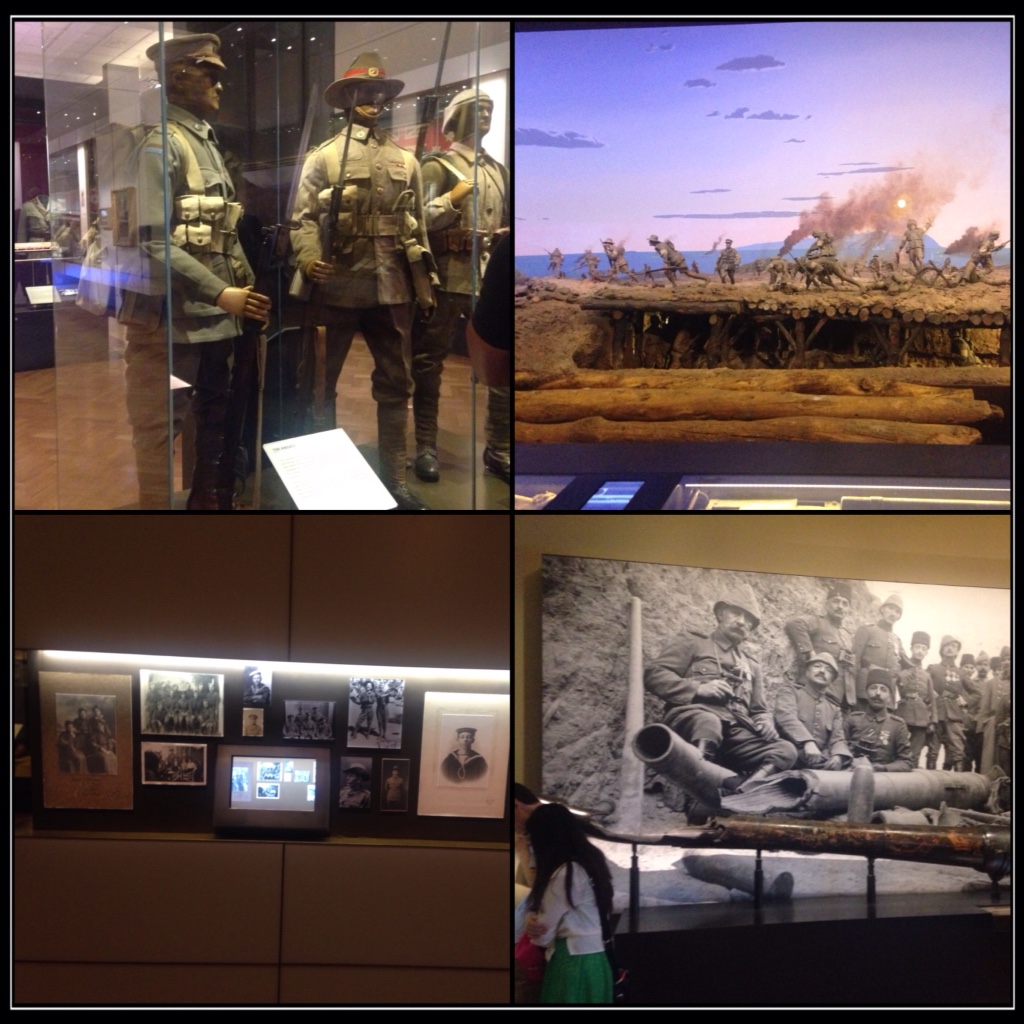
Jack and I decided we should stick our heads in the main museum doors and were surprised by some very new artefact showcases and interactive displays! NOW we need to come again and spend the full day and a bit that it would take to see it again.

We spent almost an hour just in the first entrance to the ANZAC display.


Let us all be thankful for our men and women who have served and are serving.

Lest We Forget.

Kat xo

Nov 12, 2016


Lotz House

The home of the Lotz family built in 1858, occupied for 3 years prior to the Battle of Franklin.

He was a humble man, a woodworker on a 5 acre lot with some animals. Not well to do but would have had better furniture and fixtures than most (not to the calibre of the plantation owners) due to his craftsmanship. His house was a showcase of his talents, both for structural woodworking and for instruments, he had no slaves so everything was done by the family,

Mr Lotz had heard there may be a battle but Federal officials also said that there wouldn't be a battle here, that they had planned a battle for Nashville. Mr Lotz' home was a timber structure and was concerned for his family. Across the way was the Carnton Plantation, there home made of brick. The Carters would allow the Lotz family to come stay with them should a battle occur in Franklin.

The youngest, 2 year old twins, had died before the battle after drinking contaminated or poisoned water the Federals had tampered with prior to the Confederates coming into Franklin.

This family had already endured the rigors of war before the battle had even begun.

One night when a Union officer came knocking at his door Lotz gathered up his family (and his toolbox) and they hurried to the Carnton Plantation.

It must have been difficult for him to watch his house be ruined by unruly soldiers who were merely cold, hungry. They pulled out all his out houses, barns and fences, cut down trees etc and when hungry started killing his livestock for food.

His house was severely damaged from fire, cannon's and bullets. His house was used as a field hospital for both Confederate and Federal soldiers. (Hence the red flag I the picture below)

The Battle of Franklin rendered 10,000 casualties in its short 5 hours. It is said that once the troops moved on the towns folk would see the devastation that would be forever burnt in their memories.

Death and destruction like no other, as he took his family back to their home they literally had nowhere to put their feet that they weren't stepping on bodies. Seventeen horses lay dead in the front yard and no way to move any of them as he now had no stock to pull the wagon. For two weeks they lay there.

The family then lived in the root cellar (where you stored your root vegetables duri the winter), a dirt floor next to no heating during cold weather while Mr Lotz began repairs on the home, mending floorboards, walls, taking out broken windows and boarding up the right side of the house. Burnt boards were taken off and flipped over to be re-affixed. With no nails or anything, Mr Lotz pulled the horseshoes off the dead horses to use the nails for fixing floorboards.

What an overwhelming thought of grief, pride, yet sheer resilience this man and indeed his family had to be able to go on wih their lives.

It took him four years to restore his home to livable conditions. Now Mr Lotz was trying to gain commissions again for furniture and instruments. He built a piano and inlay a confederate flag one end and an American flag the other. A wingspread eagle through the centre had its talons clutching the Confederate flag.

The Klu Klux Klan was a 'good' group in the very early days. They supported Confederate families who had lost loved ones during the battles. They had heard about Mr Lotz piano and they set out to see the masterpiece. At the knock on the door Mr Lotz was excited they may be coming to see his work and purchase the piece however it took a turn for the worse. They were so outraged and felt it dishonourable to show the eagle clutching the flag that after heated discussions took place Mr Lotz was threatened that they would be back to tar and feather him.

Mr Lotz feared they would definitely be back, he quickly packed his covered wagon, sold as much as he could and left the rest, selling his house to the Buchanan family …… And along with it some other items of furniture AND the piano. By the way, he moved clear East to San Jose, California.

For the poor family who bought the home, awoken by a crashing noise, found the Klan had indeed come back and broken into the house, retrieved the piano, took it outside, smashed and burnt it.

Anyway that's all I can remember from Miss Helen's guided tour of the house. No pictures could be taken inside unfortunately. There were some truly magnificent pieces of art, china and furniture. Only a few have been returned to the House historical society that belonged to, or was made or painted by one of the Lotz family members.

You can see on the outside of the house the different cornice above the windows to showcase different styles of his work. Evident also in the very different mantlepieces, staircase and triple crown moulding he had carved and made using hand tools.


A humbling, interesting end to a long day.

Kat xo


Another Monday Meandering

A beautiful day today for meandering across the countryside…..yes would have been nice to shoot in this but nicer to travel with no rain.

Went down Old Frederick Road this morning on our way out of Thurmont and took a small detour onto Utica Road to the Utica Mills Covered Bridge. The original one was built in 1850 and originally spanned the nearby Monacacy River. It was washed away in a storm in 1889. It is said that locals gathered the remaining pieces and reconstructed the 101ft long Burr arch truss bridge at its present location crossing Fishing Creek.

These are really cool, one of three in the area, they are all painted red. Apparently there used to be 34 of these around Frederick County.

I think they are gorgeous but wonder why they felt the need to cover them? Will have to look that up.


We are heading south to Harpers Ferry, West Virginia and Winchester, Virginia

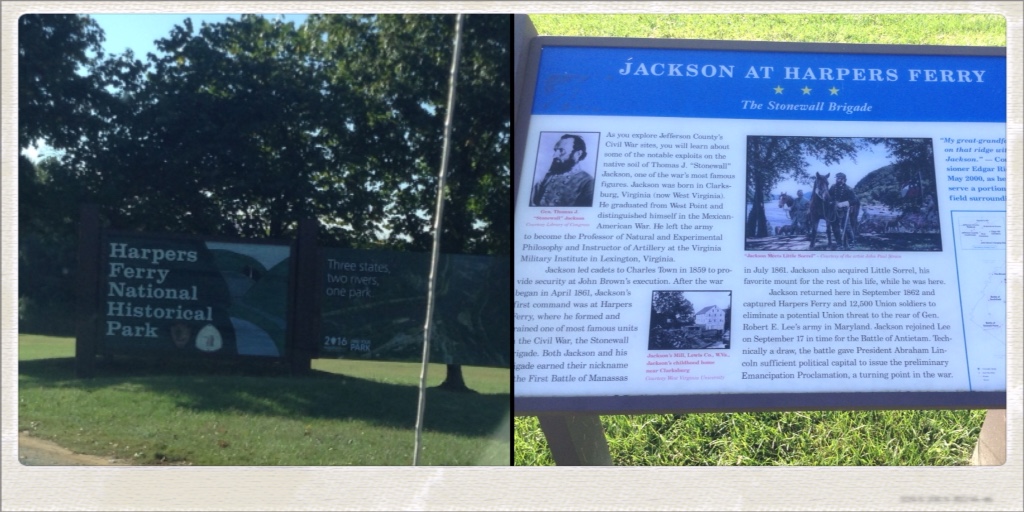
Harper's Ferry National Historic Park – more Civil War history and where the first large-scale Federal occupation began in February 1862. Harper's Ferry remained an important communication and supply line for the Union and keeping the northern Confederate invasions out.


This is the place where you can see two rivers and three states merge.

Parking the car, we then took a shuttle bus down into the town of historic buildings, museums and landscape vantage points – no parking down in the town. Buses run every 12-15mins.

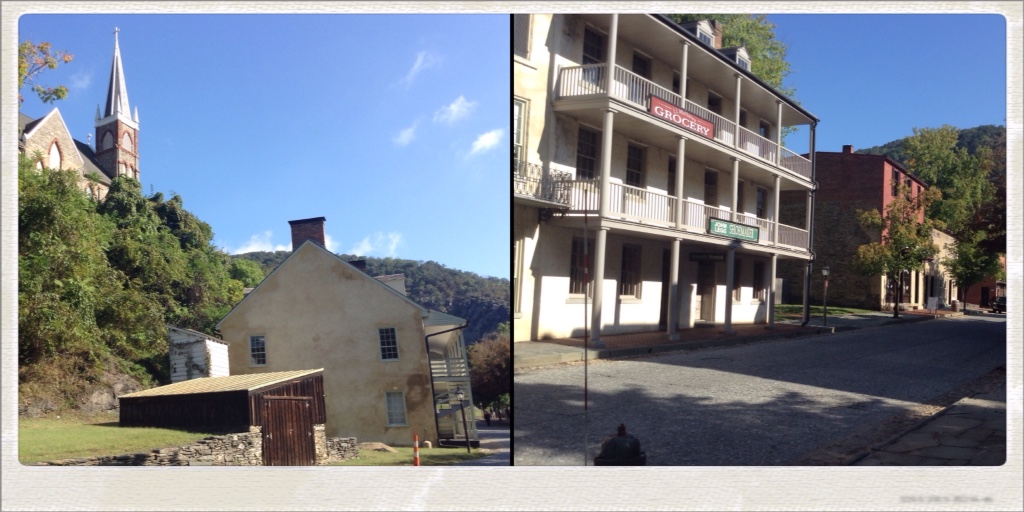
St Peters Church, the only one that operated during the Civil War I'm told, not sure whether that was just this area or in all regions(?).

The bus trip had a small tour guide playing over the speaker system giving you a brief overview of the town both past and present. The Winchester and Potomac Railroad ferried goods to both sides of the war.

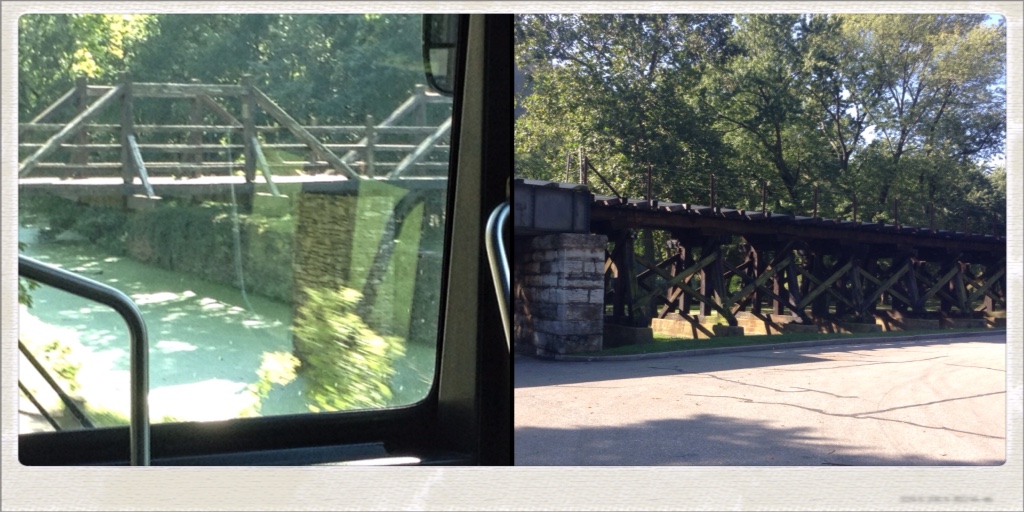
The small canal off to the side of the road used to have boats and ferries going down it, using as a bypass to the rapids on the shanendoah.

The canals also diverted water down to the mills and factories. A lot of stone for the buildings mills etc came from this immediate area. We passed the ruins of one of the mills and the canal walls that have been built from the rock.


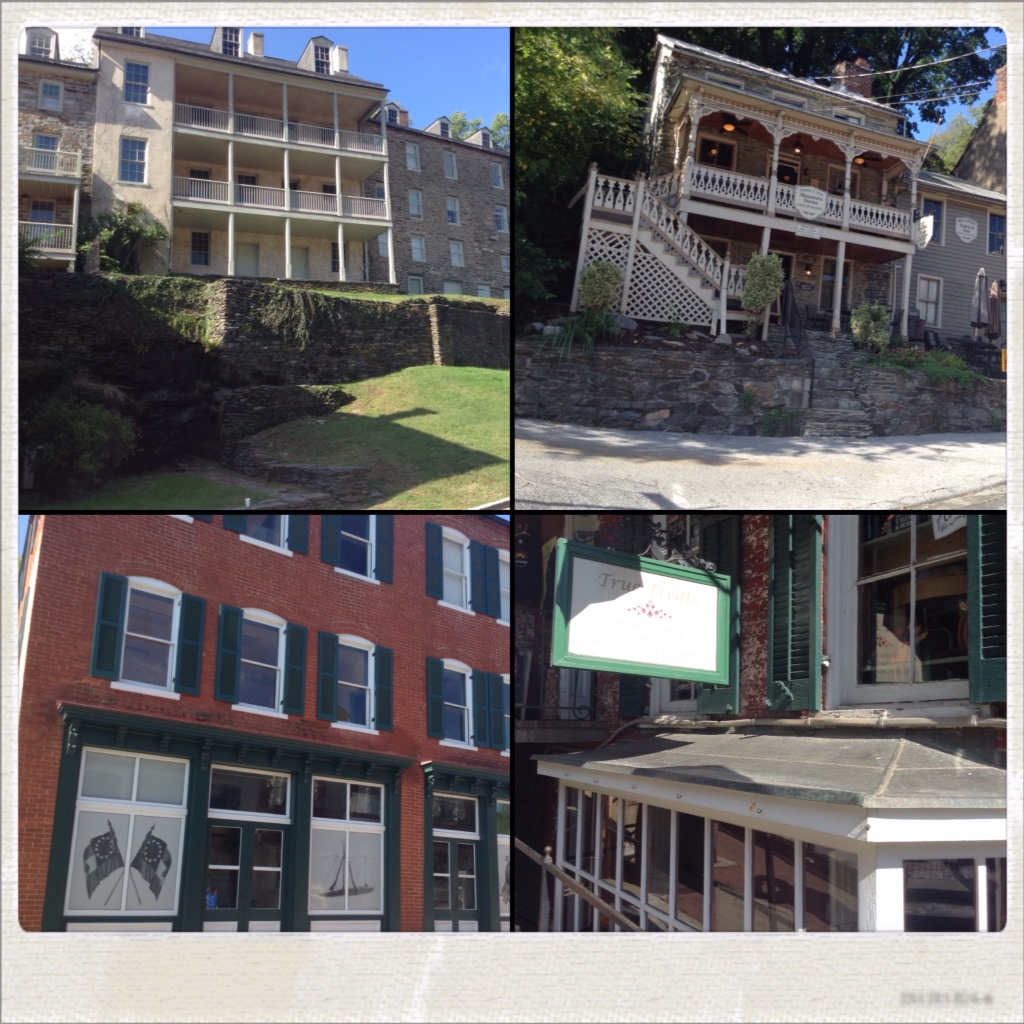
Into the town we pass some fabulous old buildings and went into the dry goods stores, some of the buildings have exhibits in them.


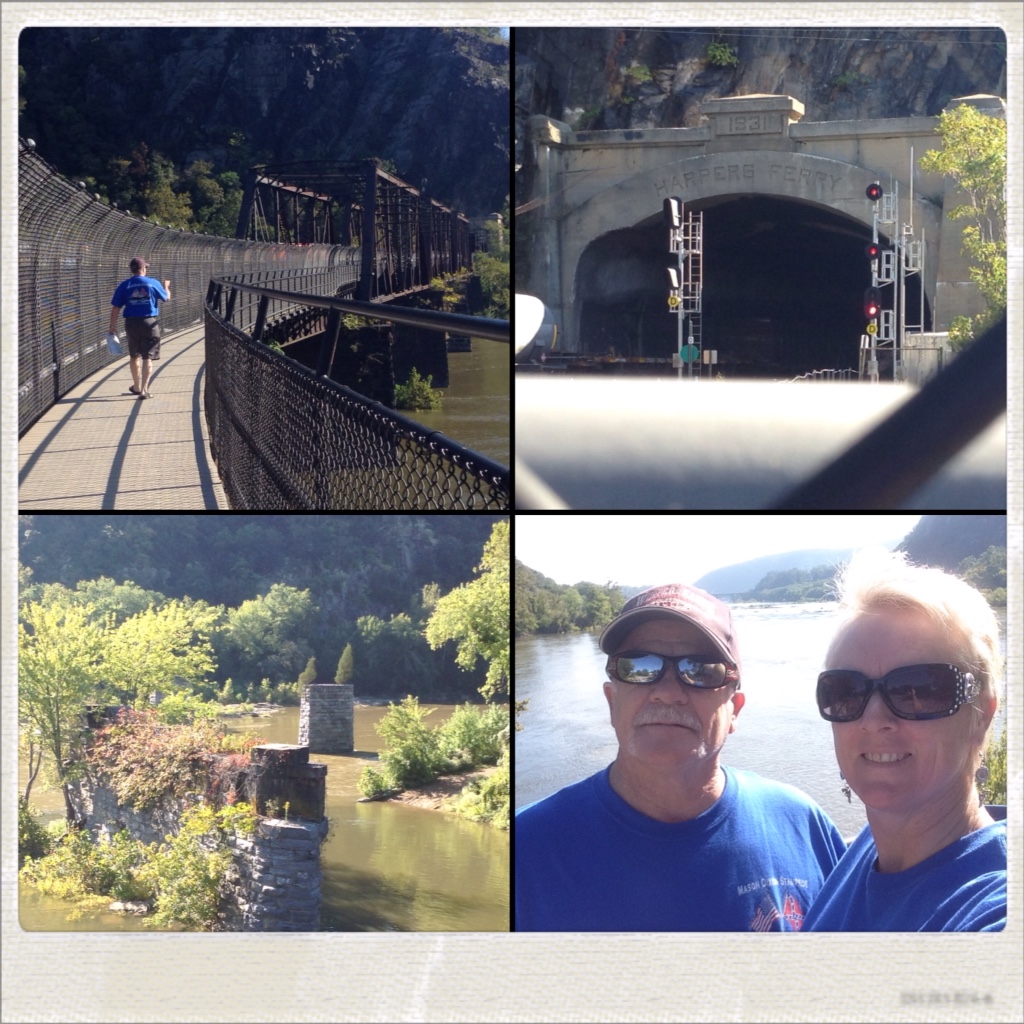
We walked past the John Brown armoury building and down to the view of the river. Took a quick walk across the rail bridge and back again.


In and out of buildings, housing museum artefacts and an I nsight to history.


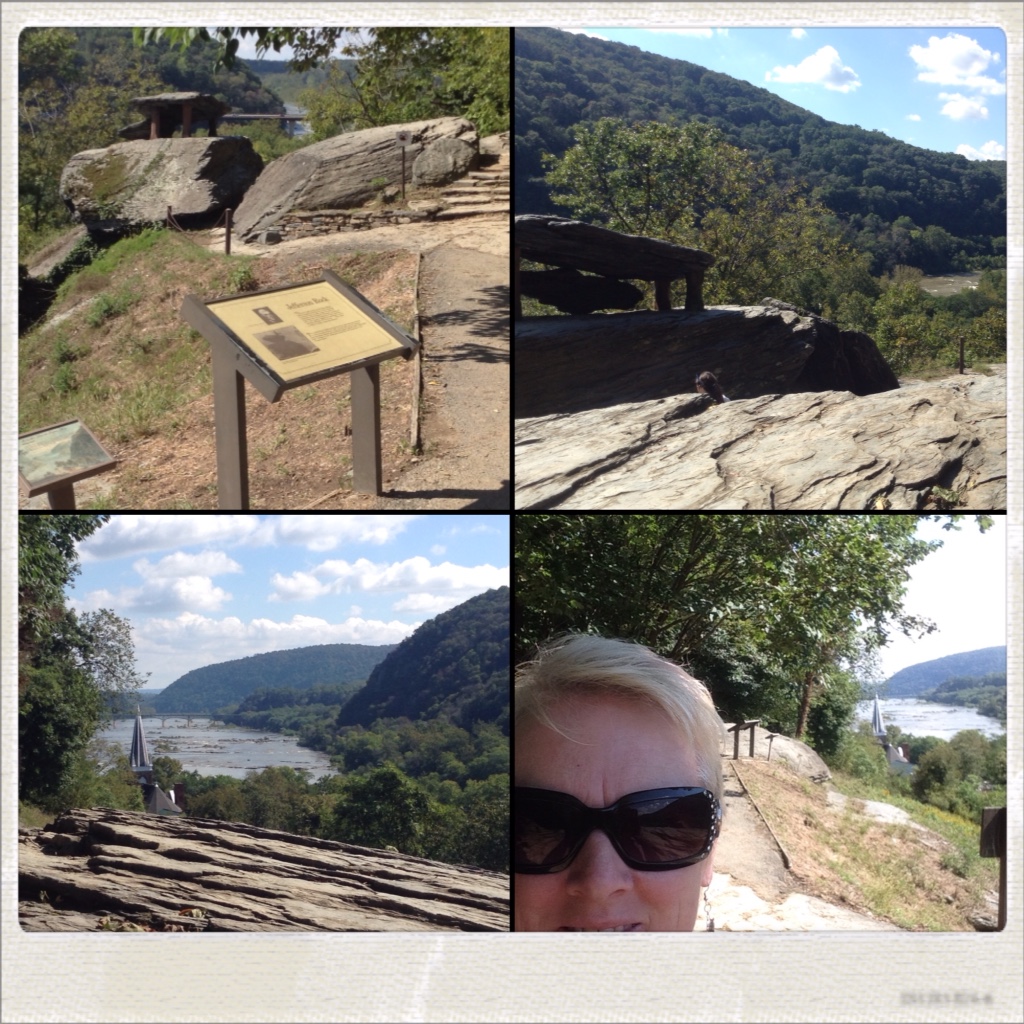
We scaled the stone stairs to the St Pauls Church and then I went beyond to Jefferson's Rock to see the view – three states, two rivers. The decline is much easier back past the Episcopal Church ruins. It made for a nice snapshot back through to the river and the railway tunnel beyond.


On to Winchester but feeling slightly worn, we hit Hobby Lobby for some haberdashery, stopping the big in Salem, Virginia, we are heading for Tennessee.

Kat xo


Gettysburg, Pennsylvania

We are now in Thurmont, Maryland.

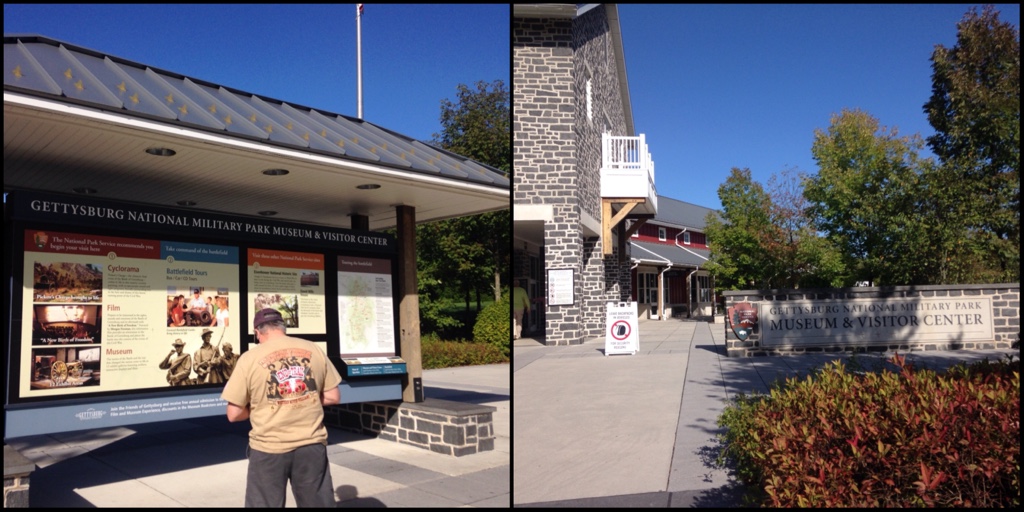
Taking a short trip up into Pennsylvania, Tuesday and Wednesday were spent at the Gettysburg National Military Park. Sensational! To say the very least!

The first thing we did was bought tickets to the Film, Cyclorama and Museum.

The film was narrated by Morgan Freeman (love his voice) and there was so much to see on the big curved screen, my eyes were darting everywhere trying to take it all in.

It was pure genius, a visual sensation, beautifully done by the History channel, the 1863 Battle of Gettysburg. The Civil War battle that took place over July1-3 of 1863.

Total casualties for the three days (killed, wounded, captured, missing) of fighting were 23,000 Union, 28,000 Confederates.Incredible numbers fought, lost and won during that 3 day campaign with Robert E. Lee as the Confederate commander and George Gordon Meade, the Union commander. 70,000 Confederates went up against a Union army of 93,000 on that 1st day in July.


Next when you exit the theatre you are taken up into the viewing room of the cyclorama. (Cycloramas – a 360deg view panoramic painting of a scene, viewed from the centre, often with music or narration, first developed in 1787 – popular in the early 19th century)

A spectacular vision of sound and light, as if you were standing behind Union lines. It is the largest oil painting in America. Painted in 1884 by Paul Dominique Philippoteaux, it came to Gettysburg in 1913.

The 377ft painting debuted in Boston 132 years ago and in 2008 restoration began for this project.


It truly is magnificent and the detail incredible. The artist has even included himself in the painting as his signature. See the picture below of the bearded officer leaning against a tree with sword over his leg,


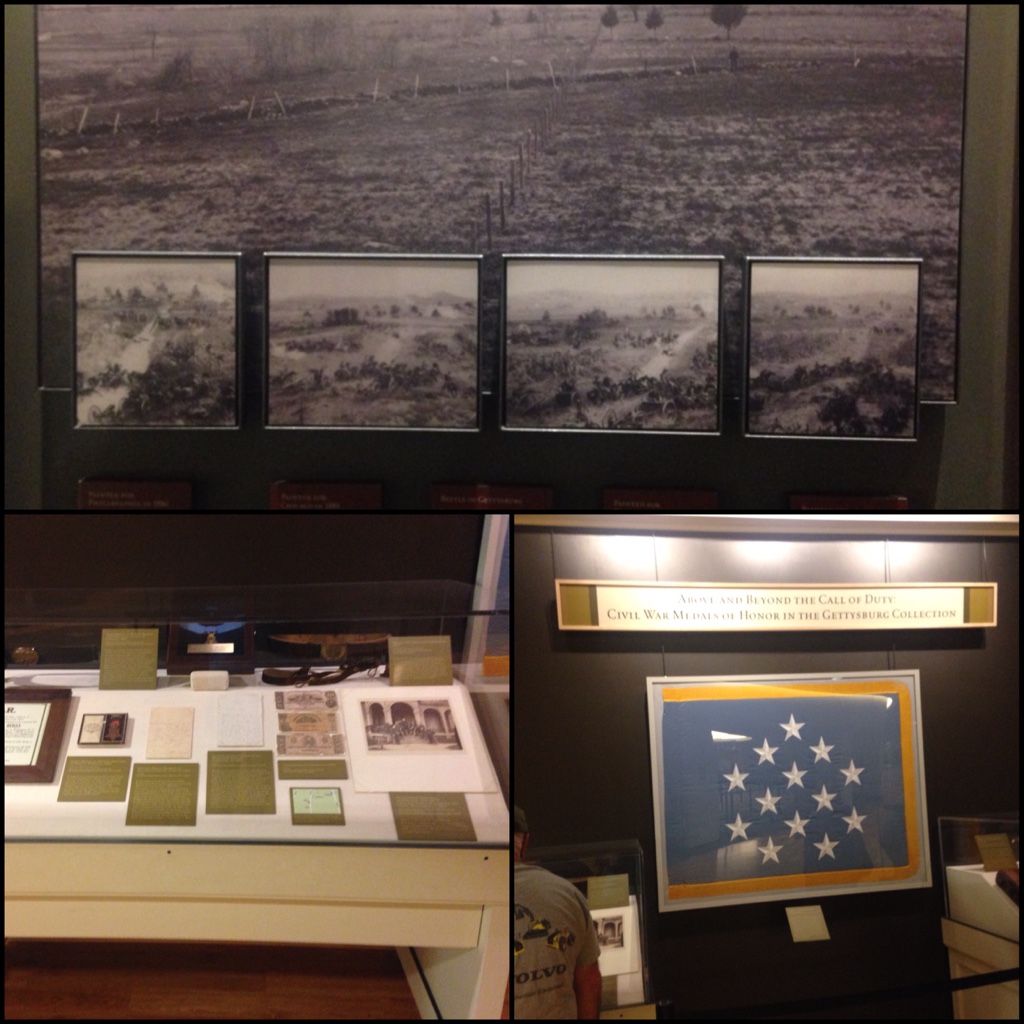
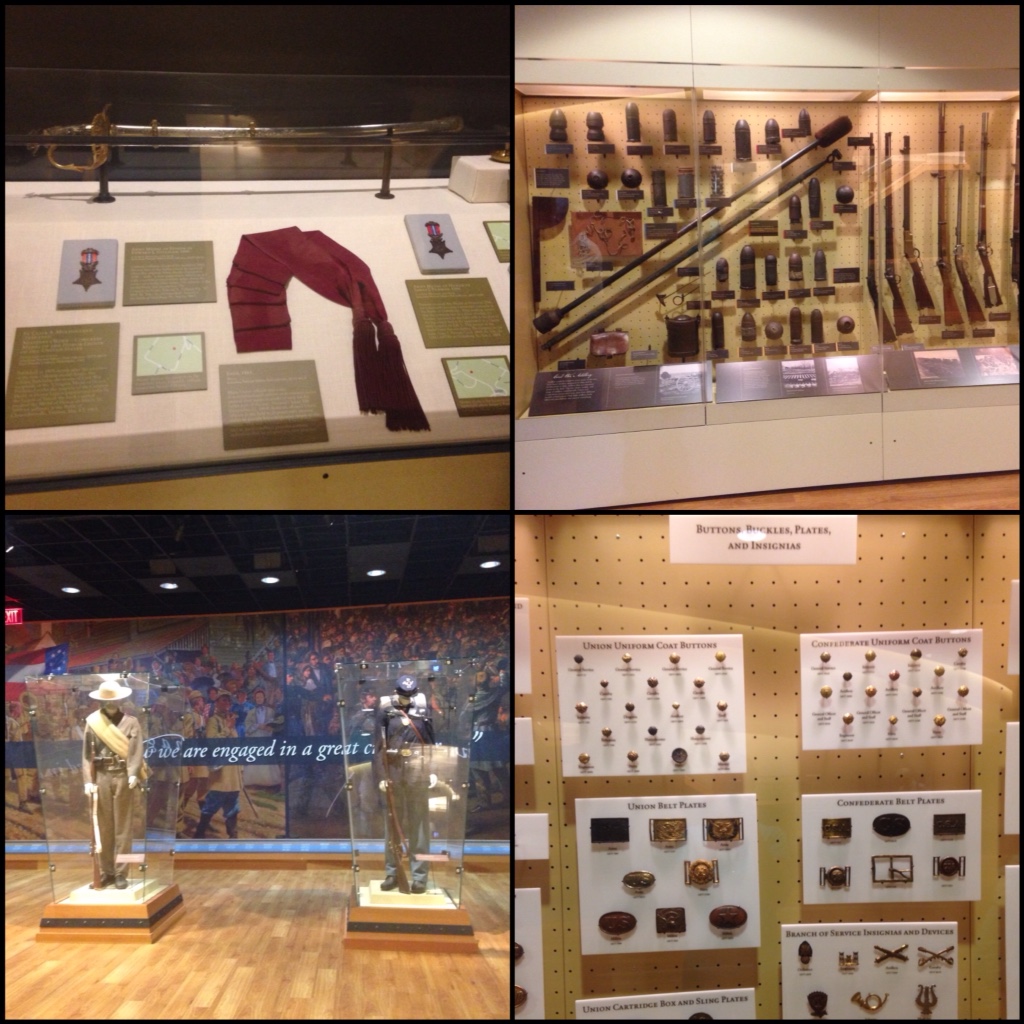
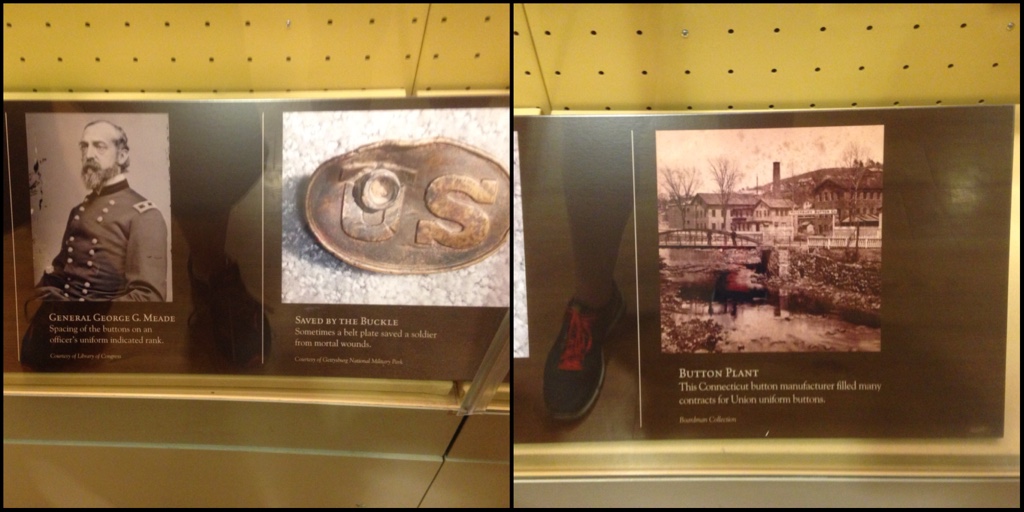
The Museum section has many artefacts, beautifully displayed with excerpts of speeches, letters and legislation surrounding the walls. Timber plaques have also been printed or etched with pictures and text,


A number of interactive displays run through the 3 years of the war on screens of varying size throughout the museum.


It is an exceptional place full of history and if you ever get to this region it is not to be missed! A very comprehensive display. They weren't wrong when saying you would easily need a couple of hours for the Museum alone.

The weather was divine on Tuesday but turned a little overcast and on the cool side on the Wednesday.


However that did not deter us from making our way back to Gettysburg and taking the 24mile auto tour of the battlefield.


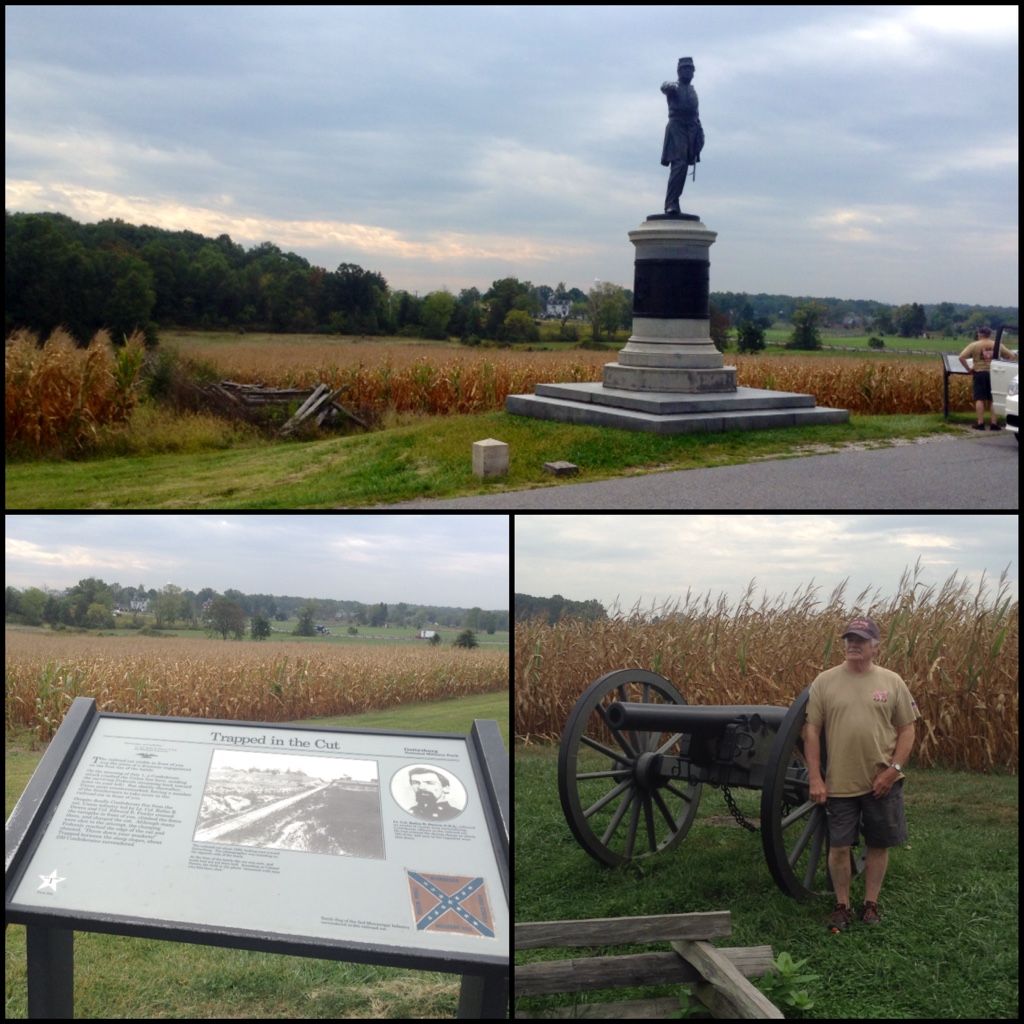
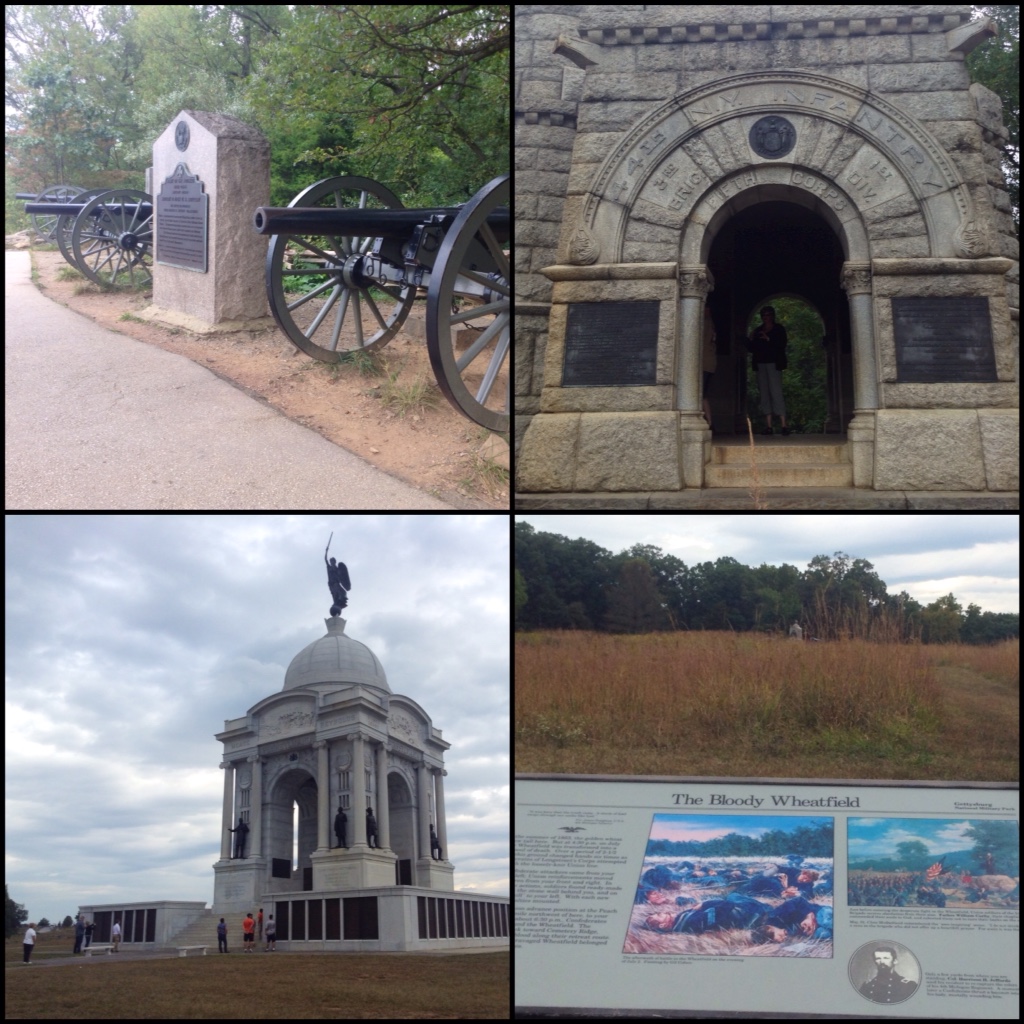
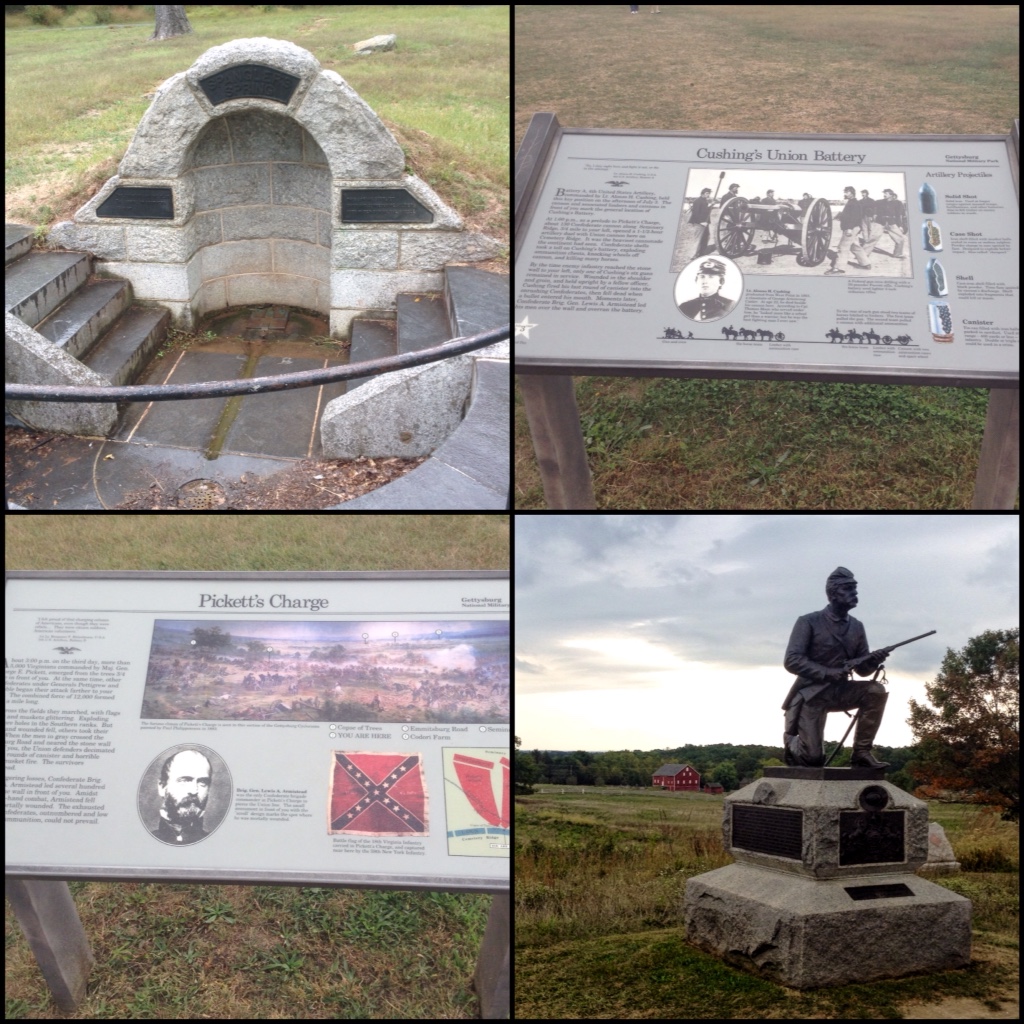
There are 16 tour stops along the way and instead of purchasing a cd at gift store we found an app that ran off the GPS and would talk to us once we reached the spot on the map. Relaying information regarding the battle for the point we were at, we could then get out and view the magnificent monuments, fields and take in the terrain that would have been encountered by so many on foot back in the day.


An extremely humbling experience.

Kat xo

Sept 28, 2016

This is only a small sampling of pictures taken. So, so much to see. Loved it.