Buffalo Camp 2018

We left the girlies Friday morning and headed West towards Gunnedah, NSW. We wound our way through some small and historic towns.
Singleton – established 1820's by John Howe. The Main Northern Railway line reached Singleton in 1863 and remained the end of the line until 1869. It still has a number of historic buildings including the court house (1841), churches and pubs with some rural mansions dated between 1828-1877.

Muswellbrook – est. 1833 or gazetted. It was explored by John Howe also in 1819 with the first white settlement in 1820's. It too, had a number of heritage listed buildings.

Aberdeen – just north of Muswellbrook, it lies between there and Murrurundi. Aberdeen is named after the Scotland Aberdeen. It's first post office opened on 1st August, 1856. First police station 1862. First school 1864 and by 1866 it also had two churches, 3 inns, a few shops and a steam driven mill.

Scone – 'Horse Capital of Australia', Scone was named in1831 after Scone, Perth and Kinross, Scotland by Jason Kent Toth. It was gazetted in 1837. The Scone Cup is one of the richest country racing days in New South Wales and Australia.

Blandford – a small village outside of Scone had an 1872 railway station (no trace remains) and horse farms such as Aquis Farm and Emirates Park reside here.

Murrurundi – est 1840 after European settlement began in 1820's. Thomas Haydon, a local landowner established his own township called Haydonton adjacent to this and in 1913 the two merged to be Murrurundi that it is today. It is said to be an aboriginal word meaning “nestling in the valley”. According to Wikipaedia it it in fact means “five fingers” a representation of the rock formation visible at the northern end of the town.

Ben Hall – The infamous bushranger's father Benjamin Hall had a small farm near Murrurundi in 1839. Ben Hall lived in Murrurundi until he was 13.

Quirindi – early spellings 'Cuerindi' and 'Kuwherindi' was gazetted in 1884 with its Post Office opening January 1st 1858.

Breeza – Ben Hall Senior worked on a station here at one time. Another bushranger Frederick Ward, known as Thunderbolt, robbed a man here in 1865.

And finally we reach Gunnedah – Koala Capital of the World – a farming region for cotton, beef, lamb, pork, coal, cereal and oilseed grains. It is home to Australia's largest annual agricultural field day which coincidently just finished this last week on Thursday. Gunnedah was settled by European sheep farmers in 1833-34. Coal was discovered on Black Jack Hill in 1877 and by 1891, 6000 tons of coal had been raised.

So after our brief township history lesson we are ready for this weekends match!

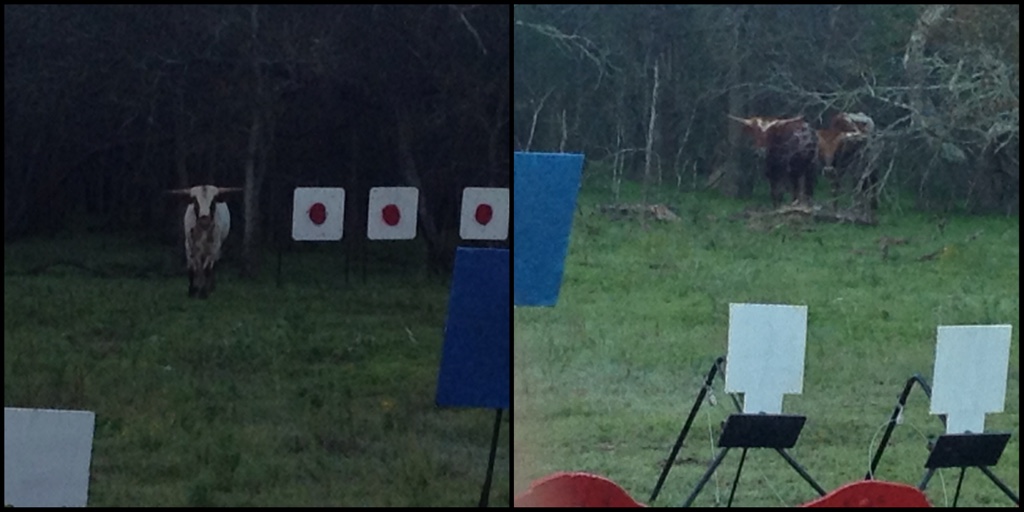
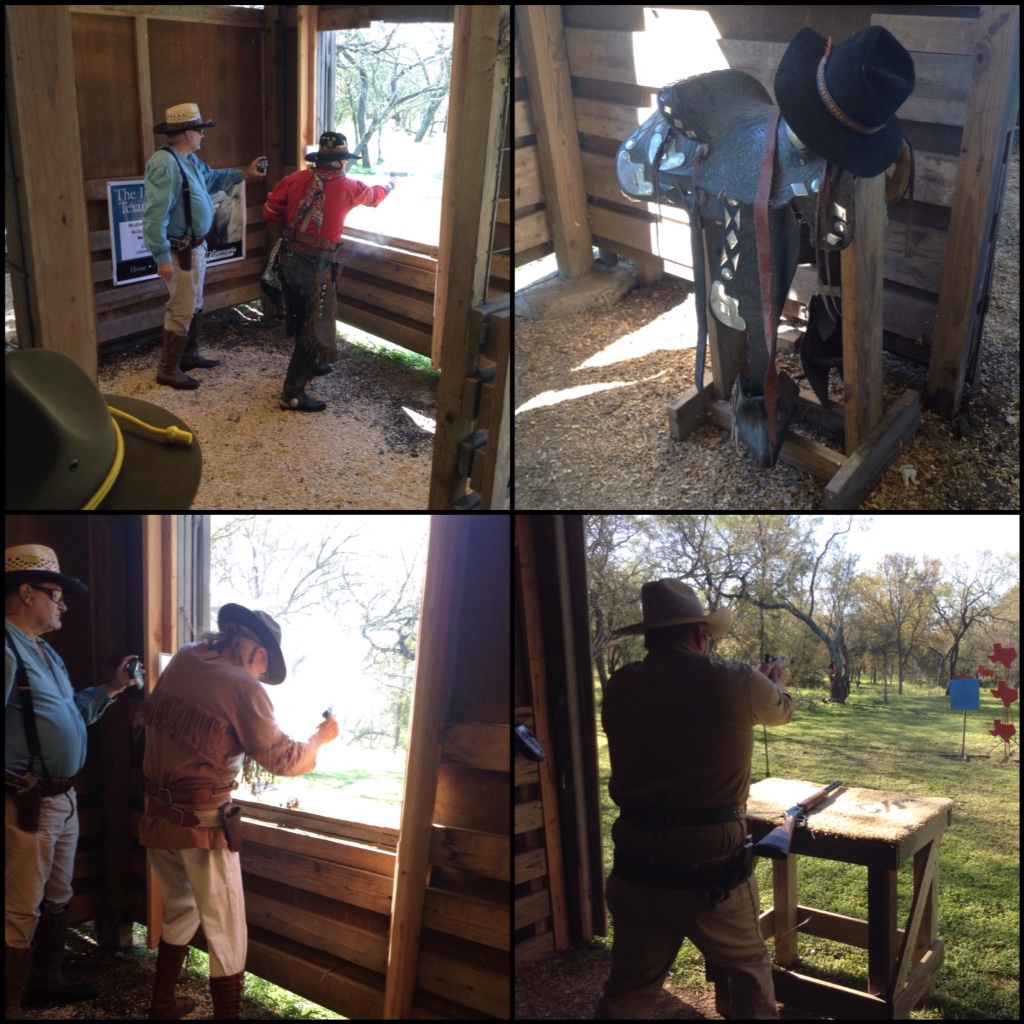
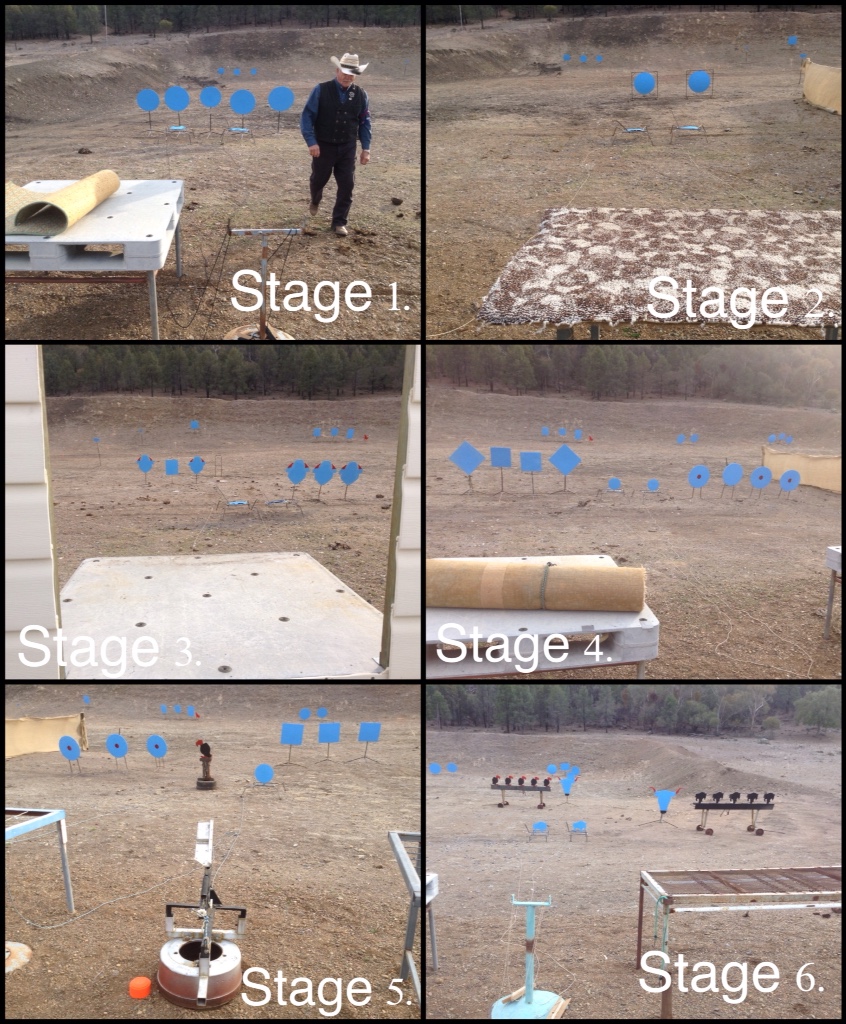
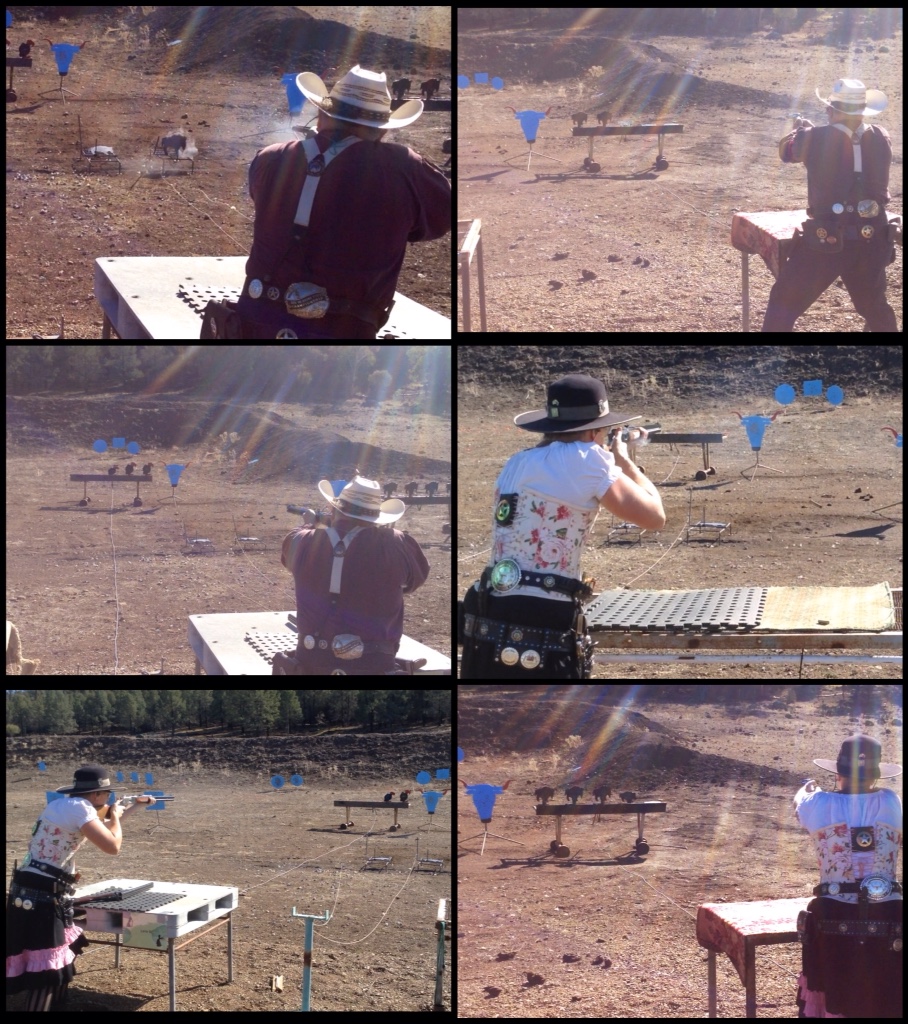
Namoi Pistol Club hosted this year's Buff Camp. Buffalo Camp is a Pat Garrett match that utilises all cowboy guns as well as a large lever action or single shot calibre in the mix.

Each stage had 6 rounds of large cal ammo, 10 rounds rifle, 10 rounds pistol and 2+ shotgun. Ten stages of fun with side matches held on the Friday.

We arrived Friday to warm weather and played with other cowboys and cowgirls doing some side matches before going to check into the motel. The precision pistol and both rifles was a bit of fun with an extremely small buffalo target wayyyyy out there!


It is so so dry out here due to the drought and of course the match is on and the area is expecting rain. However, the rain stayed away with just a cool start to Saturday morning. Six stages were completed by mid afternoon and some have faired a little better than others in the fun that was.


Saturday night we had some very good showers in town and guessed they had same at the range. They had some steady showers which had definitely settled the dust!

Sunday morning it was cool but few clouds around made it warm quickly. With 4 stages left to do the clouds moved in near lunch time and a few drops started just as the other 2 posse's were finishing their final stage.


Fortunately with everyone squared away the rain hit hard with thunder and some hail! It soon cleared again and with everyone under cover (just in case another round comes) the awards got underway.

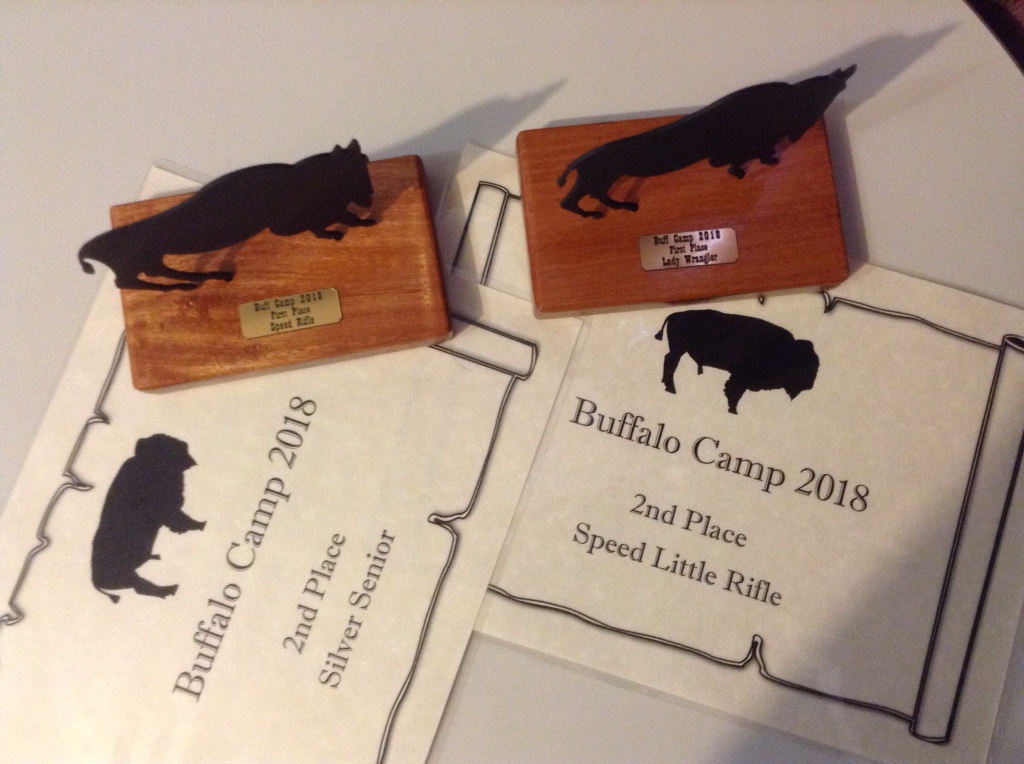
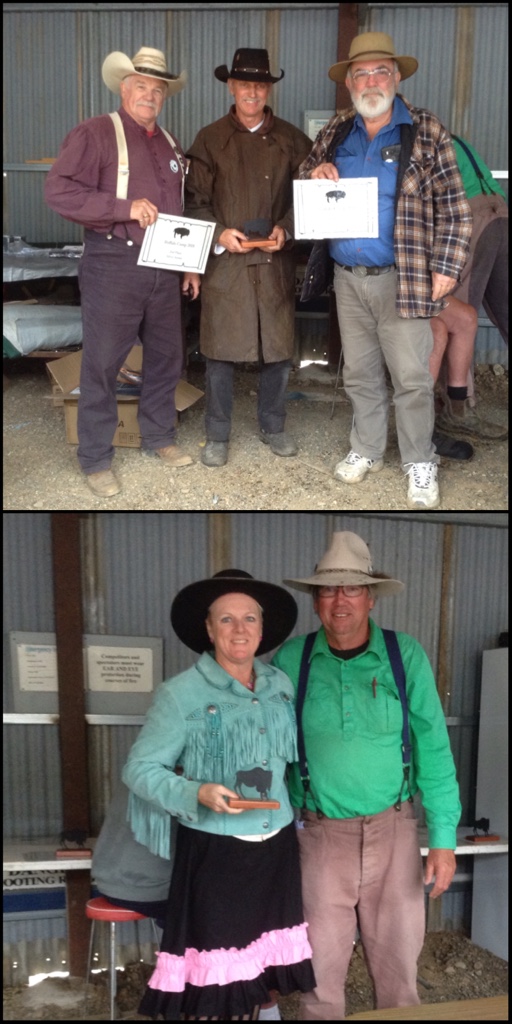
Jack won the Speed Rifle and I was 2nd, although Jack thought it was the other way around. Congrats man! He placed 2nd in Silver Senior and I was 1st in Lady Wrangler.


Congratulations to all 62 competitors – there were no 'clean' matches!

Congratulations to Drop Bear in 1st place overall and I came in 5th overall and 1st lady.


Thank you again to all the members of Namoi Pistol Club, the ladies who worked the lunches, morning teas, scoring and to the Match Directors.

We had a blast!

Kat xo


West to East

Well that does sound like we are travelling a lot further across the country but no, just a few states.

Wyoming, on through Nebraska, dropping down into Kansas and further down into Oklahoma.

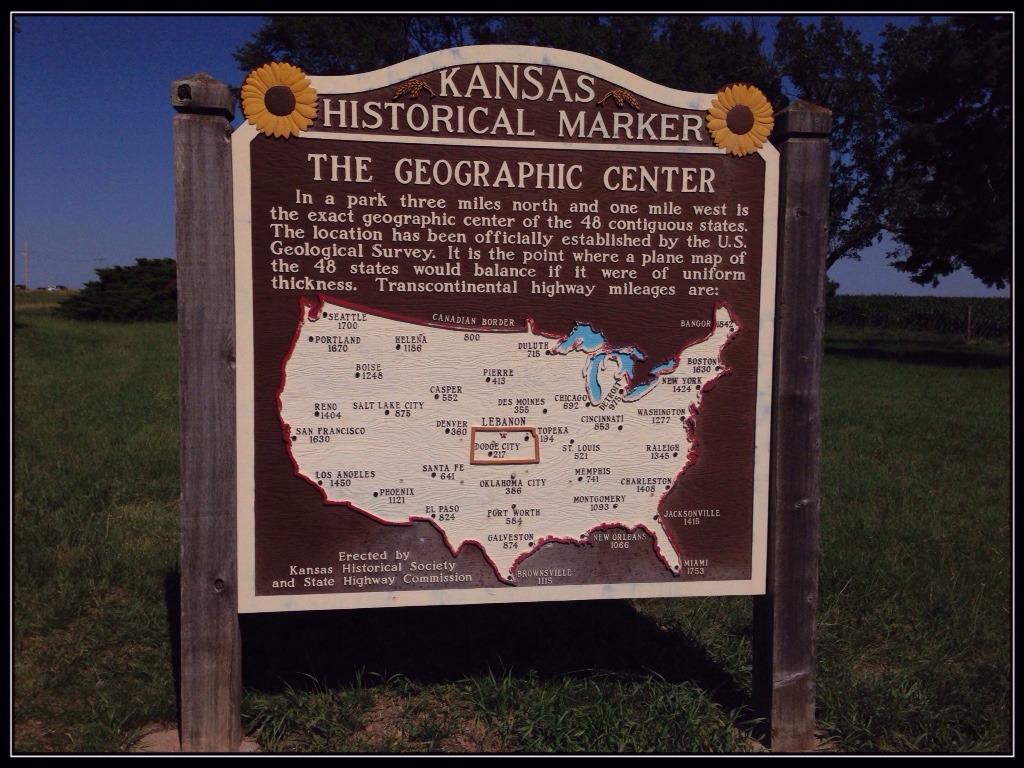
As we came into Kansas yesterday we found the historical marker indicating the geographical centre of the country.


We stopped in Belleville, KS for the night and walked from the motel to the BelVilla family dining. A little home style restaurant, licensed, nothing flash about the decor but great food and awesome service. I asked the girl if I could keep the menu, a newspaper style print with a beautiful old courthouse and water tower on the front.


If you know me then of course I wanted to find this building. Jack and I headed into the downtown district after breakfast. Belleville was established in 1869, some old buildings came into view but alas no old courthouse just the white Art Deco version in the town square. We drove in and around a few streets, asked two old guys (one at a workshop and one driving the USPS truck) and both have only been in the area for a couple of years and couldn't help.

As Jack filled the car with gas, I did a search on the phone and when he returned all I could work out was that it had been burned down and replaced with the current one and also that Belleville was known for the 'world's fastest half mile high bank dirt track!'

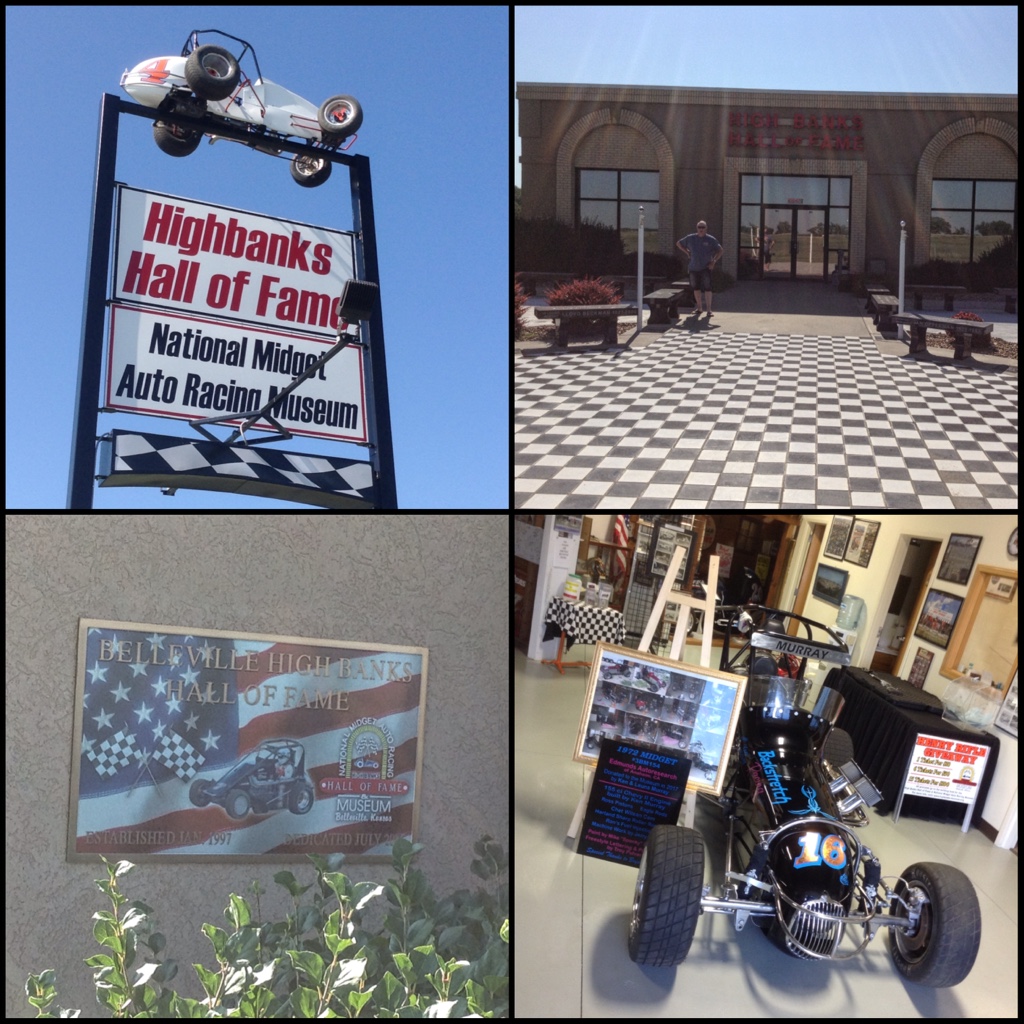
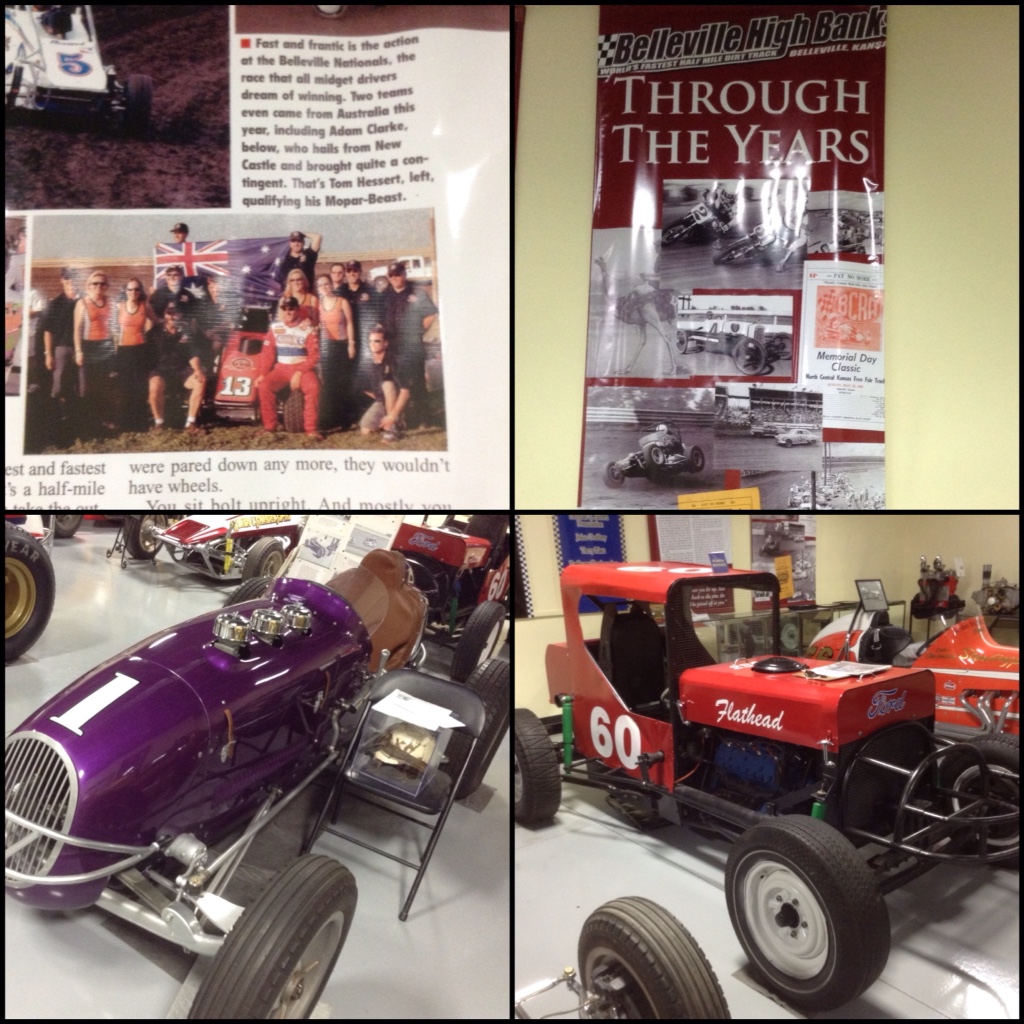
A race track for midgets and sprint cars. As we got back on the road there on the left was the Highbanks Hall of Fame and Museum so we stopped in for a quick look.


The gentleman was just opening up the doors as we were looking at the display out front. We went in for a short visit.


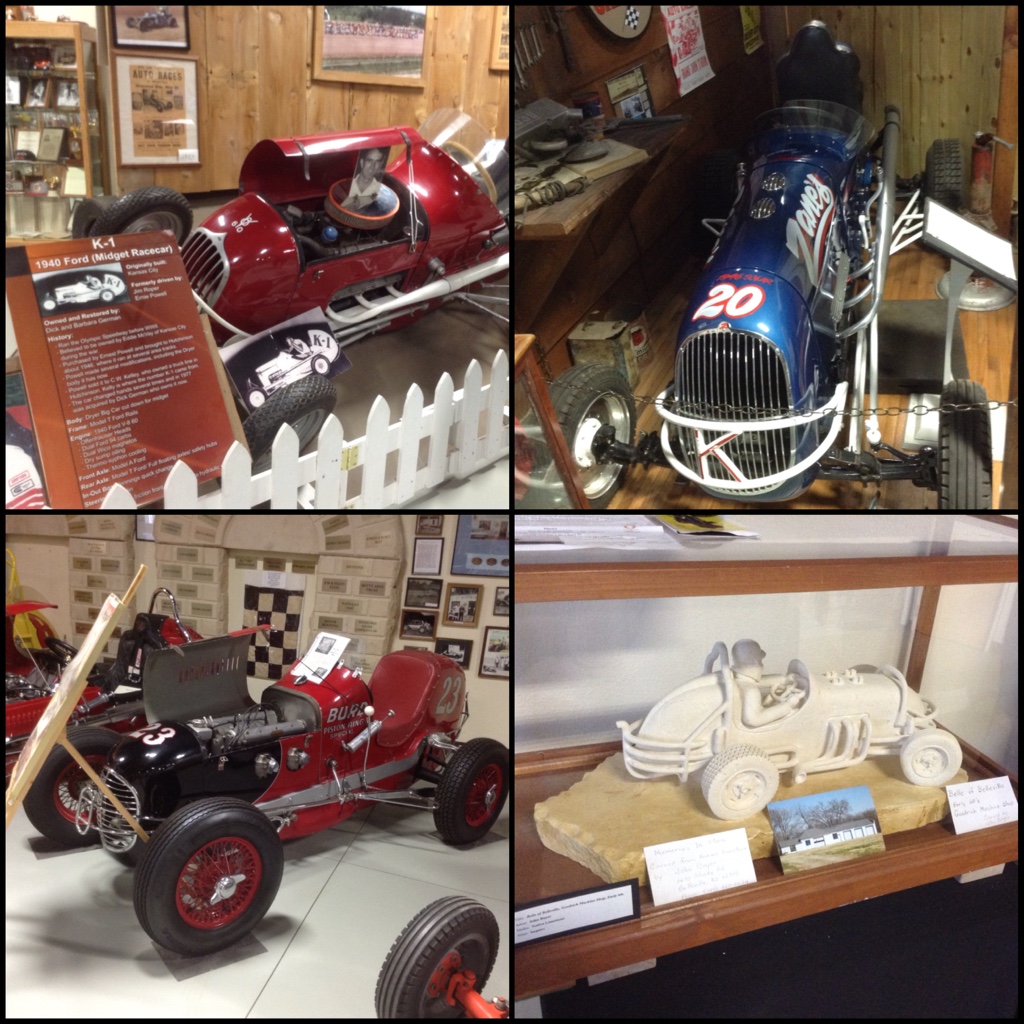
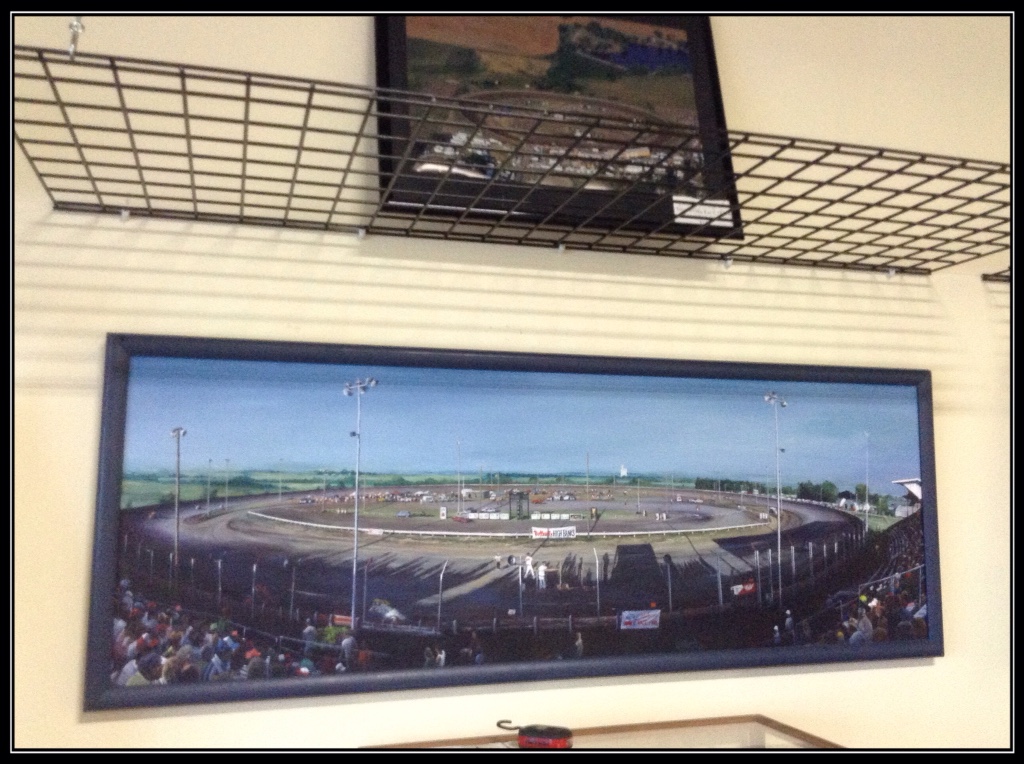
This picture shows a photo of the track at the top and below it a painting of the track. The Belleville High Banks dirt track is 23 ft high on the bank and 80ft wide, you can't walk up it but can certainly run at 140mph in these little cars!


There are some great displays, cars and memorabilia for the car enthusiast to stop and have a look. Donation for entry.

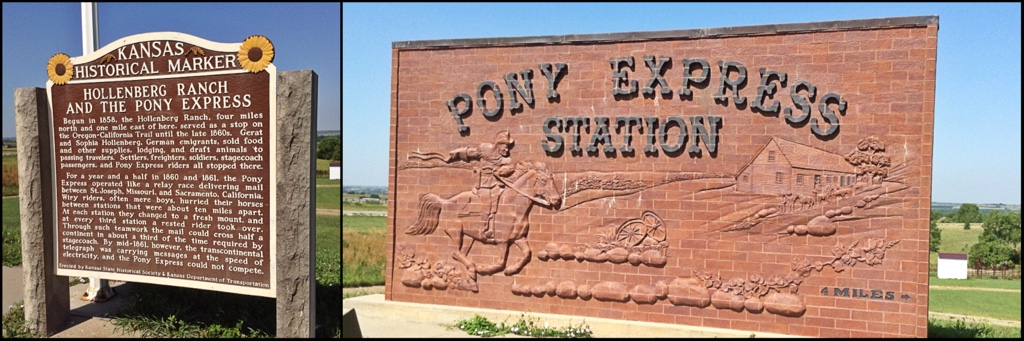
Back on the road and we are heading for Marysville and the Pony Express station. This is, as a sign said in a paddock, Pony Express country. From Washington this section of the highway is known as the Pony Express Highway.


A quick stop in Hanover, the visitor centre is closed but we saw the Pony Express Station on the Hollenberg Ranch just east of town. It is said to be the only one still on its original site. (Seems contradictory now when you get to the next stop! lol)


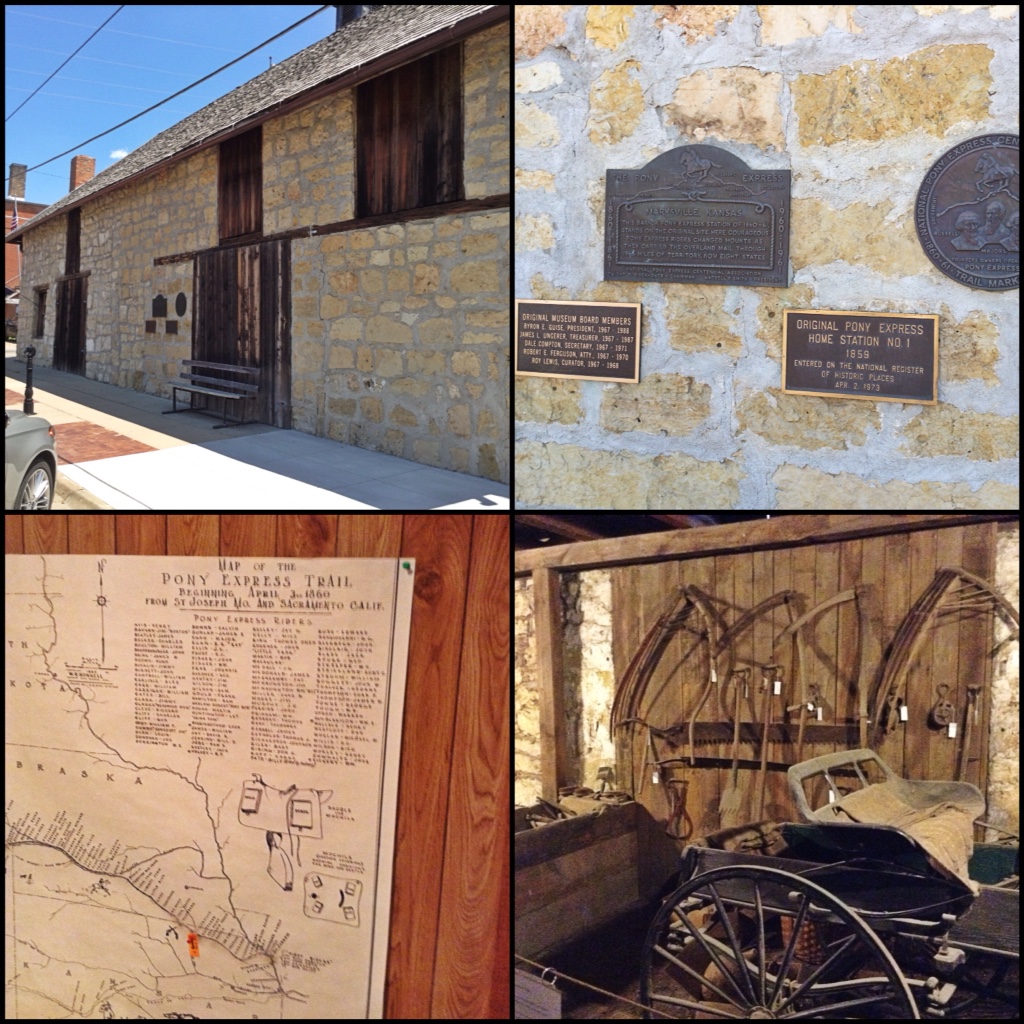
Next stop Marysville. The Marysville Pony Express Station is the only original station still on its original site. Home Station No.1 has been many other businesses over the course of history but has been lovingly restored and stripped of modern fabrications back to its original limestone walls.


The 18″ thick limestone walls, original openings for light and ventilation with a replacement roof – 12 years after the pony express ran through – the original roof had been burnt in a fire.

This station allowed riders to stay in bunks within the barn, often up to 10 days until the next mail came in, or they could stay at the nearby Barrett Hotel.


During the 19 months the Pony Express ran for, over 35,000 pieces of mail were delivered via 200 relay stations. The number of rides/mileage made is enough to circumnavigate the world 3 times over.


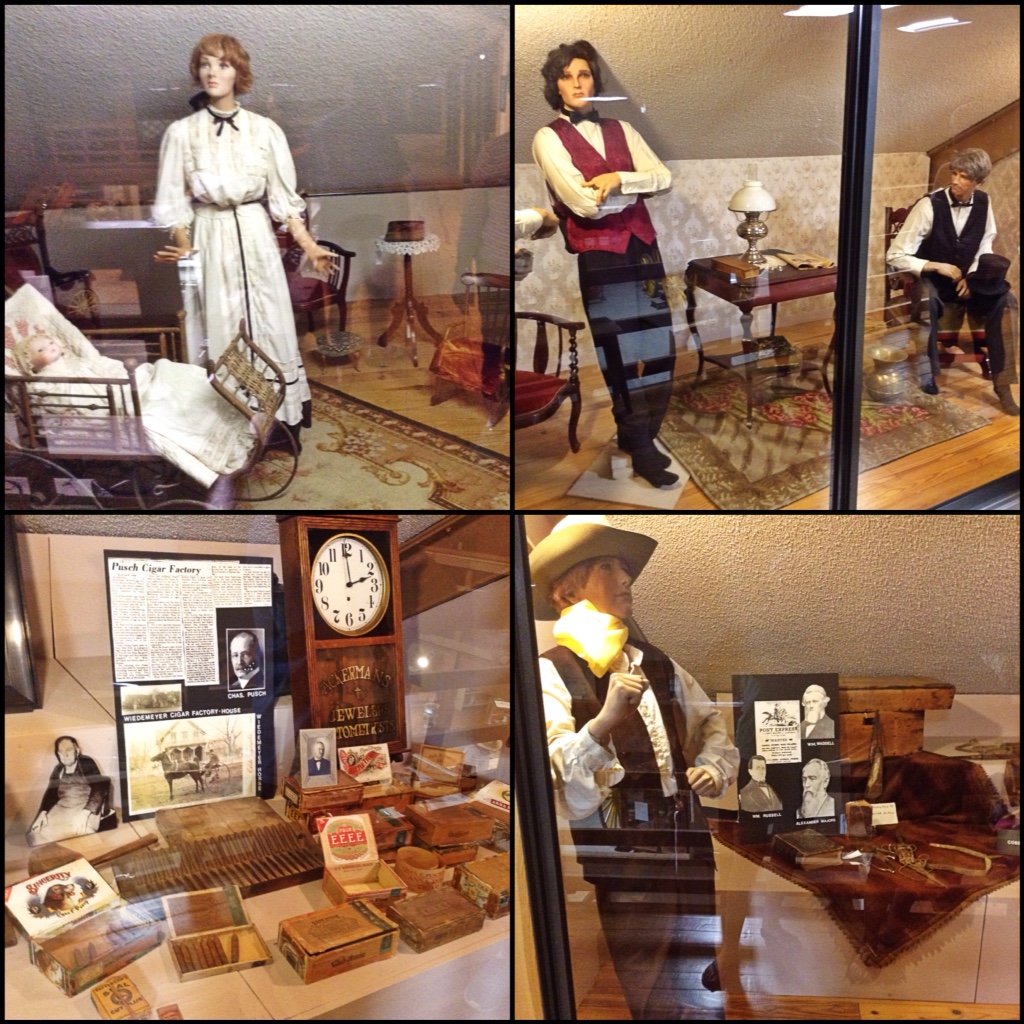
Mary set us up for a short video when we entered and Shirley gave us the rest of the tour through many wonderous antiques, machinery, vehicles, reproduction stagecoach, popcorn machine, dioramas and much more!


What a sensational stop, she suggested the Wagon Wheel for lunch near the statue and glass panels. We headed there next and had a great lunch with a quick visit to the statue in the 99F heat. The glass picture panels are great, the picture changes with your movement.


We continued our journey south through the great Kansas plains and farming land. Corn……..corn………..and more corn. I'm sure there is more to the crops than that, just seems like that is all you see. 🙂

We made it! We are back in Oklahoma.

Kat xo


Laramie, WY Part 2

As we left the Ivinson Mansion we headed towards the railroad and found the historic Old Buckhorn Bar.

Established in 1900, it is Laramie's oldest standing and most historic bar. It has the gorgeous, heavy timber carved, mirrored bar back. There are a number of taxidermy heads placed around the walls with antique firearms and signs.

A bullet hole features on one of the glass panels, enquiring minds had to know the story behind this. Alas not from an outlaw's gunfight but a disgruntled ex decided he would take a 30/06 and fire it towards his ex girlfriend in the 70's after they broke up. She survived, the original mirror panel still remains and now it's on a tshirt! A bullet hole glass break pic with 'I survived the Buckhorn Bar'. A beer and we head off to find one with food.

Around the corner is the Crowbar Grill. A neat little place, great food and a nice Belgian White Passionfruit beer. The place was packed on this 4th July considering the rest of the town was very quite.

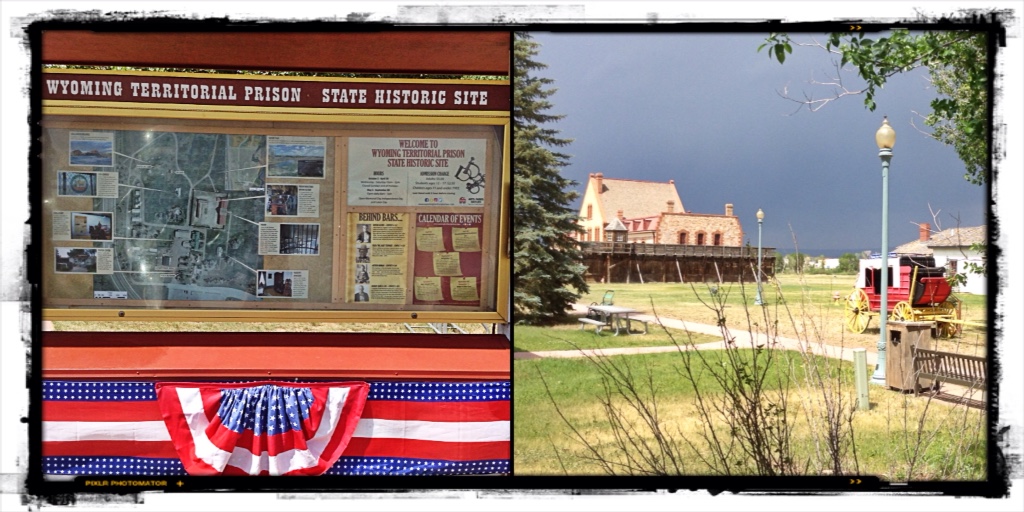
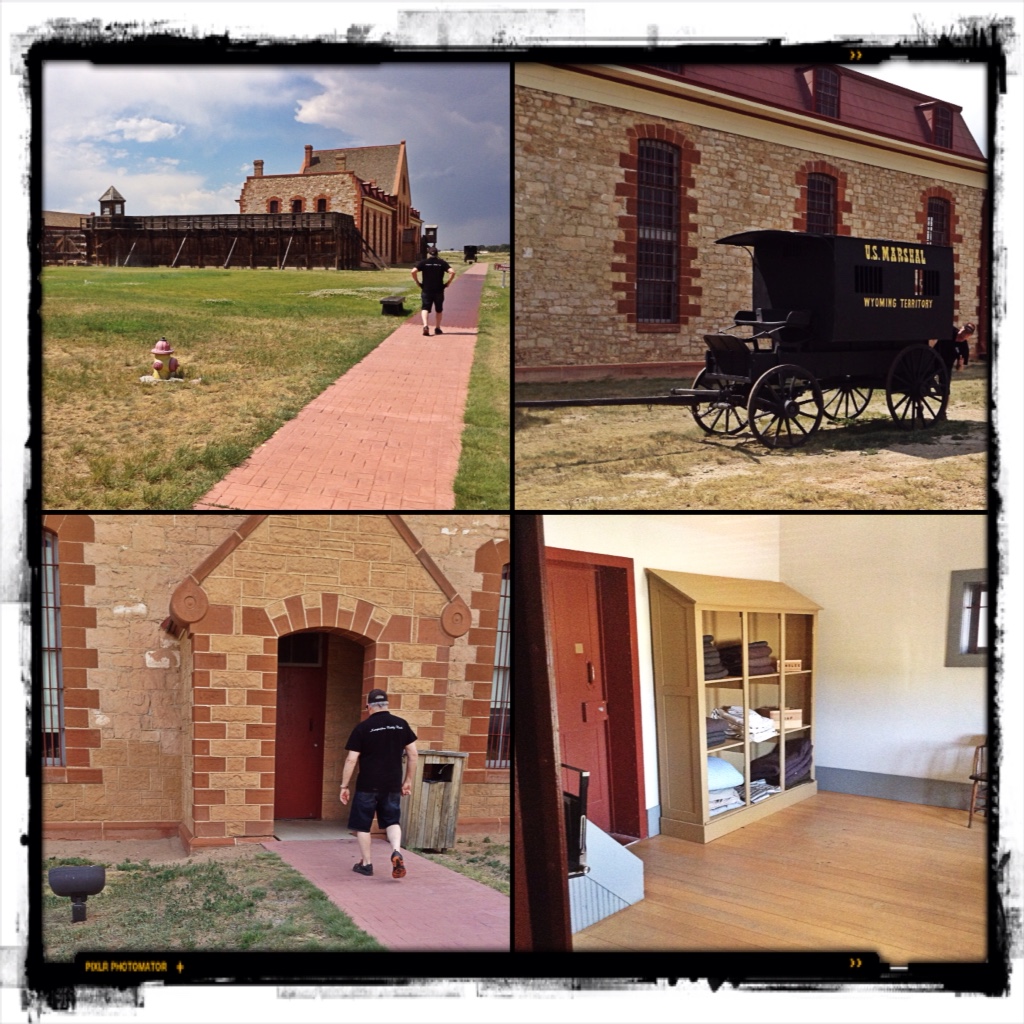
Next, the Wyoming Territorial Prison, built in 1872 it was restored in 1989.


Before entering the Prison building itself we viewed the Warden's house built in 1875 by inmates it was constructed with 4 bedrooms, a kitchen, dining room and basement.


This is a self guided tour into the prison and features furnished cells, guards quarters, dining area, laundry room, an infirmary and the women's quarters.


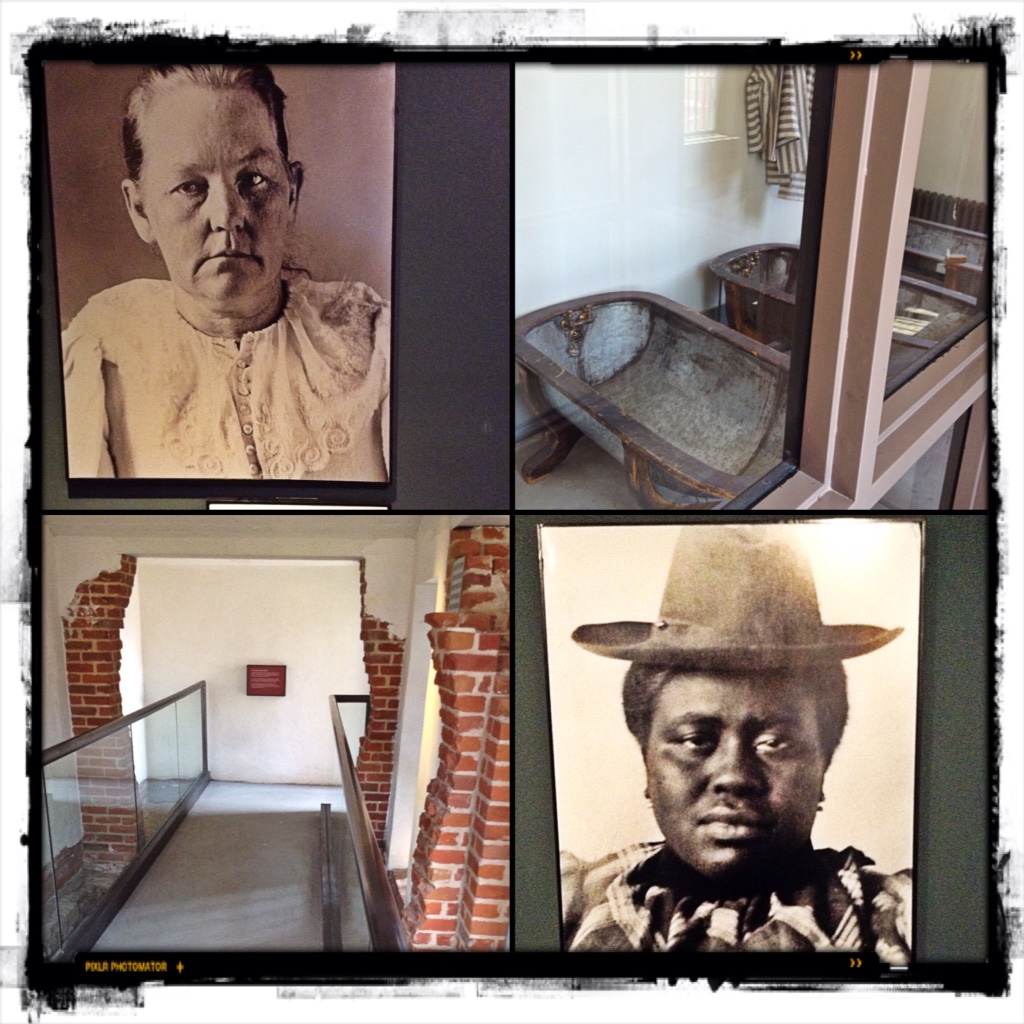
The first room in is the processing room where prisoners were fitted with their black and white stripe uniform. Rules and regulations were cited to each prisoner regarding bathing, airing bedding, hygiene etc.

The walls are hung with pictures of prisoners who were here, information regarding the prison conditions, the locking mechanisms for cells, etc.


The Wardens office had also been restored back to 1890's glory. Faded patterns on walls were found and subsequent reproduction of exacting color's and patterns for wallpaper were used in the restoration.


Before the erection of the stockade and the calling of the mountains to the west 25% of the prisoners in 1875 escaped. The stockade prevented some but there is record of at least a few scaling the stockade wall and escaping.


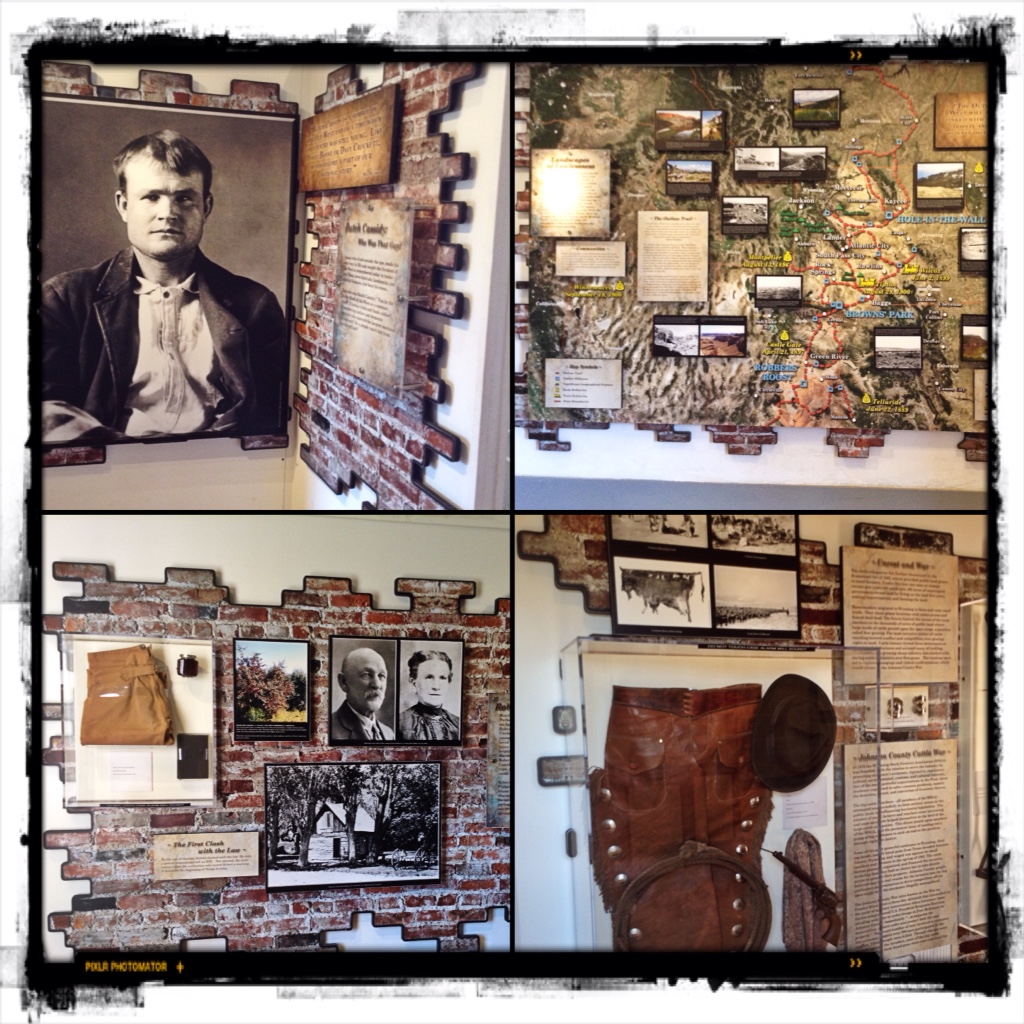
As you move through the additions of the prison there are preserved excavation sections, an exhibit on Butch Cassidy. A very well presented display on the man, the myth, the legend, the Pinkerton Detective Agency, an 1888 blown up safe, and more.


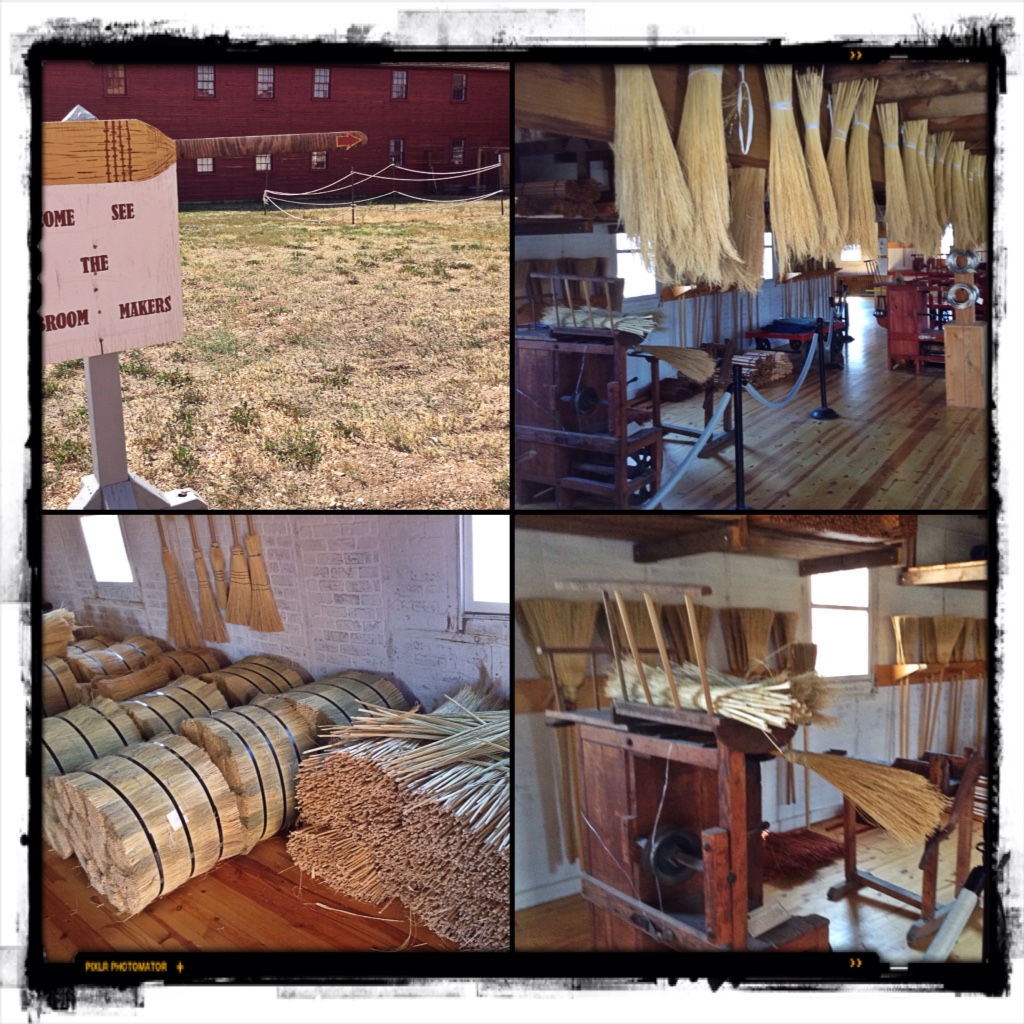
In 1882 the first wing on the broom factory was built and later further additions plus steam pipes heating instead of wood and coal were implemented.

The broom factory building and equipment are still original except the flooring was replaced. Brooms are still made here during exhibit displays and are sold within the gift store.


Now in Part 1 I had referred to John Hjorth, the Swedish architect/wood carver. Two of his furniture pieces are on display here – a table and a bench. Other pieces made by prisoners such as horsehair woven hatbands, halter's and a very intricate model ship.


A great site which has another small town section that we didn't go into. Definitely worth a visit!

What a great way to spend Independence Day in Laramie, finished with dinner, cupcakes and fireworks looking like glitter against a burnt orange sunset.

Thanks to my darling man and a spectacular Wyoming backdrop!

Kat xo


Laramie, WY Part 1

On Wednesday, 4th, Jack took me to Laramie for my birthday. We hadn't been out here before so it was another new place for exploration.

As we travelled further North into Wyoming we made a stop at the Ames Monument.

President Lincoln signed the Pacific Railway Act of 1862 but it was not until a few years later after slow progress of the Union Pacific, commissioning of Oakes Ames to head the railway project took place.

Oakes Ames was known for taking on difficult projects and he and his brother Oliver contributed significant funds for that time period to head the Transcontinental Railroad project.

The Ames Monument is a memorial to the brothers and was built near the highest point of elevation (8247 feet) on the Transcontinental Railroad in 1882.


It is known as the pyramid of the plains as its granite construction resembles the rocky outcrops in the background. It has two relief pieces resembling the brothers and is 60ft wide at the base, rising 60ft into the blue sky.


Travelling along the Lincoln Highway (US30 and I-80) we made a stop at the rest area and information centre. There is a memorial to Henry Bourne Joy, first president of the Lincoln Highway Association (1913) and president of the Packard Motor Car Company. He was called the father of the nation's modern highway system.


Here at the rest area is the memorial stone for Henry B. Joy and a monument commemorating Abraham Lincoln's 150th birthday. The bronze statue of Lincoln's head weighs 4,500 pounds and is 13.5ft tall sitting aloft its hollow granite base. It is situated at the highest point along the I-80 at its highest point of elevation 8640ft.


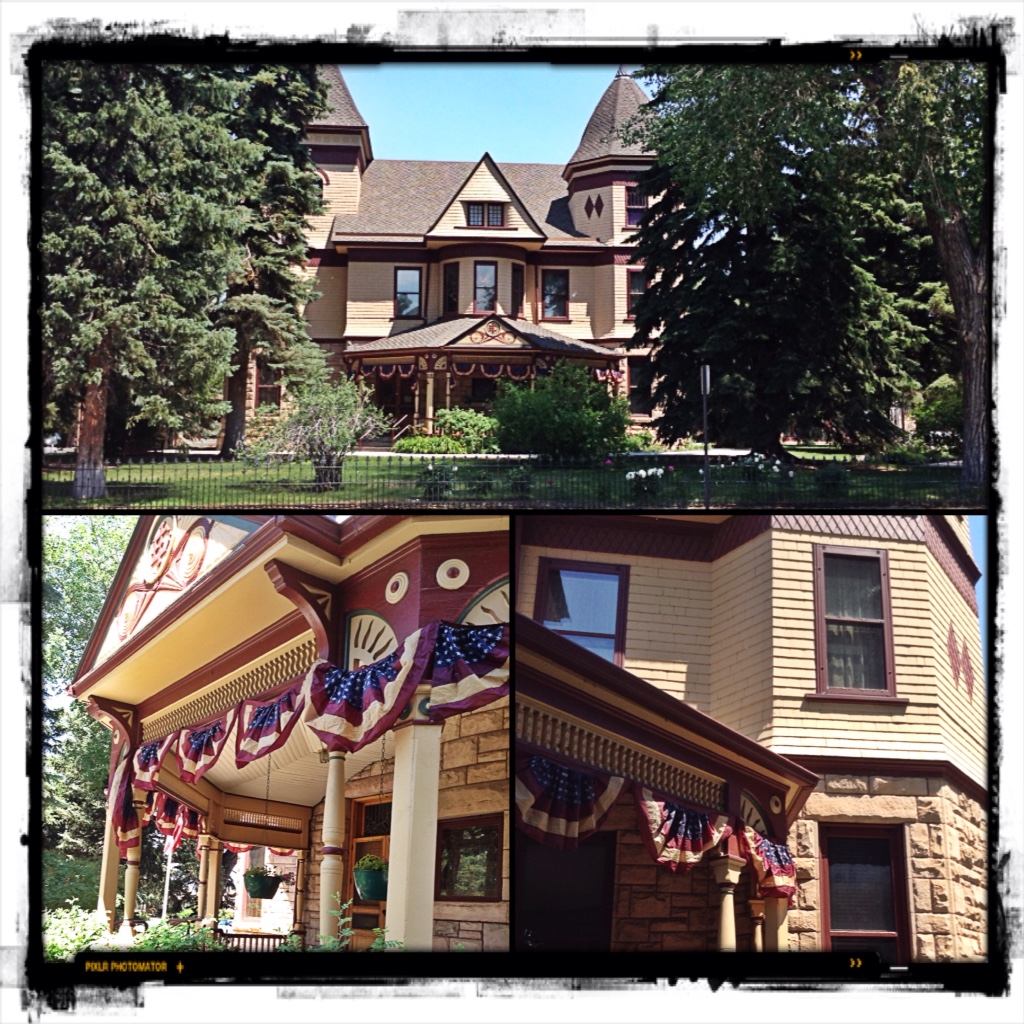
We headed on into Laramie and found the Historic Ivinson Mansion. We were met inside the garden gate by two young girls who directed us to the carriage house to organise tour tickets.


Kaydence and Alicia, both Grade 7 honour students (going into Grade 8) are among a number of students up to Grade 10 who through history lessons etc have learned or are learning the history of the Ivinson Mansion and all its wonders, antiques and stories. They then host the tours of the mansion.

So off we set with Kaydence and Alicia for our tour. The Mansion was owned by Edward Ivinson, a banker, he owned the First Interstate Bank and contributed to a hotel in the area. He and his wife Jane and adopted daughter(?) lived and entertained many in this gorgeous home.


It was one of the first to have electricity, indoor plumbing and heating.

After his wife died, Edward left the home and gave it up for a girls boarding house. The boarding house was used for girls from outlying ranch's. After the boarding house period it was left abandoned for a period of time and was later saved from being turned into a parking lot and restoration began.

Some pieces were stolen from the house and some have been returned, like the original front door knob fittings. Some window sections were missing or smashed and pieces have been recreated to complete the original appearance.


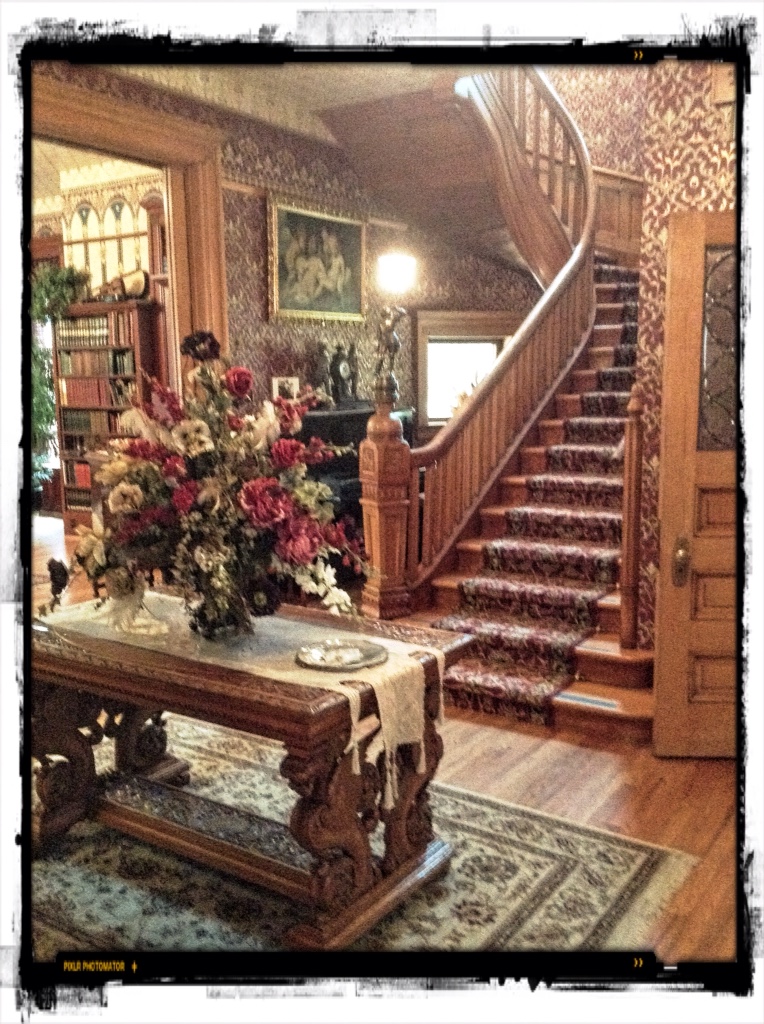
The entrance, floating staircase, rooms are absolutely stunning. The foyer and entry light fixtures are the only two original to the mansion. There is a section in the kitchen that shows the differing layers of wallpapers throughout the time and wallpapers have been recreated to fit to as far back as they could see a legible print on the walls.


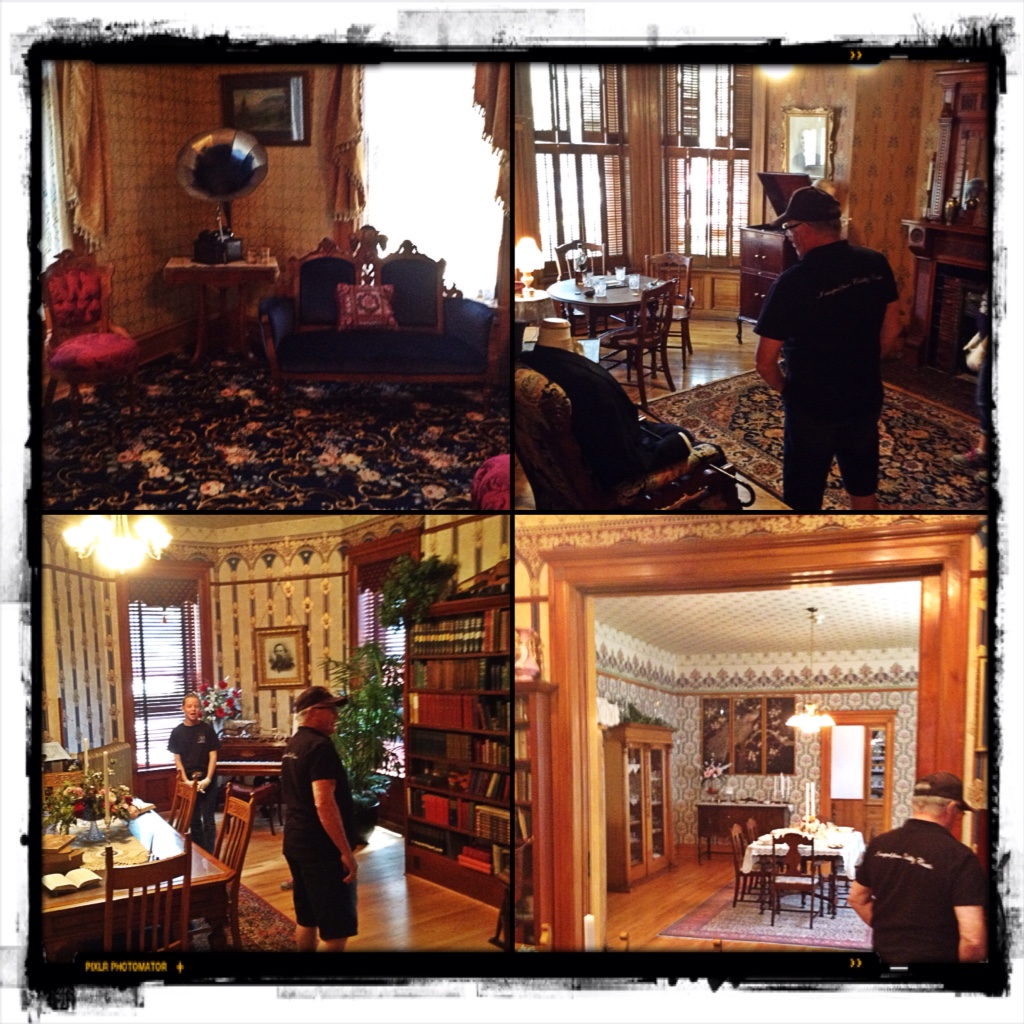
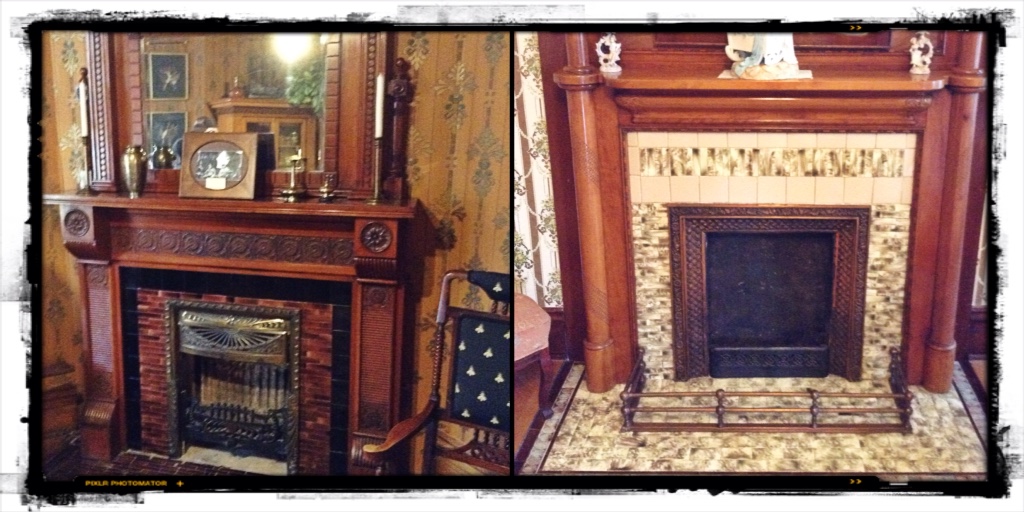
In the drawing room the fireplace is original but the mantle is not. The fireplace and mantle in the dining room however, are original to the house. A few tiles were missing from the dining room one but spares were actually found in the basement.


The front parlour has a beautiful piece of furniture, a liquor cabinet handcrafted by John Hjorth. A Swedish architect and master wood carver he was prisoner #458 at the nearby Territorial Prison. Hjorth was imprisoned for forging a $25 check (cheque) and spent much of his time carving and making beautiful pieces of furniture with mythical creatures and detail. There are 17 pieces of his furniture on this first floor.

In the drawing room is a record player owned by Melville C Brown. Brown was mayor for a short period of time when outlaws ran rampant through the time. A group of vigilantes took over the lawless town with some outlaws joining the vigilantes to avoid being hung.

The library holds an original desk from the bank and was used during the boarding school period.


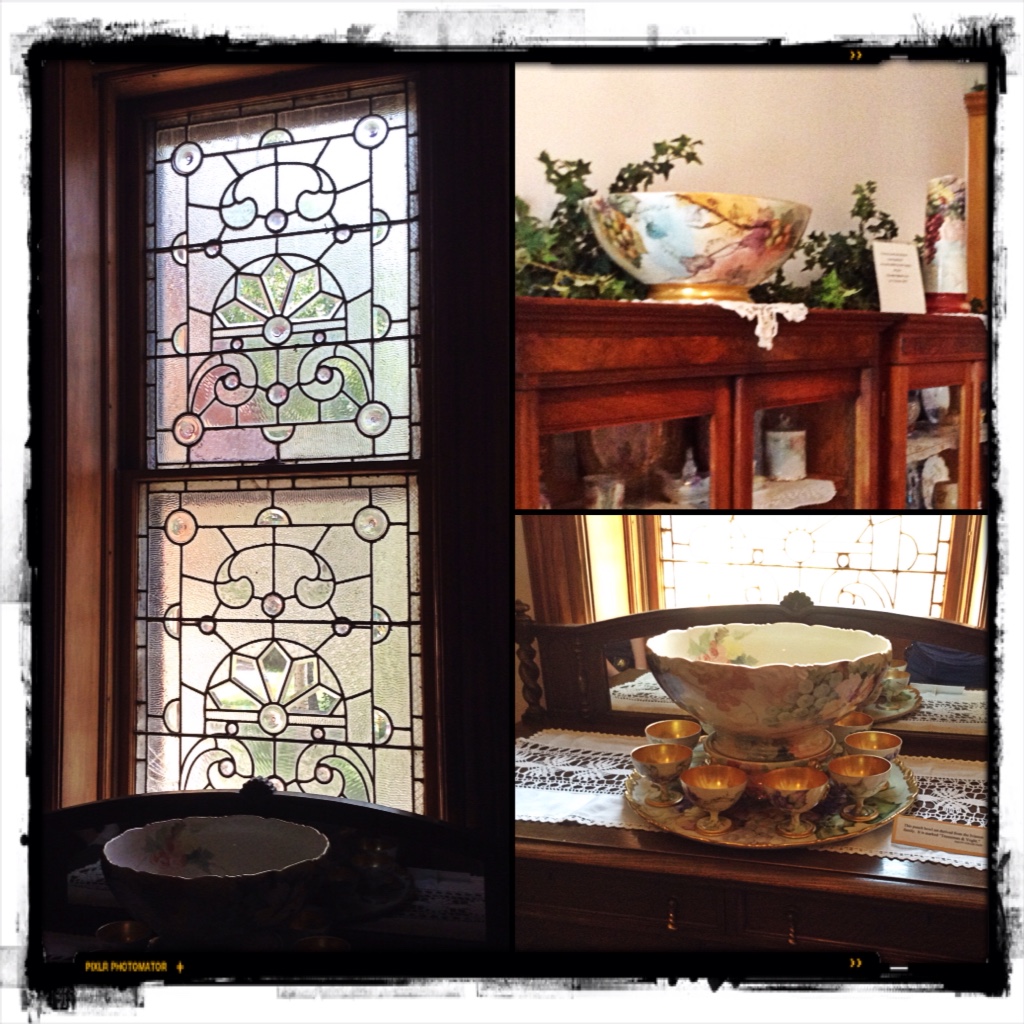
The dining room is exquisitely displayed with Jane Ivinsons dinner setting and original napkin rings that were gifted them with the Ivinson initials. I love the knife rests etc. Inside a special case is a cut crystal punch bowl set, said to be one of 12 owned by the Ivinson's.


The butlers pantry windows are original to the home as is the punch bowl and pitcher on top of the cabinet, a replica has been recreated so the others are not damaged.


The kitchen although without its original fire stove has original squeaking floorboards, clock work spice rack that locked down of a night time.


There is a dumb waiter in the hallway and was actually electric.

Upstairs you find the the dormitory room and maids room. She was very important to Jane and even had her own bathroom however, shared with visiting guests.

The Ivinson Mansion is an exquisite piece of restored history and was an enjoyable tour by two fine young ladies. A quick look inside the small school building and we headed off for lunch and the Territorial Prison.

Kat xo


Cheyenne Visit

Thursday was a free day and after some gun cleaning and new stock cover replacement it was time to head out.

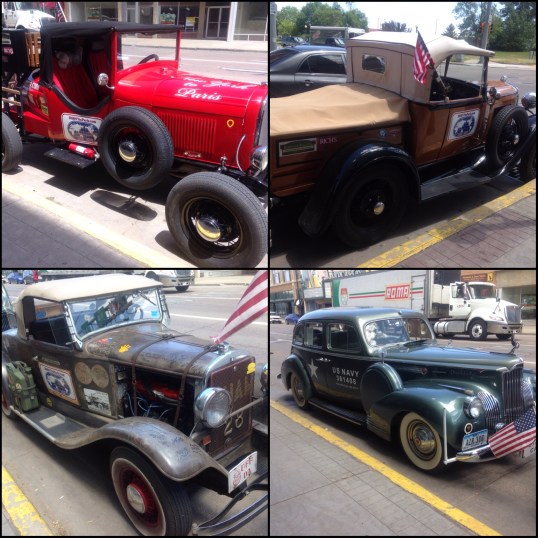
After a car wash Jack and I ventured downtown and coming to the historic Plains Hotel we spied some neat old cars parked there doing a run from Paris to New York.

We headed across the square to the Depot where we found Accomplice Beer Company – Agarita Annie and Neuces Slim worded us up on this one!

What a great place, not only for being situated in the original Cheyenne train depot and right next to the railway lines but the ultimate in beer experience’s for sure.

When you enter the craft brewery you hand over a card and name then you are given a beer card.

Inside the main bar and restaurant area is 14 different beer taps, a variety of glass sizes, styles and growlers.

The beer menu board shows the beer appropriate to the tap including your ABV (alcohol by volume), IBU (international bitter units), name and brief description.

Now the fun begins! You place your card in front of the beer tap screen and pour as little or as much as you want. It then tells you how many ounces and how much it cost you for that pour.

As you work your way through them it will give you a total spend also.

We had salads for lunch that were great, although a little light on the chicken inclusion. The salted caramel apple fritter and ice cream was divine and big enough to share.

There are yard games for the back patio area and tables out the front also.

A great place to experience and we will definitely be back before the week is out.

As we headed back to the car the other vintage cars had come to the square with others turning up for a small car show.

The rat rod and its almost 80yr old owner were a hit!

A great quick visit in Cheyenne, as much of it we have seen before with a trip to the range to pick up packs ready for side matches.

Kat xo

Torrington, WY

Today we took the ‘stage’ to Torrington to see the Pony Express re-ride. Here they did a changeover of horse and mail just as occurred in 1860-1863.

Outside Bomgaars Supply the horse and rider came through just as we arrived and managed to video! A minute later and we would have missed the changeover as they were slightly ahead of time!

One rider jumped off her horse, grabbed the mochila throwing it on to the next rider’s horse and then she was on and heading out of town.

The rider (Stephanie, hope that’s right) we spoke with has been doing it for 25 years now, she started with her Dad. Now her, her husband and kids do the re-ride each year.

The riders today do approximately 2 miles each (so as not to wear their horses out) compared to the past where the original pony express stations were 50miles apart. However they often rode 75-100 miles in a stretch changing horses every 10-15miles.

I had to laugh, her husband said they use 5 horses and a back up. Sounds like cowboy shooters – take what you need plus your backup’s.

I’m glad we got there in time to see it!

We headed into Torrington and made a short stop at the Goshen County Museum situated in the original South Torrington Union Pacific Depot.

It had some very interesting artifacts in there and also had the 1996 Pony Express mochila. The rider we spoken to carried the flame for the Atlanta Olympics during the 1996 ride.

Back we headed towards Hawk Springs (population 45) where The Emporium steak house was calling us for late lunch.

What a neat little place! Has a great cowboy decor and feel, beer garden and drive thru!

The steak and dessert were divine! Highly recommend a stop there or make the 80 mile trek from Cheyenne up there! It was worth it.

We headed back to Wild Horse Haven and doubt very much we will need anything much for dinner tonight!

Yours in touring

Kat xo

Capulin Volcano

On our meanderings up through New Mexico from Moriarty we headed for Raton and a side visit to Capulin (pronounced Car-poo-leen).

Jack had read about Capulin Volcano National Monument and had decided we would make a stop.

This now inactive volcano at its peak is 8182ft above sea level and is covered in rich volcanic soil and forested habitat.

An aerial view of Capulin from Wikipaedia.

Part of the National Parks scheme it is $15 per vehicle to go to the top, where you can take a couple of different hiking trails. One goes around the top rim and one shorter one down into the cinder cone volcanic crater itself. Be prepared for a steep climb back out though on a well paved path.

At the top of the Volcano you can see to parts of New Mexico, Oklahoma, Texas, Colorado and Kansas.

It was President Woodrow Wilson, in 1916 who would have Capulin Volcano set as a National Monument.

From here we took a right out of the park gates and headed for Folsom, all we found was a tiny little town, didn’t go into the museum and the historic hotel was closed.

Back on the road our next stop would be Trinidad, Colorado and on to Limon for the night.

Tuesday we headed NW to Cheyenne and on to Wild Horse John and Saginaw Sue’s – Wild Horse Haven as I like to call it.

Kat xo

Places We Hadn’t Been

Amarillo, Texas – The Big Texan

Jack and I have been through Amarillo many a time before. Every time we do he makes the comment about how he has been to The Big Texan before………..but I haven't!!

Finally we stopped and I got to experience this fabulous venue on Route 66 with its colourful hotel, the big cowboy, the odd cowboy boot wearing excited dinosaur and the big bull outside the restaurant.


Inside is a gift shop, laser shooti arcade, their own craft brews and bar, a fabulous restaurant with stuffed animals, deer horn chandeliers, wait staff all wearing the mandatory cowboy boots and hat and of course it wouldn't be complete without the outdoor area and the big rocking chair!


What a unique experience! Oh and I forgot to mention this is the home of the 72oz steak that if you eat it in under an hour you get it for free! Holy cow! That's massive but one lady, Molly Schuyler, holds the current World Record for eating not 1 but 3 72oz steaks in under an hour – to be more precise, she did it in around 20 minutes!!


This restaurant has been running since 1960 and if you haven't had a chance to stop there then you need to! Even if only to brows the gift shop and check out the place.

Adrian, Texas – Midpoint

Midpoint on Route 66 in Adrian is the exact halfway point of the route! 1139 miles to Chicago and 1139 miles to Los Angeles.


Nothing much else in Adrian, the poor little Cafe was struggling with burst water pipes this day meaning no rest rooms and no food service. There were people from Leeds, England, Chicago and us.

Santa Rosa, New Mexico – Blue Hole

Again, every time we drive past the signs we say to each other, we should stop there one day, so came the time to take a side exit back onto Route 66 and visit the Blue Hole.


It's spectacular curiously crystal clear blue waters sit at a constant 61F/16C. It is 60ft wide, 81ft deep and has an outflow of 3000gal per minute. I'm curious about that and how large the outflow is, where does it go to, where does water come in? Divers can explore the hole but with lifeguards on duty it is for those wants to just jump into the refreshing waters from various rock points over and over again.

Moriarty, New Mexico – Sierra Blanca Brewery

How many times have we been to Moriarty now and not once have we managed to get to the brewery?! I hear you all gasp in disbelief knowing Jack and I enjoy beer tasting, okay well drinking, especially trying out new local craft brews and we hadn't been to this one just two minutes from the hotel!


It's been in its current location since 2006 and has around 14 varieties on tap for tasting, beer flight samples, or full glasses, your choice. Here we sampled the Outlaw Lager, Alien Wheat, Alien Vanilla Milk Stout and the Pancho Verde Green Chile Cerveza. Then Jack went for a straight up Alien Wheat and I had the Cherry Wheat – I like that one too. One case Alien Wheat $30 bucks!

Grants, New Mexico – Route 66 Drive Thru

Into Grants to drive thru their new neon sign for a photo opportunity. We will visit this again in February and see it of an evening lit up!


We stopped at the Mining Museum briefly and agin we will make time for this next trip as there is an underground tour of the uranium mine right below the building!


Milan, New Mexico – Transcontinental Air Transport Museum

A small little building of National Heritage, the restored 1953 Flight Service Station. The Federal facility operated until 1973. It tells the tale of Charles Lindbergh's involvement in TAT's historic plane and train cross country travel, mail routes and his gegraphical aerial photography taken in 1929.

The photos were recreated in 2008.

The Beacon 62 power shed sat in the Zuni Mountains when it was in operation. Each beacon tower with its accompanying power shed and concrete arrow made for a visual “light line” along the route.

These beacons were located 10-15 miles apart with every 50miles having a landing strip which would also consist of actual radio contact and a weather station.


Also on the grounds is the metal route arrow of 59B moved to the museum location from El Morro.


A 1955 “Delta Platform” UHF antenna.


The Transcontinental Airway was approved by congress in 1923 becoming the world's first civilian ground-based air navigation system. It was to improve airmail service from the then current daylight airmail service that took greater than 2 days.


The TAT passenger service cost $340 a ticket to get you from one side of the country to the other. Fred Harvey provided in Flint drinks and meals and after day 1 flight journey the Harvey Houses provided swift service to a waiting Pullman and the train ride and onto the next day's flight continuation.


This was a great little museum with some very interesting and unique exhibit pieces.

That's it for new and interesting places!

Kat xo


Stone Mountain Park

We had heard from some Oklahoma friends (Lady Roadrunner is from Georgia) that Stone Mountain Park in Georgia was a place to see. We did some research and added it to the list.

Agarita Annie and Neuces Slim had visited Stone Mountain before the Georgia State match and said it was definitely a must see. They had managed to see it, despite low fog and mist.

Jack and I headed there yesterday under perfect skies. Slightly overcast made it a little more pleasant for doing the walking trail, I didn't get right to the summit as I'd lost sight of Jack for some time and headed back to where he was resting. A great track though, stacks of people of all differing athletic abilities were on this stone track on a Sunday morning with a church revival service resounding from another section of the mountain.

We stopped near the flag poles, reading the plaques and the use of these flags during the Civil War. Many people do not understand the 'rebel' flag. It is history! It is the 'Confederate' flag and had great significance during the Civil War.


At the left end of the Confederate Flag Terrace is the Confederate Battle Flag.

At the battle of Manassas, July 21, 1861, the Confederate Commander was unable to recognize reinforcements because in the dust of battle the Stars and Bars of the Confederacy could hardly be distinguished from the Stars and Stripes of the Union forces. As a result, the Confederate battle flag was adopted in September 1861.


Far right on the terrace is the First National Flag.

The First National flag of the Confederate States of America was the Stars and Bars, with seven white stars in the blue field. One star for each Confederate state at the time of adoption this flag was raised over the Capitol building in Montgomery, Alabama, at sunrise on March 4, 1861.


Second from the right is the Second National Flag.

The Second National, a pure white flag with the 'battle flag' in the upper left hand corner, was adopted by the Confederate congress on May 1, 1863. The Second National was substituted for the First National which, it was thought, bore too great a likeness to the flag of the Union.


In the centre of the flag terrace is the Third National Flag.

Because the Second National flag, when hanging limp, could be mistaken for a flag of truce, the Confederate congress, on March 4, 1865, changed the design by adding a broad red bar across the end. This created the third flag of the Confederacy which was known as the Last National flag of the Confederacy.


Second from left is the United States of America Flag.


Now you can see and understand how it all ties in to history and in my opinion, a history that needs to remain told, understood, and never to be forgotten.

Great men fought, won and lost during this time period. The carving on the side of Stone Mountain is a tribute to the Confederate States of America. It was conceptualised in the early 1900's when both Northerners and Southerners were establishing memorials for the Civil War heroes.


Inside Memorial Hall (sits directly opposite, with a view to the carving) their is an auditorium with a film explaining the Civil War battles and a huge window with reproduction pieces indicating actual size, references to the 3 men depicted, how it came to be, design competition, the carvers etc.


The carving of Confederate President Jefferson Davis (left), General Robert E. Lee (centre), and General Thomas J. “Stonewall” Jackson is a spectacular sight to see and you really don't get the scale and depth of it until you have read the information or taken the Skyride up the mountain to fully appreciate the great feat the carvers have produced.


The total dimensions of the carved section is 90 feet high and covers an area of a large city block.

The actual dimensions of the carving itself are 76 feet high, 160 feet wide and at the deepest relief section, 42 feet. You can fit two school buses side by side on the back of Lee's horse. I liked the comparison between other well known carvings around the world. It's half the height of the Statue of Liberty but larger than Mt Rushmore and I thought that was big!


Here's some perspective on the stars on General Lee's collar, the buckle from “Black Jack's” bridle, and the mouth of the horse – actual size reproductions. You could fit in the horses mouth to get out of a rain shower, the buckle is as big as a stove, Jefferson Davis's thumb is as big as a couch and Robert E. Lee's head is 15ft tall.

Sculptor Gutzon Borglum's first concept for the memorial was to include an entire Southern army!? It took 60 years (approx 13 actual carving) before it was completed as it was! A widower of a Confederate soldier, C. Helen Plane pushed for a memorial and by 1915 had rallied the Atlanta Chapter of the Daughters of the Confederacy to contract the renowned sculptor for the project.

Over five decades, three sculptors later (Gutzon Borglum, Augustus Lukeman and Walter Hancock) time, lease, money issues and artist grievances, the carving was finally dedicated in May 1970. The some 420ft 'tallest' outside elevator was eventually completely removed by 1972.


The mountain itself was formed by volcanic activity and over time soil erosion has revealed the largest exposed granite rock in the world. It's only taken about 120 million years for it to get like this!?!

The park has the Skyride cable car, you can do a return trip, walk up and take the ride back to the bottom, ride to the top and walk down. There is a train that runs around the base. The Ampitheatre and pond area are beautiful and there are night time laser shows against the side of the mountain. Historic Square has a number of old homes that have been relocated, restored and house a number of antiques, these can be viewed for an extra entry price.


Confederate Hall which sits at the base of the walking trail doesn't open until 12pm on a Sunday so we missed seeing inside this building. It sits adjacent to the car park where the original owner Andrew Johnson's house, the Gilbraltar Hotel was when the township was known as New Gibraltar.


A beautiful spot to visit and I would recommend it to anyone. I can imagine summer season is going to be jam packed with visitors, it was bad enough on a warmer than usual spring day in off peak. Lots of people enjoy this area that is evident. My tip is if you are going to spend the money to get in, enjoy the rides and historic square then I would suggest picking a time when you can spend the time to stay and enjoy the laser show as well.

Thanks Georgia for highlighting our trip as we left this state.

Kat xo


Georgia On My Mind

Tuesday we hit the road travelling through Oklahoma, Arkansas, Tennessee and into Mississippi. We made an overnight stop at Olive Branch and today are hitting the road for Georgia.

As Elvis crooned across our airwaves yesterday Jack said we would make a stop at Tupelo to Elvis' birthplace and Museum. Yippee!

This morning we made the stop in Tupelo, Mississippi to visit the Museum. No photos are allowed in the Museum which features times during the Depression when times were tough for Vernon and Gladys Presley. There are many photos, memorabilia, clothing worn by Elvis and more.

Elvis Aaron Presley was born January 8, 1935 (his twin brother was stillborn) in the tiny little two room 'shotgun' style house at this very site.

The small church Elvis and his family attended was a block over on Adams Street. When the church needed to build a larger facility it was used as a house and later purchased by the Museum in 2008 and relocated here to its current site on the house and Museum grounds.


He grew up with the church services and the gospel sounds that would set Elvis on a path of music, beyond the weekly gatherings around the radio listening to the Grand Old Opry.

It was Reverend Frank Smith who taught a young and shy Elvis a few guitar chords. He was encouraged to perform during services, often with his parents. The Reverend would walk and play which statements attribute this to Elvis performance style.

Also noted in the Museum was that Elvis used to entertain himself with simple toys and Captain Marvel, Jr comics. Speculation maybe? They also suggest his signature hairstyle and perhaps the TCB (taking care of business) lightning bolt could have been attributed to these comics.


In 1938, the family lost their house when Vernon was sent to prison for forging a check (cheque) where he served 8 months of a 3 year sentence. Gladys would work to keep food on the table.

As Elvis continued school, taking his guitar with him at times performed for friends. His teacher entered him in a state contest where he placed 5th.

In 1948 the Presley's moved to Memphis. This became a turning point in Elvis' career where he began performing with other boys who played music. He still had the intention of being part of a Gospel quartet.

In 1953, he paid $3.95 to make his first recording 'My Happiness' and 'That's When The Heartache Begins'. Then if you have ever done a Sun Studio's tour in Tennessee, we all now what happened after that and how Marion Kesker had saved the recording and later Sam Phillips produced many of Elvis' recordings.

The grounds to the Museum are spectacular with plaques of information during the years of pivotal moments, a bronze statue depicting a young Elvis in oversized overalls and a meandering walk both wheelchair accessible by way of ramps and paths or stairs to the top of the property to another statue called 'Becoming'.


This stunning statue shows a small Elvis and as a mature, larger than life flamboyant style as he had become.


Onwards and we cross into another state we have not visited – Alabama. We will pass the Talladega Super Speedway. Now comes to mind, besides NASCAR races of course, is Talladega Nights – Ricky Bobby, shake and bake – a very funny movie. We will make a stop here on the return trip to the Motorsports Speedway Museum and Hall of Fame!


From Alabama winding through the Talladega National Forest, we continued East heading across the border into Georgia.


We found the range, then the hotel and we are ready for an early start tomorrow. We missed the registration as we forgot we would lose an hour!

Kat xo